

7 Best At-Home Recovery Tools for Athletes
Table of Contents
- What At-Home Recovery Tools Do for Athletes
- How to Use a Foam Roller for Muscle Recovery
- Best Percussion Massage Gun for Athletes
- Benefits of Compression Boots for Recovery
- Other Essential At-Home Recovery Tools
- Post-Workout Recovery Routine for Athletes
- How to Choose the Right Recovery Tool
- Contraindications and Safety Considerations
Last Updated: August 5, 2026
What At-Home Recovery Tools Do for Athletes
Athletic recovery isn't optional, it's where performance gains happen. Better recovery means faster adaptation to training, reduced injury risk, and the ability to push harder in the next session without accumulated fatigue.
At ShopVerse.life, we've curated recovery tools that address the physiological demands athletes face after intense training. These tools work through different mechanisms: some enhance blood flow and venous return, others reduce inflammation and delayed onset muscle soreness (DOMS), and some combine multiple modalities into single devices.
After exercise, your muscles accumulate metabolic waste and experience microscopic damage. Recovery tools accelerate the natural repair process through myofascial release, compression therapy, cryotherapy, and other evidence-based techniques.
How to Use a Foam Roller for Muscle Recovery
A foam roller applies sustained pressure to muscle tissue, triggering myofascial release. This breaks up adhesions in the fascia (connective tissue surrounding muscles), restores tissue elasticity, and improves blood flow to support muscle repair.
Position the foam roller perpendicular to your target muscle group (quads, hamstrings, glutes, calves, IT band). Roll slowly for 30-60 seconds per muscle group, pausing on tender points for 10-15 seconds. Most athletes foam roll for 5-10 minutes total, covering major muscle groups used in their sport.
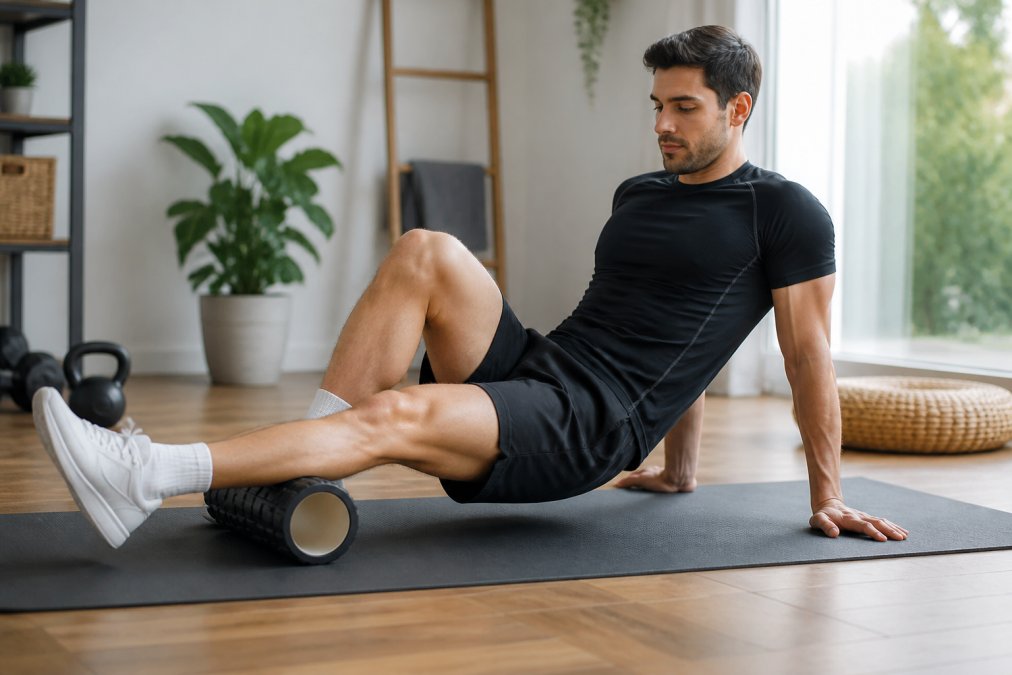
Use foam rolling within 30 minutes of finishing exercise, when blood flow is elevated and muscles are warm. This window optimizes the myofascial release effect. You can also use it on rest days for active recovery, though the effect is less pronounced.
The ShopVerse.life 30cm Yoga Column Foam Fitness Muscle Training Pilates Sports Massage Foam Roller features a grid trigger point design at $28.34. The hollow core design keeps it lightweight and portable, supporting up to 500 pounds.
Best Percussion Massage Gun for Athletes
Percussion therapy delivers rapid, targeted impacts to muscle tissue, increasing localized blood flow and reducing muscle fatigue more quickly than manual massage or foam rolling alone. A good percussion massage gun operates at 1,200-3,200 impacts per minute, penetrating 10-16mm into muscle tissue.
The Hypervolt Go 2 ($139.00) is ideal for athletes prioritizing portability and affordability. It delivers professional-grade percussion in a lightweight 1.5-pound package that's TSA-approved for travel. Three speed settings adjust intensity based on muscle sensitivity, with 3 hours battery life per charge and QuietGlide technology keeping noise under 60 decibels.
The Hypervolt Go 2 lacks Bluetooth connectivity and advanced features like heat or LED light therapy. For pure percussion therapy at a reasonable price, this is the right choice.
For serious athletes willing to invest more, the Theragun PRO Plus ($649.99) combines five recovery modalities: percussion, heat, LED light therapy, vibration, and cold therapy. The 16mm amplitude delivers deeper tissue penetration. Bluetooth connectivity to the Therabody app provides guided recovery routines and biometric tracking.
| Tool | Price | Best For | Key Limitation |
|---|---|---|---|
| Hypervolt Go 2 | $139 | Portable, budget-conscious athletes | No app connectivity or multi-therapy features |
| Theragun PRO Plus | $649.99 | Comprehensive home recovery | Expensive, not portable |
Benefits of Compression Boots for Recovery
Compression therapy enhances venous return (blood flowing back to the heart) and promotes lymphatic drainage, accelerating metabolic waste clearance and reducing swelling in the lower body.
Quality compression systems use dynamic pulsing, pressure increases and decreases in waves, rather than static compression. This mimics the muscle pump action your body naturally uses to move blood back up from your legs. Research shows compression therapy reduces DOMS and supports faster recovery when used within 30 minutes post-workout.
The Compex Ayre Wireless Air Compression Recovery Boots ($599.99) deliver professional-grade compression without tethering you to a power outlet. Integrated rechargeable pumps provide up to 3 hours of recovery per charge. Four separate compression chambers allow targeted treatment of different leg sections.
The Ayre fits feet up to roughly size 13. Maximum compression duration is 60 minutes per session, sufficient for most athletes.
For athletes with a larger budget, the NormaTec Pulse 2.0 Leg Recovery System ($1,295.00-$2,157.60) is the gold standard. It uses pulsing, gradient, and distal release technology, three distinct pressure patterns applied sequentially. Bluetooth control lets you customize pressure levels (30-110 mmHg range) and track recovery sessions.
Other Essential At-Home Recovery Tools
Beyond foam rollers and compression boots, several other recovery modalities address specific needs in your post-workout routine.
Cold Therapy and Cryotherapy
Cold exposure triggers vasoconstriction (blood vessels narrow), reducing inflammation and numbing pain signals. When you remove the cold, vasodilation follows, flushing fresh blood into the treated area.
Cold therapy works best within the first 15 minutes post-workout for acute inflammation. Ice packs applied to specific muscle groups for 10-15 minutes provide measurable inflammation reduction without extreme discomfort.
Red Light Therapy and Photobiomodulation
Red light and near-infrared wavelengths (600-1,000 nanometers) penetrate skin and muscle tissue, stimulating mitochondrial function and increasing ATP production. This process, called photobiomodulation, supports cellular energy production and reduces inflammation.
Evidence for red light therapy is growing but mixed. What's clear: it's non-invasive, has no known contraindications, and takes only 10-15 minutes per session. Adding a red light panel ($200-500) is a reasonable addition to an existing recovery routine.
Muscle Stimulation and Electrical Stimulation
Neuromuscular electrical stimulation (NMES) uses electrical current to trigger muscle contractions without voluntary effort, promoting blood flow circulation and reducing muscle soreness when applied 24-48 hours post-workout.
ShopVerse.life offers several EMS options. The EMS Abdominal Muscle Trainer Portable Massager ($35.64) and Smart EMS Abdominal Trainer Muscle Stimulator ($38.00) target core activation. The EMS Electric Cordless Hand Wrist Massager ($28.90) addresses hand and wrist fatigue from repetitive activity with ten vibration modes and USB recharging.

Heat Therapy and Saunas
Heat therapy increases tissue elasticity, reduces muscle stiffness, and promotes parasympathetic nervous system activation. Heat works best 2-3 hours post-workout, after acute inflammation has resolved.
At-home options range from simple heating pads and warm baths ($30-100) to infrared saunas ($3,000-10,000). For most athletes, a heating pad applied to sore muscles for 15-20 minutes provides measurable relief at minimal cost.
Post-Workout Recovery Routine for Athletes
A complete recovery routine combines multiple modalities in a specific sequence. Timing and order matter because different tools work through different mechanisms.
Immediate post-workout (0-15 minutes): Start with cold therapy if you have acute inflammation. Ice packs on major muscle groups for 10-15 minutes reduce swelling and numb pain signals.
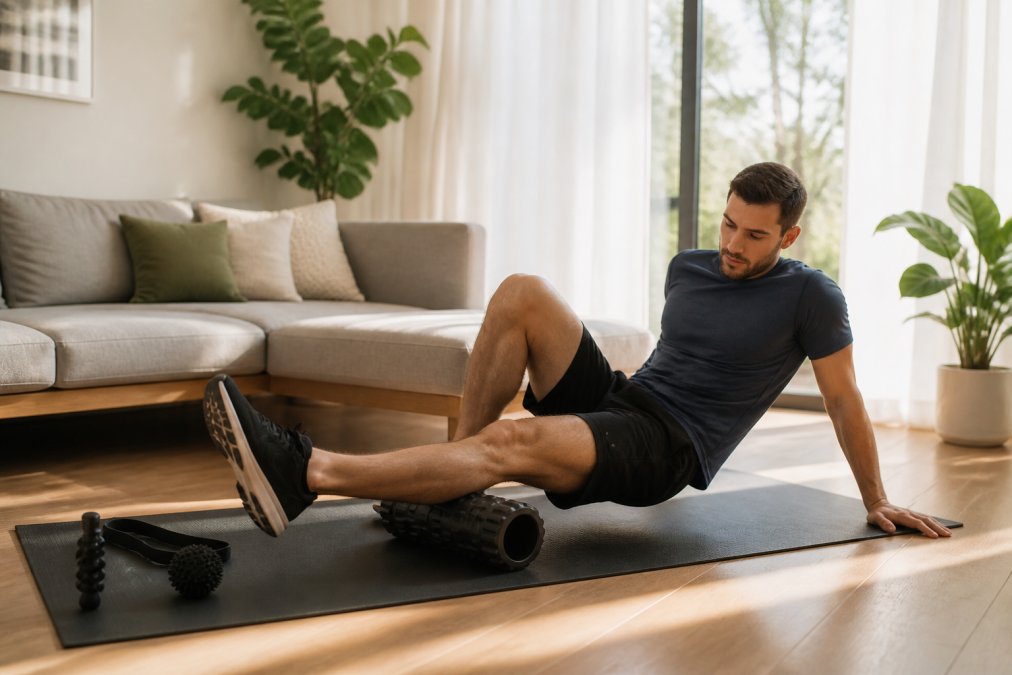
Short-term recovery (15-60 minutes): Use percussion massage or myofascial release. A 5-10 minute foam rolling session addresses major muscle groups, followed by 2-3 minutes of percussion therapy on specific tight areas.
Extended recovery (2-24 hours): Use compression therapy within 30 minutes post-workout. A 30-60 minute compression session enhances venous return and accelerates metabolic waste clearance. Follow with gentle active recovery stretching (10-15 minutes).
Optional additions: Red light therapy (10-15 minutes) can be added any time post-workout. Heat therapy works best 2-3 hours after exercise. Electrical stimulation is most effective 24-48 hours post-workout for reducing DOMS.
A minimal routine (foam rolling + stretching) takes 15-20 minutes. A comprehensive routine (cold therapy + percussion + compression + stretching + heat) takes 90-120 minutes.
How to Choose the Right Recovery Tool
Selecting the right tools depends on three factors: your training demands, your recovery timeline, and your budget.
Training demands determine priority. Endurance athletes benefit most from compression therapy and heat. Strength athletes benefit from percussion massage and myofascial release. Sport-specific movements create repetitive strain in specific areas.
Recovery timeline affects tool selection. If you train daily or twice daily, you need tools that work quickly. If you train 3-4 times per week with 48+ hours between sessions, slower modalities like red light therapy and heat are sufficient.
Budget determines scope. A complete home recovery setup costs $500-2,000. Start with foam rolling ($25-40) and compression therapy ($150-600), then add percussion massage ($150-650) as needed.
| Recovery Goal | Best Tool | Cost | Time Required |
|---|---|---|---|
| Myofascial release | Foam roller | $25-40 | 5-10 min |
| Deep muscle impact | Percussion massage gun | $150-650 | 3-5 min |
| Lower body circulation | Compression boots | $600-2,157 | 30-60 min |
| Inflammation reduction | Cold therapy | $30-100 | 10-15 min |
| Cellular energy | Red light therapy | $200-500 | 10-15 min |
| Muscle activation | EMS stimulator | $28-40 | 15-20 min |
Contraindications and Safety Considerations
Recovery tools are generally safe, but certain conditions require caution or contraindicate use entirely.
Foam rolling and percussion therapy: Avoid rolling directly over bone, joints, or the spine. Never use percussion therapy on the head or neck. If you have acute muscle strains or severe bruising, wait 24-48 hours before using these tools. People with nerve damage or neuropathy should avoid aggressive myofascial release without professional guidance.
Compression therapy: Avoid compression boots if you have deep vein thrombosis (DVT), active blood clots, or severe varicose veins. People with diabetes should monitor skin carefully during compression sessions. Compression is contraindicated if you have acute fractures or severe swelling that hasn't been medically evaluated.
Cold therapy: Avoid ice therapy if you have Raynaud's syndrome or cold-induced urticaria. People with neuropathy may not feel pain signals indicating tissue damage from prolonged cold exposure.
Electrical stimulation (EMS): Never use EMS if you have a pacemaker or other implanted electrical device. Avoid EMS over the abdomen if pregnant. Consult your physician if you have metal implants. Never use EMS on the chest, neck, or head.
Red light therapy: Red light therapy has minimal contraindications, but people taking photosensitizing medications should consult their doctor.
If you have any chronic health condition, injury, or medication affecting muscle or nerve function, consult your healthcare provider before starting a new recovery routine.
Choosing the right recovery tools transforms how your body adapts to training. The tools ShopVerse.life offers, from affordable foam rollers to professional-grade compression systems, give you access to recovery modalities once limited to elite athletes and sports medicine clinics. Start with fundamentals (foam rolling and stretching), add compression or percussion based on your specific needs, and expand as your training demands increase. ShopVerse.life's curated collection makes it easy to build a recovery routine that fits your home, budget, and athletic goals. Shop All recovery tools today and experience the difference that professional-grade recovery makes in your training.
Frequently Asked Questions
Do at-home recovery tools actually work for muscle soreness?
Yes. At-home recovery tools address the physiological mechanisms behind delayed onset muscle soreness (DOMS) and muscle fatigue. Percussion therapy increases blood flow circulation and reduces inflammation. Compression boots enhance venous return and metabolic waste clearance. Foam rolling targets myofascial release and improves tissue elasticity. The key is consistent use, tools work best when integrated into a regular post-workout routine rather than used sporadically.
How often should athletes use at-home recovery tools?
Most athletes benefit from daily recovery tool use, especially after intense training. Percussion massage guns work well for 1-2 minutes per muscle group daily. Foam rolling is effective 3-5 times per week for 30-60 seconds per area. Compression boots are typically used for 20-30 minutes post-workout, 3-5 times weekly. Wearable recovery trackers like WHOOP monitor your readiness daily to guide when you need active recovery versus harder training.
What is the best recovery tool for tight muscles?
For tight muscles, a combination approach works best. Foam rollers like the TriggerPoint GRID ($39.99) excel at myofascial release and tissue elasticity improvement. Percussion massage guns such as the Hypervolt Go 2 ($139.00) deliver targeted therapy to specific trigger points. For deeper tension, the ROLL Recovery R8 ($149.00) provides consistent hands-free pressure. ShopVerse.life's 30cm Yoga Column Foam Roller ($28.34) offers an affordable entry point for daily muscle tightness management.
Are percussion massage guns worth the investment for athletes?
Percussion massage guns are worth the investment if you train regularly and experience muscle soreness or stiffness. The Hypervolt Go 2 ($139.00) offers excellent value for portable, on-the-go relief and improved range of motion. For serious athletes, the Theragun PRO Plus ($649.99) combines percussion, heat, LED light, and vibration for comprehensive muscle recovery and faster tissue repair. Budget options like ShopVerse.life's EMS massagers ($28.90-$40.54) provide electrical stimulation benefits at lower cost.
How can I improve my athletic recovery at home with these tools?
Build a structured post-workout recovery routine combining multiple modalities. Start with 5-10 minutes of foam rolling for myofascial release and blood flow. Follow with 2-3 minutes of percussion therapy on sore areas. Use compression therapy for 20-30 minutes to enhance venous return and reduce swelling. Add wearable tracking like WHOOP 4.0 ($149/year) to monitor your parasympathetic nervous system activation and recovery readiness. Consistency matters more than tool sophistication, daily use of affordable tools beats sporadic use of expensive ones.
This article was written using GrandRanker