

Best High-Quality Kitchen Appliance Brands: 2026 Guide
Table of Contents
- Best High-Quality Kitchen Appliance Brands: Top Luxury & Reliable Options
- Most Reliable Kitchen Appliance Brands: Durability & Performance Metrics
- How to Choose Kitchen Appliances: Key Factors & Evaluation Criteria
- Kitchen Appliance Maintenance Tips: Extending Appliance Lifecycle
- High-End vs. Luxury Appliance Brands: What Justifies Premium Pricing
- Conclusion: Making Your Best High-Quality Kitchen Appliance Investment
Last Updated: July 7, 2026
Choosing kitchen appliances separates mediocre purchases from investments lasting decades. At ShopVerse.life, we've analyzed premium manufacturers across reliability, performance, and long-term value to help you make informed decisions. The appliances you choose will either support your kitchen vision or undermine it.
Best High-Quality Kitchen Appliance Brands: Top Luxury & Reliable Options
Premium kitchen appliances represent decades of engineering refinement and commitment to 15+ year performance.
Sub-Zero, Wolf, and Cove dominate high-end kitchens for good reason. Sub-Zero pioneered vacuum-sealed refrigeration that preserves food fresher longer, justifying $6,000+ price tags. Wolf ranges feature dual fuel construction with twin fan convection for even heat distribution. Cove dishwashers operate at 38 decibels, among the quietest available. These three brands integrate seamlessly, giving your kitchen unified performance. The drawback: limited integrated refrigerator sizes and custom configuration constraints.
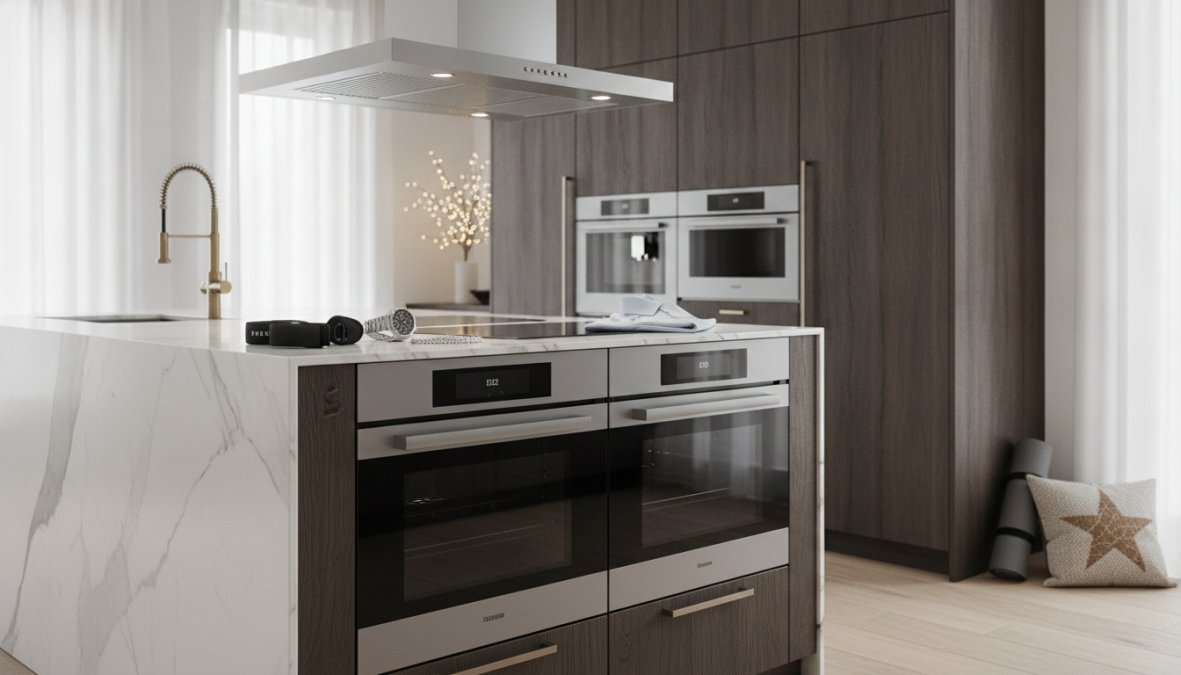
German Engineering: Miele and Gaggenau
German manufacturers obsess over precision, durability, and incremental innovation rather than flashy features that depreciate quickly.
Miele builds appliances that feel engineered rather than designed. Their M Touch controls offer intuitive operation without steep learning curves. Steam-assist cooking technology adds moisture during baking, producing superior browning and texture. Oven temperature precision adjustable by a single degree appeals to serious home chefs. Dishwashers achieve superior cleaning with minimal noise. The trade-off: professional ranges can feel underpowered compared to BlueStar or Wolf.
Gaggenau adds architectural ambition to German engineering. Their ovens feature 17 distinct cooking modes, including combi-steam function useful for bread baking and pastry work. The signature blue enamel interior reduces cleaning time and resists staining. High-end integrated espresso makers add genuine value for coffee enthusiasts. Controls can feel complex for casual users.
According to Consumer Reports appliance reliability data, German brands consistently rank in the top tier for long-term durability, with failure rates 30% lower than mass-market alternatives over 10 years.
Professional Performance: BlueStar and Thermador
These brands deliver professional-grade cooking power without sacrificing design.
BlueStar offers obsessive customization with over 1,000 color options and six trim styles. High-output burners reach 25,000 BTUs, enabling searing and stir-frying power home cooks crave. Refrigerators accommodate full-size sheet pans, a thoughtful detail that changes workflow. Construction is heavy-duty and professional-grade. The limitation: BlueStar lacks smart features and doesn't offer a dedicated dishwasher line.
Thermador innovates in unexpected ways. Their signature star-shaped burners distribute heat evenly across cookware, preventing hot spots. The extra-low simmer burner suits delicate sauces and chocolate work. Optional steam ovens add versatility for health-conscious cooking. Modular refrigeration with six-drawer options provides flexibility. Most models use single convection rather than dual, meaning longer cooking times for certain applications.
Smart-Ready Options: Bosch, Monogram, and Signature Kitchen Suite
Modern kitchens integrate with smart home ecosystems. These brands balance premium performance with technology that actually works.
Bosch represents the sweet spot between reliability and innovation. The Home Connect app enables remote oven preheating and refrigerator door notifications. Dishwashers are consistently rated among the quietest and most efficient. Twin compressors ensure independent temperature control for different zones. Controls feel intuitive. The trade-off: cooking appliances have less capacity than some competitors.
Monogram, GE's luxury line, punches above its weight. Dual fuel ranges feature smart app-based controls rivaling dedicated smart appliance brands. Built-in infrared grills enable professional searing indoors. Refrigerator cooling performance is consistent across models. Premium brass and stainless finishes offer aesthetic flexibility. Refrigerators often use single compressors, limiting precise temperature control.
Signature Kitchen Suite (SKS), LG's premium brand, focuses on tech-forward innovation. Dual fuel ranges include sous vide cooking panels bringing precision temperature control to your stovetop. Burners reach 23,000 BTUs with solid chromium grills. Convection and steam oven modes are simple to use. Contemporary design appeals to modern sensibilities. Less brand name recognition may affect resale value.
Research from J.D. Power appliance satisfaction ratings shows smart home integration has become the third-highest satisfaction driver after reliability and performance.
Accessible Luxury: GE Café
GE Café delivers high-end aesthetics and solid performance without premium pricing.
GE Café offers extensive customization with multiple color and handle options. Six-burner double oven ranges provide capacity for ambitious cooking. Advanced induction cooktop technology heats cookware directly, offering precision gas can't match. Design language feels professional and sophisticated. Performance is similar to lower-priced GE Profile models, so you're primarily paying for customization and aesthetics. This brand delivers exceptional value for design-conscious buyers.
Most Reliable Kitchen Appliance Brands: Durability & Performance Metrics
Reliability means consistency. An appliance doing one thing reliably for 15 years beats one doing ten things inconsistently for five years.
Reliability Ratings & Repair Frequency
The most reliable brands use proven technologies rather than bleeding-edge innovations, design for repairability rather than planned obsolescence, and maintain parts availability for decades.
Sub-Zero, Miele, and Wolf consistently rank at the top of reliability surveys with repair frequencies below 5% in the first five years. Bosch and Thermador follow closely at 5-8%. The industry average for mass-market brands sits around 12-15%.
Premium brands use commercial-grade components throughout. Motors are oversized for the load they carry, running cooler and lasting longer. Control boards use industrial-grade circuitry. Compressors exceed residential requirements. These engineering choices cost more upfront but eliminate premature failures.
Service Network Availability & Maintenance Costs
Reliability means nothing without accessible service. Sub-Zero and Wolf benefit from nationwide service networks with technicians in most metropolitan areas. Average service calls cost $150-250 for diagnostic plus parts. Miele maintains strong urban and suburban coverage but thinner rural coverage. Gaggenau service is more limited with potential 2-3 week waits. Bosch leverages GE's service network for broad availability.
Before purchasing any premium brand, verify local service availability. A phone call to customer service takes five minutes and prevents future frustration. Ask about average response times and whether technicians are factory-certified.
Maintenance costs for premium brands are typically 20-30% higher than mass-market alternatives, reflecting specialized parts and trained technicians. A compressor replacement on a Miele refrigerator costs $800-1,200 versus $400-600 for standard brands, but the Miele compressor lasts 20+ years versus 12-15 for standard models.
How to Choose Kitchen Appliances: Key Factors & Evaluation Criteria
Choosing appliances means matching your actual cooking style, kitchen layout, and long-term plans to the appliances you select.
Energy Efficiency & Sustainability Ratings
Energy efficiency matters significantly. A refrigerator runs 24/7, consuming 600-800 kWh annually. Over 15 years, that's 9,000-12,000 kWh. The difference between highly efficient and average models represents $1,500-3,000 in operating costs.
Look for ENERGY STAR certification, indicating top 15% efficiency. For refrigerators, inverter compressors adjusting speed based on cooling demand use 10-15% less energy than fixed-speed compressors. For ranges and ovens, convection models distribute heat more efficiently, reducing cooking time by 15-25%.
Sustainability extends beyond energy consumption. Miele and Gaggenau design for repairability and parts availability, keeping appliances out of landfills longer. Some manufacturers use recycled materials and offer take-back programs.
Smart Home Integration & Modern Technology
Smart home integration has evolved from novelty to practical utility. Bosch Home Connect, LG ThinQ, and GE's SmartHQ platforms offer solid integration with major ecosystems (Amazon Alexa, Google Home, Apple HomeKit). Implementation quality varies; test the app interface before purchasing.
Avoid choosing appliances primarily for smart features. Smart technology depreciates faster than mechanical reliability. Prioritize core performance and reliability, treating smart features as a bonus.
Budget Planning: Long-Term Ownership Costs
The sticker price is only part of the equation. A $5,000 refrigerator lasting 18 years costs $278 annually. A $2,500 refrigerator lasting 12 years costs $208 annually, but with a $600 compressor replacement at year 10, true cost becomes $258 annually. Premium brands often deliver better cost-per-year value.
Calculate your actual budget across 15 years: purchase price + estimated repairs + energy costs + maintenance.
| Brand Category | Purchase Price | Annual Energy Cost | 15-Year Repair Estimate | Total 15-Year Cost |
|---|---|---|---|---|
| Premium (Sub-Zero, Wolf) | $5,000-8,000 | $80-120 | $800-1,200 | $6,200-9,800 |
| High-End (Miele, Bosch) | $3,500-5,500 | $100-140 | $600-1,000 | $5,100-8,400 |
| Accessible Luxury (GE Café) | $2,000-3,500 | $120-160 | $1,000-1,500 | $4,800-7,900 |
| Mass-Market | $1,200-2,000 | $140-200 | $1,500-2,500 | $4,200-7,500 |
Premium brands often cost less over 15 years when factoring in reliability and energy efficiency.
Kitchen Appliance Maintenance Tips: Extending Appliance Lifecycle
The most reliable appliance brands require maintenance. Preventive care extends lifespan by 3-5 years and prevents expensive emergency repairs.
Preventive Care for Built-In & Freestanding Appliances
Refrigerators: Clean coils annually. Dust accumulation reduces cooling efficiency and forces the compressor to work harder. Replace water filters every 6 months. Check door seals monthly; degraded seals cost $100+ in wasted energy annually.
Ranges and Ovens: Use self-cleaning cycles sparingly (quarterly rather than monthly). Clean the stovetop after spills. For gas ranges, ensure burner caps sit properly.
Dishwashers: Run empty hot water cycles monthly to clear mineral deposits. Use rinse aid to prevent spotting. Load dishes properly; overcrowding reduces cleaning effectiveness. Replace door seals every 5-7 years ($50-150 versus $1,500+ for water damage).
Cooktops and Induction Surfaces: Wipe spills immediately. Use appropriate cookware (flat-bottomed, ferrous metal for induction). Never use abrasive cleaners on induction surfaces.
When to Repair vs. Replace
The two-thirds rule guides this decision: if repair cost exceeds two-thirds of replacement price, replace the appliance. A $400 compressor replacement on a $5,000 refrigerator makes sense (8% of replacement cost). A $600 repair on a $1,200 refrigerator is questionable (50% of replacement cost).
Premium brands often justify repairs that mass-market appliances wouldn't. A $1,200 repair on a $6,000 Sub-Zero refrigerator is acceptable if the appliance will run reliably for another 8-10 years.
Age matters too. Appliances over 12 years old approach end-of-life for most brands. Repairs become increasingly expensive as components age. If facing major repair on an appliance over 12 years old, replacement is usually smarter financially.
High-End vs. Luxury Appliance Brands: What Justifies Premium Pricing
The difference between high-end and luxury isn't always obvious. Both cost more than mass-market alternatives but deliver value differently.
Luxury brands (Sub-Zero, Wolf, Gaggenau, Thermador) justify premium pricing through exclusivity, heritage, and performance genuinely exceeding alternatives. These brands have refined products for 30-50+ years using proprietary technologies competitors can't easily replicate. Parts remain available for decades with strong service networks.
High-end brands (Miele, Bosch, BlueStar, Monogram) deliver excellent performance and reliability at prices 20-40% lower than luxury competitors. They make smart engineering choices balancing cost and performance. You're paying for solid engineering and proven reliability, not heritage or exclusivity. This category offers the best value for most homeowners.
Accessible luxury (GE Café) targets design-conscious buyers wanting premium aesthetics without luxury pricing. These brands deliver on design and basic performance but may not match true premium brand durability. They're excellent for 10-12 year kitchen timelines rather than 15+.
Luxury brands justify pricing if you plan to stay 15+ years and value aesthetic and performance advantages. High-end brands deliver better value for most buyers. Accessible luxury makes sense if design flexibility matters more than absolute peak performance.
According to National Association of Home Builders kitchen renovation data, homeowners investing in premium appliances report higher kitchen satisfaction and are significantly more likely to remain in their homes long-term.
Choosing the best high quality kitchen appliance brands requires balancing performance, reliability, design, and budget across a 15-year timeline. The brands covered here, from luxury leaders like Sub-Zero and Wolf to accessible options like GE Café, all deliver on their promises when matched to your actual needs. At ShopVerse.life, we believe you deserve appliances that make cooking easier, last through years of daily use, and integrate seamlessly with your lifestyle. Shop our premium kitchen essentials today and invest in appliances that will serve your family for decades to come.
Frequently Asked Questions
Which kitchen appliance brands are the most reliable?
Sub-Zero, Wolf, Miele, and Gaggenau consistently rank among the most reliable kitchen appliance brands based on durability ratings and repair frequency data. These premium manufacturers offer exceptional reliability ratings due to precision engineering, high-quality materials, and decades of parts availability. Bosch and Thermador also deliver strong reliability metrics with excellent customer satisfaction scores. When evaluating reliability, consider both the brand's track record and the availability of local service technicians in your area, as this directly impacts long-term ownership costs.
How do I choose kitchen appliances for a kitchen renovation?
When selecting kitchen appliances, evaluate these key factors: reliability ratings from consumer reports, energy efficiency certifications, smart home integration capabilities, long-term maintenance costs, and local service network availability. Consider whether you prefer built-in or freestanding appliances, and assess your cooking needs, professional-style ranges suit serious chefs, while smart-ready options like Bosch work best for tech-forward households. Compare durability metrics across brands and factor in the appliance lifecycle cost, not just purchase price. Finally, ensure your chosen brands have accessible repair services in your region to minimize downtime and repair expenses.
Are expensive kitchen appliances actually worth the money?
Premium kitchen appliance brands justify their higher cost through superior durability, precision performance, extended appliance lifecycles, and better customer satisfaction. High-end brands like Sub-Zero and Miele offer vacuum-sealed refrigeration technology and precision engineering that extends food preservation and cooking accuracy. While affordable luxury options like GE Café provide excellent value, true luxury brands offer unmatched reliability ratings and parts availability spanning decades. Calculate total cost of ownership, including maintenance costs, repair frequency, and expected lifespan, rather than purchase price alone. For serious home chefs and long-term homeowners, premium brands deliver measurable returns through consistent performance and reduced repair expenses.
What smart home features should I look for in kitchen appliances?
Leading smart kitchen appliances now offer remote monitoring, app-based controls, and voice integration. Bosch's Home Connect app enables seamless control of dishwashers and refrigerators, while Signature Kitchen Suite provides tech-forward features like built-in sous vide panels. Look for brands with established smart home ecosystems that integrate with popular platforms like Amazon Alexa or Google Home. Consider energy monitoring capabilities, many smart appliances track consumption and suggest efficiency improvements. Ensure the brand's smart technology infrastructure is stable and receives regular updates. Smart integration should enhance convenience without compromising durability or reliability ratings, so prioritize proven brands with strong service networks.
This article was written using GrandRanker