

Is Cast Iron Worth the Maintenance? A Practical 2026 Guide
Table of Contents
- Is Cast Iron Cookware Worth the Maintenance? The Real Answer
- Cast Iron Seasoning Benefits: Why the Effort Matters
- How to Clean Cast Iron After Every Use: The Daily Routine
- Cast Iron Cooking Benefits and Drawbacks: Honest Comparison
- Cast Iron vs. Stainless Steel Durability: Which Lasts Longer?
- Is Cast Iron High Maintenance? Breaking Down the Reality
- The Psychological Barrier: Why People Fear Cast Iron
- Maintenance Cost Analysis: What You'll Actually Spend
Last Updated: July 27, 2026
Is Cast Iron Cookware Worth the Maintenance? The Real Answer
When evaluating whether cast iron cookware is worth the maintenance, most people ask: Do I really want to baby a pan for life? The answer isn't as complicated as the internet makes it sound. Cast iron maintenance isn't actually high maintenance once you understand what you're doing. The real barrier is misconception about what effort entails. Once you strip away the mythology, seasoning and cleaning cast iron takes less time than you think, and the cookware pays dividends for decades.
Cast Iron Seasoning Benefits: Why the Effort Matters
Seasoning is the foundation of cast iron ownership. When you apply oil to cast iron and heat it, polymerization occurs, the oil bonds to the metal surface at a molecular level, creating a hard, non-stick coating that improves with use.
How Polymerization Creates a Non-Stick Surface
Polymerization happens when oil reaches its smoke point and transforms into a plastic-like polymer layer. Each time you cook with fat or oil, you're adding to the seasoning. Over months and years, this creates a genuinely non-stick surface that rivals modern non-stick coatings without the chemicals and degradation that happens to Teflon pans after a few years.
A non-stick pan loses its coating within 3-5 years of regular use. Cast iron seasoning strengthens over time. Heirloom cast iron pans from the 1950s often cook better than new ones because the seasoning has had decades to build.
Heat Retention and Cooking Performance
Cast iron retains heat like almost no other material. Once a cast iron skillet reaches temperature, it holds that heat evenly across the entire cooking surface. This matters for searing meat, baking cornbread, and cooking anything that benefits from consistent, high heat. The thermal mass of cast iron means you can move a pan from stovetop to oven without worry. It won't warp or crack.
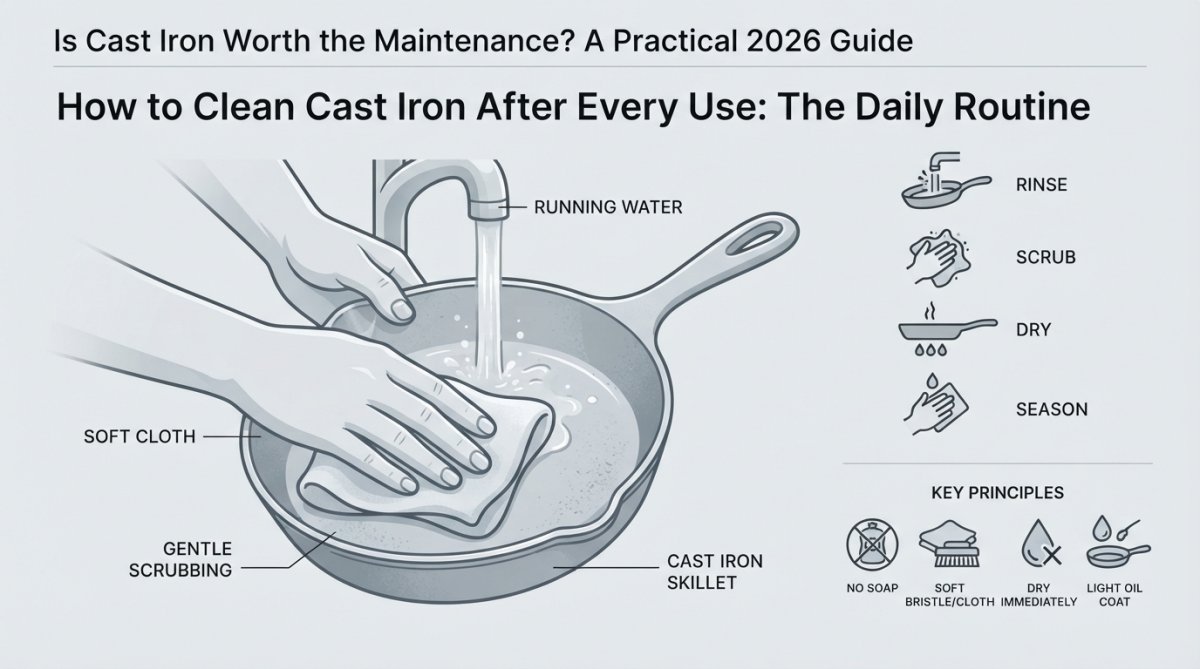
How to Clean Cast Iron After Every Use: The Daily Routine
Daily cleaning of cast iron is straightforward and takes about two minutes. You don't need special tools or to strip and re-season after every meal.
Step-by-Step Cleaning Process
-
Wipe immediately after cooking. While the pan is still warm, use a paper towel or cloth to wipe out food debris.
-
Rinse with hot water. Run the pan under hot water and use a soft cloth or sponge to remove remaining food. Yes, use water. The myth that water damages cast iron is one of the most persistent pieces of misinformation in cooking.
-
Use soap if needed. Modern dish soap won't strip seasoning. The old warning came from lye-based soaps that could damage the coating. Today's soap is mild enough to use on cast iron.
-
Dry immediately. Use a clean cloth to dry the pan completely. This prevents rust.
-
Apply a light oil coating. While the pan is still warm, rub a tiny amount of oil across the entire surface with a cloth. Wipe away excess so the pan doesn't look greasy.
-
Store in a dry place. Your pan is ready for next time.
This entire process takes 2-3 minutes.
Soap and Water: Debunking the Myth
The widespread belief that soap damages cast iron is the single biggest reason people avoid the cookware. This myth persists because older cast iron owners learned from their parents when lye-based soaps actually could damage seasoning. Modern dish soap is completely different and won't strip a properly seasoned pan. If you cook bacon or something particularly greasy, soap and water is the right move.
Cast Iron Cooking Benefits and Drawbacks: Honest Comparison
Cast iron offers real advantages that justify the maintenance commitment for many cooks, but it also has genuine limitations.
Durability and Heirloom Quality
A cast iron skillet will outlive you. A properly maintained pan easily lasts 50+ years, and vintage cast iron from the 1800s still cooks beautifully today. This durability means cast iron is genuinely an investment, you buy it once and pass it down. The cost-per-use over a lifetime is negligible compared to replacing non-stick pans every few years.
Real Drawbacks: Rust, Weight, and Learning Curve
Cast iron is heavy. A 12-inch skillet weighs around 4-5 pounds. If you have wrist issues, arthritis, or limited grip strength, this matters. Rust is a real concern if you live in a humid climate or are inconsistent with drying. The learning curve is real but overstated, you need to understand seasoning and develop a cleaning routine, which takes about a week to internalize.
Cast Iron vs. Stainless Steel Durability: Which Lasts Longer?
Stainless steel won't rust and requires almost no maintenance, making it more forgiving for beginners. But stainless steel pans can warp and eventually wear out. Cast iron doesn't wear out in any traditional sense, the cooking surface doesn't degrade. However, cast iron requires consistent care to prevent rust. For most home cooks, if you're willing to maintain cast iron, it will serve you better long-term. If you want a pan you can neglect for weeks, stainless steel is the right choice.
Is Cast Iron High Maintenance? Breaking Down the Reality
The honest answer: whether cast iron is worth the maintenance depends on whether the maintenance actually feels like maintenance to you. For some cooks, the routine becomes automatic and effortless. For others, the daily oil coating feels like a chore.
Modern vs. Vintage Cast Iron: Maintenance Differences
Modern cast iron from brands like Lodge comes pre-seasoned, so you can use it immediately. Vintage cast iron might need restoration if neglected but often has superior seasoning from decades of use. The maintenance difference is minimal once you own the pan. Both require the same daily cleaning routine.
Maintenance for Specific Lifestyles
Cast iron isn't right for everyone. If you cook daily and enjoy rituals around food preparation, cast iron fits naturally into your life. For busy families cooking multiple meals a day, cast iron works well because you're using it constantly and seasoning builds quickly. For people who cook acidic foods regularly, tomato-based sauces, citrus, vinegar, cast iron is problematic because acidic foods strip seasoning and can cause rust.
The Psychological Barrier: Why People Fear Cast Iron
The real obstacle to cast iron adoption isn't the maintenance, it's the fear of doing it wrong. Cast iron has accumulated decades of mythology. People worry they'll ruin the pan or that any mistake is permanent. This fear is understandable but overblown. Cast iron is actually very forgiving. You can't ruin a properly seasoned pan by cooking in it. The worst that happens is rust develops, which you can fix by scrubbing and re-seasoning.
Maintenance Cost Analysis: What You'll Actually Spend
A quality cast iron skillet costs between $30-$80 new. A vintage pan might cost $15-$40 at an antique store. Compare this to a quality non-stick pan at $60-$150, which you'll replace every 3-5 years. Over 20 years, you'll spend roughly $300-$600 on non-stick pans. You'll spend $30-$80 on one cast iron pan that will outlast you. The maintenance costs almost nothing.
Is cast iron cookware worth the maintenance? For most people who cook regularly and don't rely on acidic dishes, the answer is yes. The maintenance is manageable, the durability is unmatched, and the cooking performance justifies the effort. The biggest obstacle isn't the actual work, it's the fear of doing it wrong.
If you're ready to commit to cast iron, ShopVerse.life offers curated kitchen essentials and cookware options designed to elevate your cooking experience. With our carefully selected collection of top-rated products, secure payment options, and dedicated 24/7 support, you can find the right cast iron for your kitchen with confidence. Shop our collection today and join generations of cooks who've discovered that cast iron isn't a burden, it's an investment that pays dividends every time you cook.
Key Maintenance Takeaways
| Maintenance Task | Frequency | Time Required | Impact |
|---|---|---|---|
| Daily cleaning | After every use | 2-3 minutes | Prevents rust, maintains seasoning |
| Oil coating | After every use | 1 minute | Builds seasoning layer |
| Deep cleaning | Monthly or as needed | 10-15 minutes | Removes stubborn buildup |
| Restoration | Only if rust develops | 30+ minutes | Recovers damaged seasoning |
| Seasoning buildup | Continuous with use | Passive | Improves non-stick properties over time |
According to America's Test Kitchen cast iron research, properly maintained cast iron develops a naturally non-stick surface that rivals modern coatings within 6-12 months of regular use. The key factor is consistency.
Research from The Kitchn's cast iron maintenance guide confirms that modern dish soap poses no risk to cast iron seasoning, contrary to popular belief.
For those considering cast iron as a long-term kitchen investment, Lodge Cast Iron's durability documentation notes that properly cared-for cast iron can remain functional and improve in performance for 100+ years, making it one of the most sustainable cookware choices available.
Frequently Asked Questions
Is cast iron cookware actually worth the maintenance effort?
Cast iron cookware is worth the maintenance if you cook regularly and value durability. A well-maintained cast iron skillet lasts decades or generations, offering heirloom quality and superior heat retention. However, it requires consistent daily cleaning and periodic seasoning. The real cost is time, not money, expect 5-10 minutes per use for proper care. For occasional cooks or those who prefer convenience, non-stick alternatives may be more practical.
How often do you need to season cast iron cookware?
Cast iron doesn't require scheduled seasoning if you cook with oil regularly, cooking naturally builds the patina through polymerization. However, you should do maintenance seasoning every 3-6 months if cooking frequency drops or if you notice the non-stick surface degrading. Vegetable oil or flaxseed oil work well for seasoning. Store cast iron in a cool, dry place to prevent oxidation and rust between uses.
Can you use soap and water to clean cast iron after every use?
Yes, modern cast iron can handle soap and water. The myth that soap ruins cast iron is outdated. Use warm soapy water with a soft cloth or sponge to clean the cooking surface after each use. Avoid harsh scrubbing or steel wool, which damages the seasoning. For stubborn food, use a small amount of vegetable oil and coarse salt as a gentle abrasive. Dry immediately with a cloth to prevent rust.
How does cast iron vs. stainless steel durability compare for long-term use?
Cast iron lasts longer if properly maintained, many pieces are 50+ years old or vintage heirlooms. Stainless steel is more forgiving and requires less maintenance but may develop wear patterns over time. Cast iron's durability depends on consistent care: proper cleaning, seasoning, and storage prevent rust and oxidation. Stainless steel won't develop a patina or non-stick surface but resists rust naturally. For daily cooking, cast iron's durability edge justifies the maintenance if you're committed to the routine.
This article was written using GrandRanker