

Finereserved Alternative for High Quality Fashion in 2026
Table of Contents
- Why Shoppers Look for a Finereserved Alternative for High Quality Fashion
- How to Identify Quality Clothing Before You Buy
- Where to Buy Quality Clothes Online Without Guesswork
- Durable Clothing Brands and What Makes Them Last
- Sustainable Alternatives to Fast Fashion That Still Look Good
- Price Bands and Cost Per Wear: What High Quality Fashion Actually Costs
- Building a Timeless Wardrobe With Quality Staples
- Frequently Asked Questions
Last Updated: October 19, 2026
Why Shoppers Look for a Finereserved Alternative for High Quality Fashion
Shoppers hunt for a Finereserved alternative for high quality fashion because the gap between "looks good in a photo" and "still looks good after fifty washes" has never been wider.
A product page shows a styled model, flattering light, and a price, not thread count, seam allowance, or whether the fabric will pill by November.
That uncertainty pushes people toward two bad options: overpay for a name they recognize, or underpay and replace the item twice a year.
What a useful alternative actually has to do
A Finereserved alternative is only useful if it solves the same problem: buying high quality fashion without guesswork. Hold any option to these five criteria:
- Fiber transparency. The listing names the fiber and the percentage, not a vague "premium blend." A linen shirt that is 55% polyester is a polyester shirt with a marketing problem.
- Construction detail. The seller describes stitching, fit, and finish in specific terms, loose fit for airflow, a finish that keeps the garment wrinkle-free, rather than leaning on adjectives like "luxury" or "high quality."
- Stated use case. Each piece has a job: a breathable shirt for warm workdays, a dress cut for warm-weather events. Purpose-built design outlasts trend-driven design.
- Transparent pricing and returns. You can see the price band and the return terms before checkout, so cost per wear is calculable rather than a guess.
- Curation over selection. A narrow catalog the seller can describe accurately beats a marketplace with ten million listings and no incentive to tell you which linen shirt is worth buying.
Where ShopVerse.life fits, and where it does not
ShopVerse.life is built to clear criteria one through five. The fashion range is deliberately narrow, and every listing states the fiber, the fit, and what the garment is for, from a 100% linen short sleeve shirt with a natural wrinkle texture to a non-ironing Oxford shirt built for warm-weather workdays.

It is not the right fit for every shopper. If you want one marketplace stocking every brand and trend, or deep discount volume on unverifiable listings, a curated shop will feel limited.
Below, we break down the fabric signals, construction checks, price bands, and wardrobe logic that turn high quality fashion from a guessing game into a repeatable habit.
How to Identify Quality Clothing Before You Buy
Quality clothing is fabric and construction working together: a fiber suited to the garment's job, cut and sewn with enough allowance to survive real wear.
Most shoppers judge color, silhouette, and price, then treat material as an afterthought.
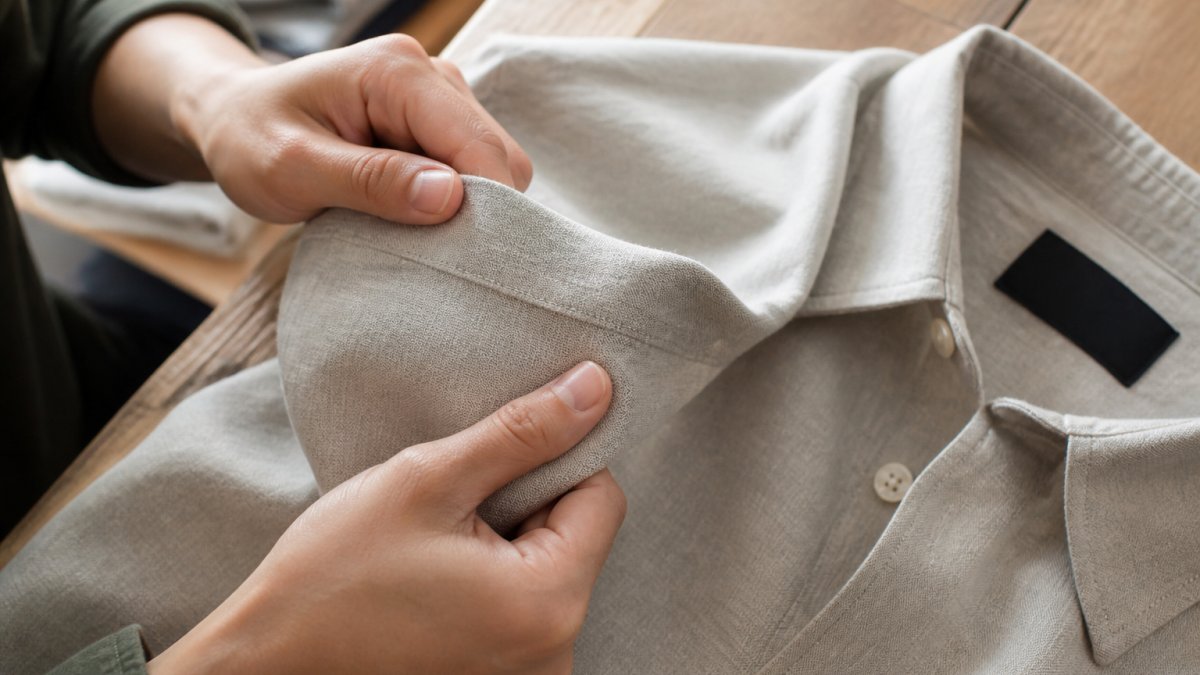
Fabric composition: what the label tells you
Natural fibers like linen, cotton, and hemp breathe, soften with washing, and age into texture rather than decay. Synthetic blends can work, especially in activewear, but they tend to pill, hold odor, and lose shape faster.
Read the label in this order:
- Fiber percentage first. A "linen shirt" that is 55% polyester is a polyester shirt with a marketing problem.
- Weight and hand-feel. Listings that mention weight, drape, or texture are usually written by sellers who know the garment.
- Dye and finish claims. Vague "eco-friendly" language means nothing. Specific claims about dyes or finishes are checkable.
Garment construction checks you can do online
A high price does not guarantee good construction. Look for listings that describe stitching, fit, and finish in specific terms rather than adjectives, a seller who explains a loose fit for airflow or a wrinkle-free finish is telling you what the garment does, which beats "premium quality."
Where to Buy Quality Clothes Online Without Guesswork
The most reliable place to buy quality clothes online publishes specific product details, states return terms clearly, and limits its catalog to items it can describe accurately.
Selection is not curation. A marketplace with ten million listings has no incentive to tell you which linen shirt is worth buying. A curated shop stakes its reputation on every item it lists.
At ShopVerse.life, our fashion range is deliberately narrow. We stock pieces we can describe in concrete terms, from a 100% linen short sleeve shirt with a natural wrinkle texture to a non-ironing Oxford shirt built for warm-weather workdays.
High quality fashion depends on fit as much as material.
Durable Clothing Brands and What Makes Them Last
Durable clothing brands share three traits: they name their materials, design for a specific use, and avoid trends that date a garment in one season. Longevity is a design decision, not an accident.
The garment that lasts is the one you actually wear.
Look for these markers when comparing durable clothing brands:
- Fiber transparency. The label names the material and the percentage.
- Purpose-built design. A polo cut for outdoor activity, a dress cut for warm-weather events.
- Repairability. Simple construction with replaceable buttons and clean seams.
ShopVerse.life's approach is to stock pieces with a stated job. The men's knitted business polo is described as breathable and moisture-controlling for hot workdays. The vintage-style denim shirt is built from non-stretch denim for layering.
| What to check | Weak signal | Strong signal |
|---|---|---|
| Fiber | "Premium blend" | Named fiber with percentage |
| Fit | "True to size" | Described silhouette and cut |
| Care | Dry clean only | Machine washable, low fuss |
| Use case | "Everyday wear" | Specific occasion or climate |
| Returns | Unstated | Clear money-back terms |
Sustainable Alternatives to Fast Fashion That Still Look Good
Sustainable alternatives to fast fashion work by slowing replacement, not by adding a green label.
Fast fashion's real cost is turnover. A shirt that loses shape after a season gets replaced, and the replacement carries the same environmental and labor footprint.
Practical moves that actually shift the needle:
100% Linen Short Sleeve Shirt for Men Breathable Summer Casual Top Minimalist →
- Buy natural fibers like linen, cotton, and hemp, which biodegrade and age well.
- Choose timeless silhouettes over trend pieces that date quickly.
- Repair before replacing. A button, a hem, a seam.
The FTC's guidance on environmental marketing claims is worth reading before you trust any sustainability badge.
Style does not have to suffer. A black vintage-inspired midi dress with a cinched waist and sheer mesh cap sleeves wears for years without reading as dated, fewer, better, longer.

Price Bands and Cost Per Wear: What High Quality Fashion Actually Costs
Cost per wear is the only price that matters: divide the purchase price by the number of times you realistically wear the item. A $30 shirt worn five times costs $6 per wear.
This is where budget alternatives to luxury clothing usually win: the luxury piece and the well-made mid-range piece often land in the same cost-per-wear band, and the mid-range piece gets worn more because you are not afraid to ruin it.
The cost-per-wear formula, worked through
Cost per wear = purchase price ÷ realistic wears. The word that matters is realistic, most shoppers overestimate statement-piece wears and underestimate basic wears. Use this three-step estimate:
- Count wears per year. Be honest: a linen shirt in a warm climate might get 40 wears a year; a formal dress might get 4.
- Multiply by three. That is a conservative three-year life for a well-made garment that is washed and cared for normally.
- Divide the price by that total. If the result is under a couple of dollars, the price is not the problem. If it lands high, the garment, or the wear frequency, is the problem.
Worked examples using listed prices:
- A $32.68 striped seven-quarter sleeve shirt worn 30 times a year for three years = 90 wears = about $0.36 per wear.
- A $71.16 linen shirt worn 40 times a year for three years = 120 wears = about $0.59 per wear.
- A $70.54 Oxford shirt worn 50 times a year for three years = 150 wears = about $0.47 per wear.
The lesson is not that the dress is a bad buy. Occasion wear should be judged on a different timeline than daily wear, and a higher headline price on a workhorse piece often produces a lower cost per wear than a cheap piece you replace twice a year.
Price bands and what each band should buy you
Rough bands to think in, based on what ShopVerse.life stocks:
| Price band | Typical pieces | What the price should buy | Cost-per-wear logic |
|---|---|---|---|
| Under $40 | Casual shirts, polos | Named fiber, clean seams, machine washable | High frequency, low risk; replace rarely if construction holds |
| $40-$75 | Linen, Oxford, denim shirts | Fiber transparency, described silhouette, stated use case | Daily rotation; strongest longevity per dollar |
| $75-$110 | Dresses, statement pieces | Purpose-built design, finish detail, clear returns | Occasion wear; fewer wears, so fit and versatility matter most |
Our $32.68 striped seven-quarter sleeve shirt and $33.20 Italian openwork polo sit in the entry band, where the math favors frequent wear. The $71.16 linen shirt and $70.54 Oxford shirt sit in the workhorse band, the range where cost per wear usually drops fastest. A black vintage-inspired midi dress in the upper band earns its price by moving across occasions rather than sitting in a closet.
How quality evidence changes the math
Price bands only work if the garment lasts, so pair the cost-per-wear calculation with the quality checks above. A $70 shirt with a named fiber, described silhouette, and machine-washable care will usually hit its three-year estimate; a $70 shirt with a vague blend and dry-clean-only care may not, and hidden cleaning costs quietly double the real price per wear.
The pieces that survive to year three tend to have simple construction, replaceable buttons, and care instructions that match how you actually live, that is where price band and durability evidence line up.
Building a Timeless Wardrobe With Quality Staples
A timeless wardrobe is a small set of versatile pieces that cover most of your week, chosen for fit and fiber rather than trend.
Wardrobe staples worth owning first:
- A breathable natural-fiber shirt for warm weather.
- A polished polo or knit that reads professional without a jacket.
- A relaxed denim or overshirt for layering.
- One dress that moves from daytime to evening.
- A finishing accessory that pulls outfits together.
That last one is underrated. A rose gold stainless steel watch with a minimalist dial does more for a plain outfit than another shirt ever will.

For warm-weather dressing, a white halter-neck maxi shirtdress in natural cotton covers the "one dress, many occasions" slot. Buy it once, wear it for years.
A useful checklist before adding anything:
- Does it work with at least three items I already own?
- Is the fiber named and suited to the season?
- Can I describe when I will wear it, specifically?
Frequently Asked Questions
What are the best alternatives to Finereserved for high-quality fashion?
The best alternative depends on what you want from a store: consistent fabric quality, clear pricing, and easy returns. Look for retailers that publish fabric composition and construction details on every product page, show real customer photos, and offer a money-back guarantee. ShopVerse.life curates a smaller catalog of higher-quality pieces, such as a 100% linen short sleeve shirt at $71.16 or a black vintage-inspired midi dress at $104.16, so you can compare quality and price without sorting through thousands of low-grade listings.
How can I tell if clothing is good quality before buying it online?
Start with the fabric composition: natural fibers like linen, cotton, and hemp generally wear better than thin synthetics. Check the product description for construction details such as non-iron finishes, reinforced seams, or lined interiors. Read reviews that mention fit and durability after washing, and look for close-up photos of stitching and hems. If a listing gives no fabric breakdown or only vague claims, treat that as a warning sign.
Is more expensive clothing always better quality?
No. Price reflects branding, marketing, and retail markup as much as materials. A $32.68 striped shirt can be well made, while a $200 piece can use the same fabric as a $60 one. Judge quality by fabric composition, stitching, fit consistency, and how the item holds up after repeated washing. Cost per wear is a better measure than sticker price: a $70 shirt worn 100 times costs $0.70 per wear, which beats a $20 shirt worn five times.
What materials tend to last longer in everyday clothing?
Linen, cotton, hemp, and wool generally outlast thin polyester blends because the fibers are stronger and handle repeated washing better. Linen, for example, softens with age and resists pilling. Oxford cotton holds its shape and resists wrinkling, especially with a non-iron finish. For activewear, look for denser knits rather than sheer synthetics. Always check the care label: natural fibers often need cooler washes and air drying to keep their shape.
How do I build a timeless wardrobe instead of buying fast fashion?
Buy fewer pieces and choose neutral colors and classic cuts that work across seasons. Start with wardrobe staples: a linen button-up, a well-cut polo, a midi dress, and a versatile denim shirt. Check fabric composition and construction before price. Then track cost per wear for a month to see which items earn their place. Replacing five cheap items with two durable ones usually lowers your annual clothing spend while making daily dressing faster.
The hard part of buying high quality fashion is not finding clothes. It is finding a seller who tells you enough to judge them. ShopVerse.life curates a focused fashion range with stated fibers, described fits, secure payment, fast shipping, and a money-back guarantee, so the decision rests on the garment rather than on guesswork. Browse the collection and build a wardrobe you will still be wearing in three years.