

How to Build a Modern Home Office: A 2026 Guide
Table of Contents
- How to Build a Modern Home Office: Key Fundamentals
- Choosing the Right Location and Space Planning
- Ergonomic Home Office Setup: Desk and Chair Selection
- Lighting: Natural and Artificial Solutions for Focus
- Small Modern Home Office Solutions: Maximizing Limited Space
- Budget Modern Home Office: Smart Spending Across Styles
- Modern Home Office Design Ideas: Color, Decor, and Personalization
- Sustainable and Eco-Friendly Modern Home Office Design
Last Updated: July 23, 2026
How to Build a Modern Home Office: Key Fundamentals
A modern home office balances three critical elements: ergonomics, aesthetics, and functionality. At ShopVerse.life, we've curated insights on creating workspaces that enhance productivity while reflecting contemporary design principles. Most people select furniture first, then realize their layout wastes space or creates eye strain. The right strategy starts with understanding your work patterns, available square footage, and budget before purchasing anything.
Choosing the Right Location and Space Planning
Your location decision determines everything that follows. The best modern home office sits in a room with natural light, minimal foot traffic, and a door you can close. A functional workspace requires at minimum 80 square feet, though 120-150 square feet allows for proper separation between work and living zones.
Consider these location factors in order of importance:
- Natural light access: Position your desk perpendicular to windows, not facing them directly (glare) or with your back to them (shadows on your work surface)
- Noise isolation: Rooms with solid doors and distance from household activity centers reduce distractions by 60-70%
- Climate control: Separate thermostats or proximity to vents prevent temperature fluctuations that affect focus
- Electrical outlets: Count existing outlets and plan for cable management before committing to furniture placement
- Wall space: Ensure room for shelving, storage, or acoustic panels without creating a cramped feeling
The layout itself matters more than square footage. An L-shaped desk in a 100-square-foot room outperforms a straight desk in 150 square feet if it maximizes corner space and creates a defined boundary between work and personal areas.
Ergonomic Home Office Setup: Desk and Chair Selection
An ergonomic home office setup begins with your chair. Your chair determines spinal alignment, which determines whether you can work pain-free for eight hours or develop chronic back issues within months.
A proper ergonomic chair supports your lower back's natural curve (lumbar support), allows your feet to rest flat on the floor with knees at 90 degrees, and keeps your arms at 90 degrees when your hands rest on the desk. Budget chairs ($150-300) often lack adjustable lumbar support. Mid-range chairs ($400-800) typically include height adjustment, armrest adjustment, and basic lumbar support. Premium ergonomic chairs ($1,000+) add advanced features, but gains diminish after the mid-range.
Your desk height should position your elbows at 90 degrees when sitting in your chair with your feet flat. Standard desk height (29-30 inches) works for people 5'8" to 6'2". Shorter or taller individuals need adjustable desks. A modern home office increasingly incorporates standing desk options, not because standing all day is better, but because alternating between sitting and standing every 60-90 minutes maintains circulation and reduces fatigue.
Consider desk size carefully. A 48-inch-wide desk accommodates a monitor, keyboard, and workspace without feeling cramped. A 60-inch desk allows dual monitors plus active workspace. Depth should be at least 30 inches to allow a monitor at proper viewing distance (20-26 inches from your eyes) while leaving room for writing or other tasks.
Lighting: Natural and Artificial Solutions for Focus
Lighting quality determines whether your modern home office feels energizing or exhausting. Poor lighting causes eye strain, headaches, and circadian rhythm disruption.
Natural light is your foundation. Position your desk to receive indirect natural light throughout the day. A sheer curtain diffuses harsh sunlight while maintaining brightness. North-facing windows provide consistent, glare-free light all day.
Artificial lighting must serve two purposes: task lighting for detailed work and ambient lighting for overall visibility. A desk lamp with adjustable brightness and color temperature gives you control over task lighting. Look for lamps offering 3000-4000 Kelvin color temperature, warm enough to feel comfortable but cool enough to maintain alertness.
Ambient lighting should be indirect to avoid screen glare. Wall-mounted lights, ceiling fixtures with diffusers, or uplighting behind furniture create even illumination without harsh shadows. Avoid using a single overhead light, which creates shadows directly behind you on your desk.
The magnetic rechargeable wall lamp from ShopVerse.life ($52.98) offers flexible positioning without requiring electrical rewiring. Its black and gold design complements contemporary aesthetics while providing focused task lighting.
Color temperature shifts throughout your workday. Morning and afternoon work benefits from 4000-5000 Kelvin (cooler, more alerting). Evening work should shift to 3000 Kelvin (warmer) to avoid suppressing melatonin production.
Small Modern Home Office Solutions: Maximizing Limited Space
Building a modern home office in 50-80 square feet requires strategic choices. Vertical storage becomes essential. Wall-mounted shelving, pegboards, and floating desks create functional space without consuming floor area. An L-shaped desk in a corner uses dead space that a traditional straight desk would waste.
Multifunctional furniture solves the space problem elegantly. A desk with built-in storage, a filing cabinet that doubles as a side table, or a bookshelf that anchors your workspace reduce the number of separate pieces you need.
Cable management matters more in small spaces. Visible cables make tiny rooms feel chaotic. Use cable trays mounted under your desk, clips along the back edge, or a cable management box to contain wires.
Lighting in small spaces should be layered but minimal. A desk lamp, one wall-mounted light, and natural light from a window create sufficient illumination without fixtures consuming visual space.
Light, neutral walls (white, soft gray, warm beige) reflect light and feel more spacious than dark colors. Add personality through accessories, artwork, and textiles rather than paint.
Budget Modern Home Office: Smart Spending Across Styles
Building a modern home office doesn't require unlimited spending. Strategic allocation across categories produces better results than spreading money evenly.
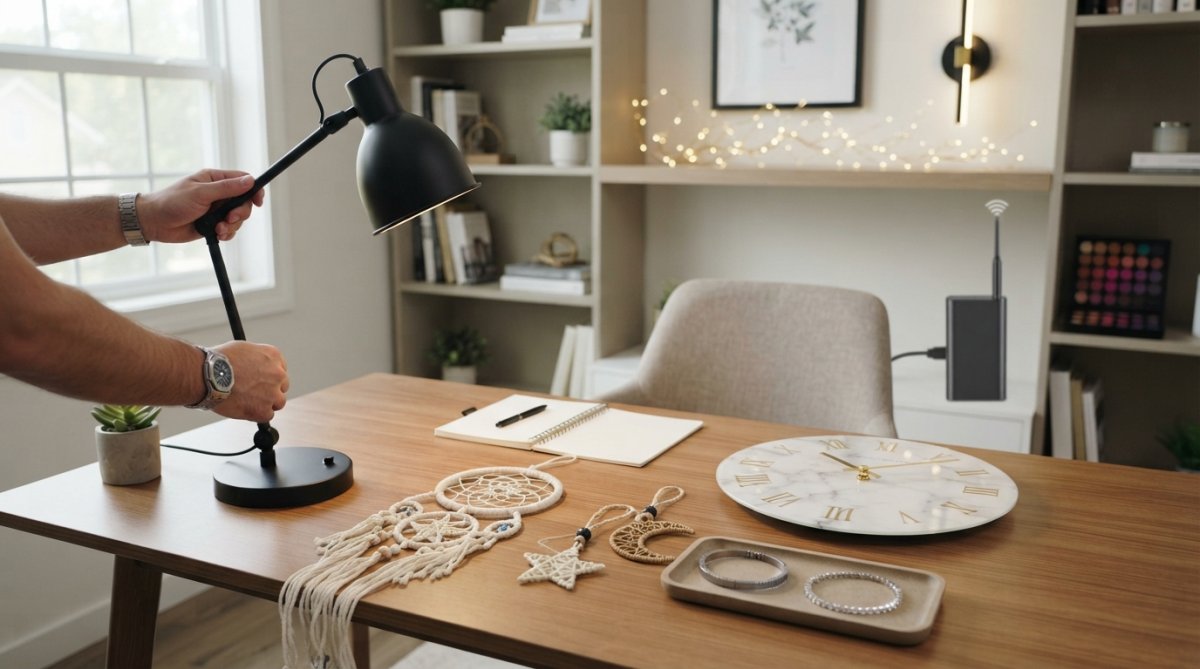
Minimalist Modern Budget ($800-1,500): Prioritize ergonomics and clean lines. A solid mid-range chair ($600), simple desk ($300), and task lighting ($100) create a functional, aesthetically cohesive space. The 12-inch tempered glass wall clock from ShopVerse.life ($79.86) with white marble texture and gold Roman numerals adds contemporary elegance without clutter.
Contemporary Comfort Budget ($1,500-2,500): Add higher-quality furniture with more design detail. A premium ergonomic chair ($900), larger desk with better materials ($600), improved lighting system ($300), and modest storage solutions ($400) create a space that feels intentional. The African Girl sculpture from ShopVerse.life ($41.84) serves as a meaningful accent piece that reflects personality.
Luxury Modern Budget ($2,500-5,000+): Premium materials, custom solutions, and sophisticated accessories define this tier. High-end ergonomic chairs ($1,500+), designer desks ($1,200+), professional lighting systems ($800+), and built-in storage ($1,500+) create spaces that feel like designer showrooms.
Regardless of budget tier, allocate roughly 40% to seating, 30% to desk and work surface, 15% to lighting, and 15% to storage and accessories. The mini tabletop rockery fountain from ShopVerse.life ($57.64) adds biophilic elements that improve well-being without expensive renovation.
Modern Home Office Design Ideas: Color, Decor, and Personalization
Minimalist and Contemporary Aesthetics
Minimalist modern design strips away everything except essentials, creating calm, focused environments. White, gray, and black form the color palette. Furniture features clean lines with minimal ornamentation. Storage is hidden or integrated.
Contemporary design shares minimalism's clean lines but adds warmth through natural materials and subtle color. Warm grays, soft whites, and natural wood tones replace stark neutrals. Accessories increase slightly, with a few carefully chosen pieces adding personality without creating clutter.
Color psychology matters in workspace design. Blue and green promote calm and focus. Warm neutrals (beige, taupe, warm gray) feel grounded without distraction. Avoid high-saturation colors on large surfaces; reserve bold colors for small accents.
Texture adds visual interest without color. A wooden desk, linen curtains, a wool rug, and concrete wall treatments create depth through material variation. Personalization within minimalist frameworks requires restraint. One or two pieces of meaningful artwork, a plant, and perhaps a decorative object maintain the aesthetic while expressing individuality.
Storage Solutions and Organization
Modern home office storage balances visibility and concealment. Open shelving displays books, plants, and attractive objects. Closed storage hides paper, supplies, and items you need but don't want visible.
Floating shelves maximize vertical space without visual heaviness. A 48-inch floating shelf can hold books, decorative objects, and a plant while consuming no floor space. Built-in bookshelves anchor a workspace and provide substantial storage.
Drawer systems and filing cabinets should match your desk or complement your color scheme. A two-drawer lateral file cabinet fits under a desk and provides substantial storage in minimal floor space.
Cable management systems deserve dedicated storage attention. Cable trays, boxes, and clips contain wires that would otherwise create visual chaos. Organizational systems must match your actual workflow. Simple systems work better than complex categorization that requires constant decision-making.
Technology Integration and Cable Management
Modern home offices integrate technology seamlessly rather than making it visually dominant. A single monitor mounted on an arm frees desk space. Dual monitors on an articulating arm provide expanded screen real estate while maintaining clean aesthetics.
Cable management begins at purchase. Choose devices with minimal cable requirements. Wireless keyboards and mice eliminate multiple cables. A docking station consolidates laptop connections into a single connector.
Cable routing systems hide wires without making them inaccessible. Under-desk cable trays keep cables organized and replaceable. Cable clips along desk edges direct wires neatly. Position your desk near electrical outlets or use a long power strip mounted under the desk edge.
Smart lighting systems automate color temperature shifts throughout your workday. Smart thermostats maintain comfortable temperature without manual adjustment. Acoustic panels, carpeting, and fabric furniture absorb sound more effectively than hard surfaces.
Sustainable and Eco-Friendly Modern Home Office Design
Building a modern home office with environmental responsibility requires thoughtful material selection and long-term thinking. Solid wood furniture from responsibly managed forests outlasts engineered wood by decades. A $1,200 solid oak desk used for 20 years costs less per year than a $400 particleboard desk replaced every five years. Certified wood (FSC, PEFC) ensures sustainable harvesting practices.
Upholstered furniture should feature natural materials when possible. Wool, organic cotton, and linen last longer than synthetic fabrics and biodegrade at end of life. Look for certifications like GOTS (Global Organic Textile Standard).
Refurbished monitors and computers function identically to new ones while reducing manufacturing impact. Devices built for repairability and upgradability extend useful life.
LED bulbs consume 75% less energy than incandescent equivalents and last 25+ times longer. Occupancy sensors eliminate lights running in empty rooms.
Cork flooring comes from renewable bark harvesting. Bamboo grows rapidly and regenerates quickly. Recycled rubber flooring diverts waste from landfills. These materials also provide acoustic benefits.
Plants improve air quality while adding biophilic design elements that boost well-being. Low-maintenance varieties like pothos, snake plants, and ZZ plants thrive in office lighting conditions.
Sustainable practices extend to daily operations. Printing less through digital workflows, using rechargeable batteries, and choosing refillable supplies reduce ongoing environmental impact.
Building a modern home office that actually works requires balancing aesthetics with ergonomics, style with function. ShopVerse.life curates products specifically designed for modern workspaces, from ergonomic support to design-forward accessories. Explore our collection of contemporary home office essentials, including the tempered glass wall clock, decorative storage pieces, and ambient lighting solutions that transform functional spaces into inspiring environments. Shop All to discover products that elevate your workspace while maintaining clean, contemporary design.
Frequently Asked Questions
What are the key elements of a modern home office?
A modern home office combines ergonomic furniture (adjustable desk and supportive chair), adequate lighting (both natural and artificial), organized storage solutions, and contemporary design elements. Technology integration with proper cable management, a functional color scheme, and personalized decor that reflects your style are equally important. The goal is creating a workspace that balances productivity with comfort and aesthetic appeal while minimizing visual clutter and distractions.
How can I create a modern home office in a small space?
Small modern home office solutions focus on vertical storage, multipurpose furniture, and strategic layout. Use wall-mounted shelves, compact desks, and corner workstations to maximize limited floor space. Choose a neutral color palette to make the area feel larger, and incorporate built-in storage where possible. Select furniture that serves dual purposes, like storage ottomans or desks with shelving, and keep accessories minimal to avoid visual clutter while maintaining a contemporary aesthetic.
What is the ideal budget for a modern home office setup?
Budget modern home office costs vary by style and needs. A minimalist setup might start at $500-$1,000 with basic desk, chair, and lighting. Mid-range contemporary offices typically cost $1,500-$3,500, including quality ergonomic furniture and smart technology. Premium luxury designs can exceed $5,000+ with custom furnishings and advanced tech integration. Start by prioritizing ergonomics and lighting, then add decor and accessories. ShopVerse.life offers curated pieces like the Magnetic Rechargeable Wall Lamp ($52.98) and tabletop fountain ($57.64) to enhance your space affordably.
How do I incorporate technology and cable management into my modern home office design?
Smart technology integration requires planning cable routes before furniture placement. Use cable organizers, conduit tubing, or adhesive clips to hide wires along desk edges or behind furniture. Invest in wireless peripherals (keyboard, mouse, headphones) to reduce visible cables. Consider a power management system or smart power strips for efficiency. Mount monitors on adjustable arms to free up desk space, and use cable boxes under desks to contain excess cords. This approach maintains the clean, contemporary aesthetic modern home offices demand while keeping your workspace functional and clutter-free.
This article was written using GrandRanker