

Red Light Therapy at Home: A Complete 2026 Guide
Table of Contents
- What Is Red Light Therapy and How Does It Work at Home?
- How Long to Use Red Light Therapy for Best Results
- Red Light Therapy Side Effects and Safety Considerations
- Choosing the Right Red Light Therapy Device for Your Home
- Top Red Light Therapy Devices Available at ShopVerse.life
- HSA Eligible Red Light Therapy Devices and Payment Options
- Common Mistakes to Avoid When Starting Red Light Therapy
- Conclusion
Last Updated: August 9, 2026
What Is Red Light Therapy and How Does It Work at Home?
Red light therapy at home has become increasingly accessible as more people recognize its potential benefits for skin health, muscle recovery, and overall wellness. At ShopVerse.life, we've curated a selection of devices that bring clinical-grade light therapy into your living space without requiring a trip to a medical facility.
Red light therapy, also called photobiomodulation, uses specific wavelengths of light to stimulate cellular activity. When red and near-infrared light penetrate the skin, they reach the mitochondria, the energy-producing structures within your cells. This interaction triggers the production of ATP (adenosine triphosphate), the cellular fuel that powers healing and regeneration processes.
The Science Behind Photobiomodulation
Red light at wavelengths around 630-660 nanometers and near-infrared light at 810-850 nanometers are absorbed by cytochrome c oxidase, an enzyme in the mitochondrial electron transport chain. This absorption stimulates ATP production, which supports cellular repair, collagen synthesis, and tissue healing.
Different wavelengths penetrate to different tissue depths. Red light (600-700nm) primarily affects surface-level skin concerns like fine lines and pigmentation. Near-infrared wavelengths (700-1100nm) penetrate deeper, reaching muscles, joints, and connective tissue. This is why comprehensive home devices often include both wavelengths.
The intensity of light delivery, measured as irradiance or power density, determines how effectively the light stimulates cellular activity. Clinical-grade devices typically deliver 50-200 mW/cm² of power density, which research suggests is necessary for meaningful therapeutic effect. Budget devices often fall short on irradiance, requiring longer treatment times or delivering reduced effectiveness.
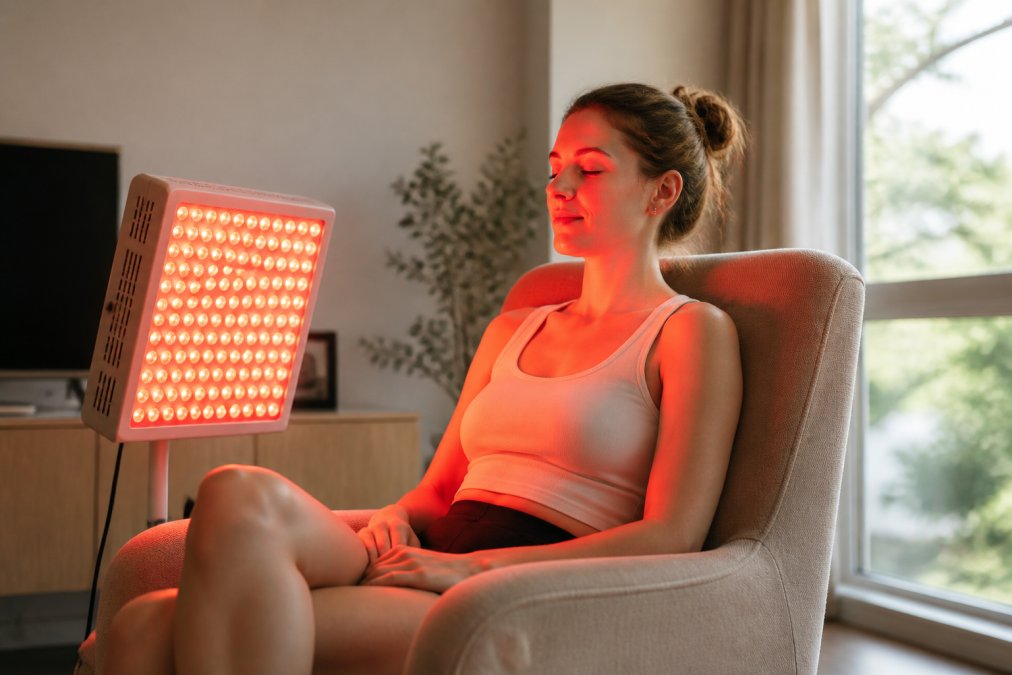
Red vs. Near-Infrared Wavelengths
Red light (630-660nm) excels at addressing surface-level skin concerns. It stimulates collagen production, reduces fine lines and wrinkles, and can help with hyper-pigmentation and redness. Many people notice visible skin improvements within 4-6 weeks of consistent red light use.
Near-infrared light (810-850nm) works deeper, reaching tissues below the epidermis. It's ideal for muscle recovery, joint pain, inflammation reduction, and deeper tissue repair. Athletes often prefer near-infrared for post-workout recovery because it reaches muscle tissue that red light cannot effectively penetrate.
The best home setups include both wavelengths. A device offering 660nm red light and 850nm near-infrared gives you comprehensive coverage for skin health, muscle recovery, and inflammation management.
How Long to Use Red Light Therapy for Best Results
The question of how long to use red light therapy depends on several factors: the device's power density, your specific goals, and your skin sensitivity. Red light therapy follows a dose-response curve where excessive exposure doesn't improve results and may cause temporary redness or irritation.
Treatment Duration and Session Frequency
Most clinical studies supporting red light therapy use session lengths between 10-30 minutes, performed 3-5 times per week. This frequency allows your cells to respond to the light stimulus without overwhelming your system. Starting with shorter sessions, around 10 minutes, is wise, especially if you have sensitive skin or are new to light therapy.
The optimal session duration varies by device type and power output. Handheld or smaller panels typically require 15-20 minute sessions to deliver adequate dosage. Larger full-body panels can achieve effective treatment in 10-15 minutes because they expose more surface area simultaneously. FDA-cleared facial masks like the HigherDOSE Red Light Face Mask are designed for precisely 10-minute sessions, which matches the duration used in their clinical trials.
Consistency matters more than duration. A person using a device three times weekly for 15 minutes will see better results than someone using it sporadically for 30 minutes. Most people report noticeable improvements in skin texture and tone within 4-6 weeks of consistent, properly-dosed treatment.
Building Your Home Red Light Therapy Routine
Begin with 3 sessions per week at 10-15 minutes each. This frequency is sustainable for most people and aligns with research showing meaningful results.
Schedule sessions consistently. Many people find morning or post-workout sessions work best, morning treatments can support circadian rhythm regulation and skin health, while post-workout sessions use the anti-inflammatory benefits for muscle recovery. Track your response with simple notes on skin texture, energy levels, or specific concerns you're addressing. Most people need 4-6 weeks before visible changes appear.
Red Light Therapy Side Effects and Safety Considerations
Red light therapy is non-invasive and generally safe when used correctly. Unlike UV light, red and near-infrared wavelengths don't damage DNA or cause the cellular stress that leads to sun damage.
The most common side effect is temporary redness or mild irritation, particularly when starting treatment or using high-irradiance devices. This usually resolves within hours. Some people experience mild headaches during early sessions from increased blood circulation, which typically resolves after a few sessions.
Contraindications and Medication Interactions
Certain medications increase photosensitivity, meaning your skin becomes more reactive to light exposure. If you take medications like tetracyclines, NSAIDs, or certain psychiatric medications, consult your healthcare provider before starting red light therapy.
Specific conditions require medical clearance. If you have a history of skin cancer, active skin lesions, or suspicious moles, get dermatological approval before using red light therapy. If you're pregnant, discuss red light therapy with your obstetrician.
Eye safety matters when using full-face or full-body panels. While red and near-infrared light aren't as damaging as UV light, extended direct eye exposure isn't recommended. Most quality devices include eye protection or are designed to be used with eyes closed.
Choosing the Right Red Light Therapy Device for Your Home
The red light therapy device market ranges from affordable handheld devices under $100 to clinical-grade panels exceeding $1,500. Your choice depends on treatment goals, budget, and the body areas you want to address.
Key Specifications: Wavelengths, Irradiance, and Power Density
Understanding device specifications separates effective tools from expensive placeholders. The critical specs are wavelengths, irradiance, and power density.
Wavelengths should include both red (630-660nm) and near-infrared (810-850nm) light. Devices offering only one wavelength limit your treatment options.
Irradiance, measured in milliwatts per square centimeter (mW/cm²), determines light intensity at the target tissue. Clinical research supporting red light therapy typically uses devices delivering 50-200 mW/cm². Budget devices often deliver 10-30 mW/cm², requiring significantly longer treatment times to achieve the same dose.
Power density describes the total optical output of the device. Check the manufacturer's irradiance specifications at the distance you'll actually use the device, as irradiance decreases with distance from the light source.
EMF (electromagnetic field) emissions and flicker-free operation matter for safety and comfort. Quality devices are designed to minimize EMF and use continuous-wave or properly pulsed light rather than flickering.
Targeted Facial Devices vs. Full-Body Panels
Facial masks and targeted handheld devices work well for skin-specific goals like anti-aging, acne, or pigmentation concerns. They're portable and convenient for daily use. Full-body panels treat larger areas and reach deeper tissues, ideal for muscle recovery, joint pain, and systemic inflammation.
Many people start with a facial mask for skin concerns, then add a smaller panel for targeted body treatment.
| Device Type | Best For | Session Time | Coverage Area | Portability |
|---|---|---|---|---|
| Handheld/Compact Panel | Targeted areas, travel | 15-20 min | Small (face or joint) | High |
| Facial Mask | Anti-aging, skin tone | 10 min | Full face | Medium |
| Medium Panel (24-36") | Full-body, recovery | 10-15 min | Torso/large area | Medium |
| Large Panel (48"+) | Comprehensive treatment | 10-15 min | Full body | Low |
Top Red Light Therapy Devices Available at ShopVerse.life
ShopVerse.life offers a curated selection of red light therapy devices, from entry-level options to clinical-grade systems. We've prioritized devices with verified specifications, independent testing, and genuine customer results.
Premium Full-Body Options
The Joovv Solo 3.0 represents the gold standard for home red light therapy systems. This medical-grade panel delivers both 660nm red and 850nm near-infrared wavelengths with clinically-validated irradiance levels. The modular design lets you start with a single panel and expand to a full-body setup as your needs grow. The Recovery+ pulsing technology adds flexibility for different treatment goals, and the ambient lighting mode supports sleep quality and circadian rhythm regulation.
The Mito Red Light MitoPRO X Series offers exceptional wavelength diversity with six separate wavelengths (590nm, 630nm, 660nm, 810nm, 830nm, 850nm) and a sophisticated touchscreen interface with mobile app integration. Independent lab testing confirms zero EMF emissions.
The RLT Home Total Spectrum COMPACT delivers seven wavelengths including short-wave infrared (1064nm) for deep tissue penetration. The high irradiance and independently verified zero EMF make it an excellent choice for serious health optimization. It includes a quality stand and protective eyewear.
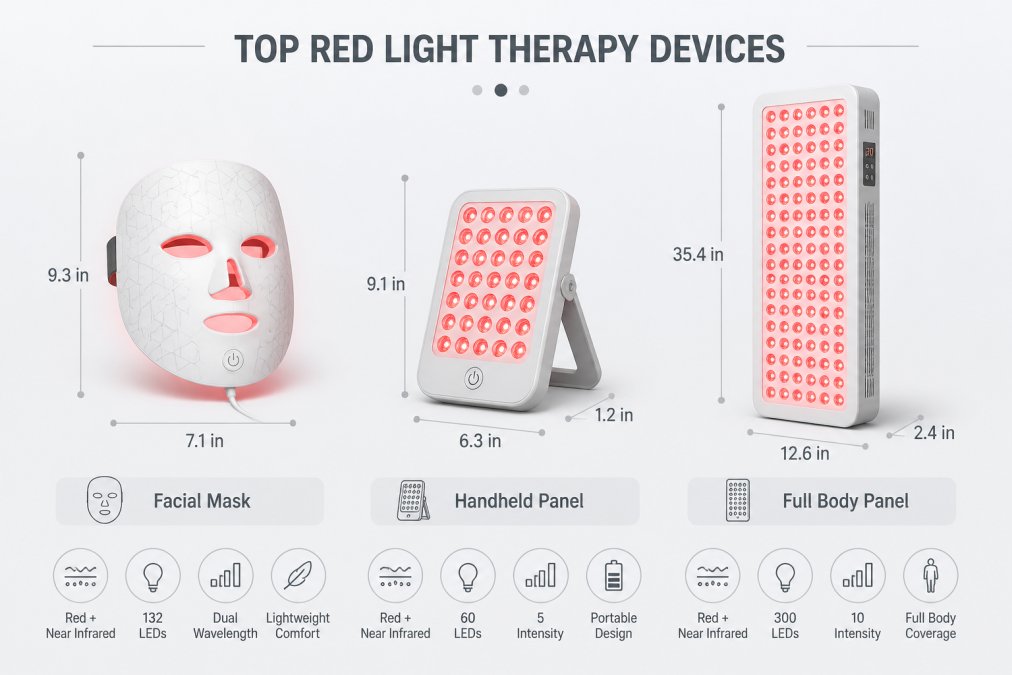
Affordable Entry-Level Devices
The Hooga HG300 bridges the gap between budget devices and premium systems. It delivers clinically-proven 660nm red and 850nm near-infrared wavelengths with independently tested irradiance. The built-in timer and 3-year warranty provide practical value.
The Solawave 4-in-1 Red Light Therapy Wand combines red light (630nm) with microcurrent, therapeutic warmth, and facial massage in a portable handheld device. The cordless design and 3-minute treatment protocol fit easily into daily routines.
Specialized Facial Masks
The HigherDOSE Red Light Face Mask is FDA-cleared and uses 630nm red and 830nm near-infrared wavelengths specifically optimized for facial skin. The flexible silicone design conforms perfectly to facial contours. The cordless, rechargeable design delivers up to ten 10-minute sessions per charge. Clinical studies support its effectiveness for reducing fine lines, improving skin hydration, and strengthening the skin barrier.
The Omnilux Contour Face is dermatologist-recommended and FDA-cleared with clinically proven results for anti-aging and pigmentation concerns. It uses 633nm red and 830nm near-infrared wavelengths in a flexible mask design. The recommended protocol of 3-5 sessions weekly for 4-6 weeks aligns with research showing meaningful skin improvements.
The Hooga Red Light Therapy Face Mask offers budget-friendly access to red light facial treatment. It combines 660nm red and 850nm near-infrared wavelengths in an affordable package.
The Celluma PRO is a large, flexible panel FDA-cleared for acne, aging skin, and pain relief. Its S-curve design accommodates various body parts beyond the face. The battery-powered design offers portability. Three light modes (red, blue, near-infrared) expand treatment options.
HSA Eligible Red Light Therapy Devices and Payment Options
Many red light therapy devices qualify for Health Savings Account (HSA) or Flexible Spending Account (FSA) reimbursement when they're FDA-cleared for specific medical indications. FDA-cleared devices for skin conditions (anti-aging, acne) or pain relief often qualify, while non-cleared wellness devices typically don't.
Check with your HSA or FSA administrator before purchasing. Devices like the HigherDOSE Red Light Face Mask and Omnilux Contour Face, which are FDA-cleared for skin benefits, generally qualify.
ShopVerse.life provides secure payment options and transparent product information to help you make informed decisions about red light therapy investments.
Common Mistakes to Avoid When Starting Red Light Therapy
Most red light therapy failures come from unrealistic expectations or poor technique rather than device limitations.
Expecting immediate results. Red light therapy works through cellular adaptation and collagen remodeling, processes that take time. Most people need 4-6 weeks of consistent treatment before visible skin improvements appear.
Using devices with inadequate irradiance. Budget devices under $50 often deliver insufficient power density to create meaningful cellular stimulation. Invest in devices with verified irradiance specifications.
Inconsistent treatment frequency. Using red light therapy sporadically won't produce results. Your cells need repeated light exposure to build collagen and reduce inflammation. Commit to 3-5 sessions weekly for at least 6 weeks before evaluating effectiveness.
Incorrect treatment distance. Irradiance decreases dramatically with distance from the light source. Follow manufacturer guidelines for optimal distance.
Ignoring contraindications and medication interactions. Always check whether your medications increase photosensitivity and get medical clearance if you have a history of skin cancer or suspicious lesions.
Combining with incompatible treatments. Using red light therapy immediately before or after harsh chemical peels or aggressive laser treatments can overwhelm your skin. Space treatments appropriately and discuss timing with your skincare provider.
Red light therapy at home transforms from an expensive clinical treatment into an accessible daily practice when you choose the right device and use it consistently. ShopVerse.life's curated selection removes the guesswork, offering devices with verified specifications and genuine customer results. Whether you're addressing skin concerns, supporting muscle recovery, or optimizing overall wellness, a quality red light therapy device delivers measurable benefits when used correctly. Start with realistic expectations, commit to consistent treatment, and give your cells the time they need to respond.
Frequently Asked Questions
Does red light therapy at home actually work?
Yes, red light therapy at home delivers measurable results when used consistently. The technology relies on photobiomodulation, where specific wavelengths (600-1000 nanometers) penetrate skin and stimulate mitochondrial ATP production. Clinical studies support benefits for collagen synthesis, muscle recovery, and inflammation reduction. Results typically appear within 4-6 weeks of regular use. Home devices must deliver adequate irradiance and power density to be effective, look for independently tested medical-grade options rather than low-powered consumer devices.
How long should you use red light therapy at home each session?
Most clinical protocols recommend 10-20 minute sessions for targeted facial devices and 15-30 minutes for full-body panels. The optimal duration depends on irradiance levels and your specific goals. Facial masks like the HigherDOSE work best with 10-minute daily sessions, while medical-grade panels may require 15-20 minutes three to five times per week. Overuse doesn't accelerate results, consistency matters more than duration. Start with 10-15 minutes and adjust based on your skin's response and device specifications.
What are the side effects of red light therapy?
Red light therapy is non-invasive and generally safe, but side effects can occur. Common mild effects include temporary redness, eye strain (if staring directly at LEDs), and headaches during initial sessions. Some users report skin sensitivity or slight warmth at the treatment site. Serious contraindications exist: avoid if you take photosensitizing medications, have active cancer, or use certain antibiotics or anti-inflammatory drugs. Always consult your doctor if you're on medications or have light-sensitive conditions. EMF-free and flicker-free devices minimize discomfort.
Are home red light therapy devices HSA eligible?
HSA (Health Savings Account) eligibility depends on whether your device qualifies as a medical device under IRS guidelines. FDA-cleared devices like the HigherDOSE Red Light Face Mask, Omnilux Contour Face, and Celluma PRO may qualify if prescribed by a physician for a qualifying condition (acne, aging skin, pain relief). However, general wellness devices without FDA clearance typically don't qualify. Check with your HSA provider and get a letter of medical necessity from your doctor. ShopVerse.life offers FDA-cleared options, contact support for documentation needed to submit HSA claims.
This article was written using GrandRanker