

Red Light Therapy vs Infrared Sauna for Recovery
Table of Contents
- Red Light Therapy vs Infrared Sauna for Recovery: Key Differences
- Benefits of Red Light Therapy for Athletes
- Infrared Sauna Session Duration and Frequency
- Muscle Recovery and Delayed Onset Muscle Soreness
- Inflammation, Joint Pain, and Tissue Repair
- Combining Heat Therapy and Light Therapy
- Comparison Table: Red Light Therapy vs Infrared Sauna
- Which Should You Choose for Your Recovery Goals
Last Updated: August 3, 2026
When comparing recovery modalities, understanding the distinction between red light therapy vs infrared sauna for recovery becomes essential for athletes and wellness enthusiasts seeking to optimize their healing protocols. Both use light and heat to enhance recovery through fundamentally different biological mechanisms. At ShopVerse.life, we've analyzed how these therapies integrate into comprehensive recovery strategies, the answer isn't choosing one over the other, but understanding when each excels and how they work together.
Red Light Therapy vs Infrared Sauna for Recovery: Key Differences
Red light therapy delivers specific wavelengths of light (600-1000 nanometers) directly to tissue, where they interact with mitochondrial structures to increase ATP production. Infrared saunas generate thermal energy that raises core body temperature and triggers heat shock proteins and systemic circulatory adaptations.
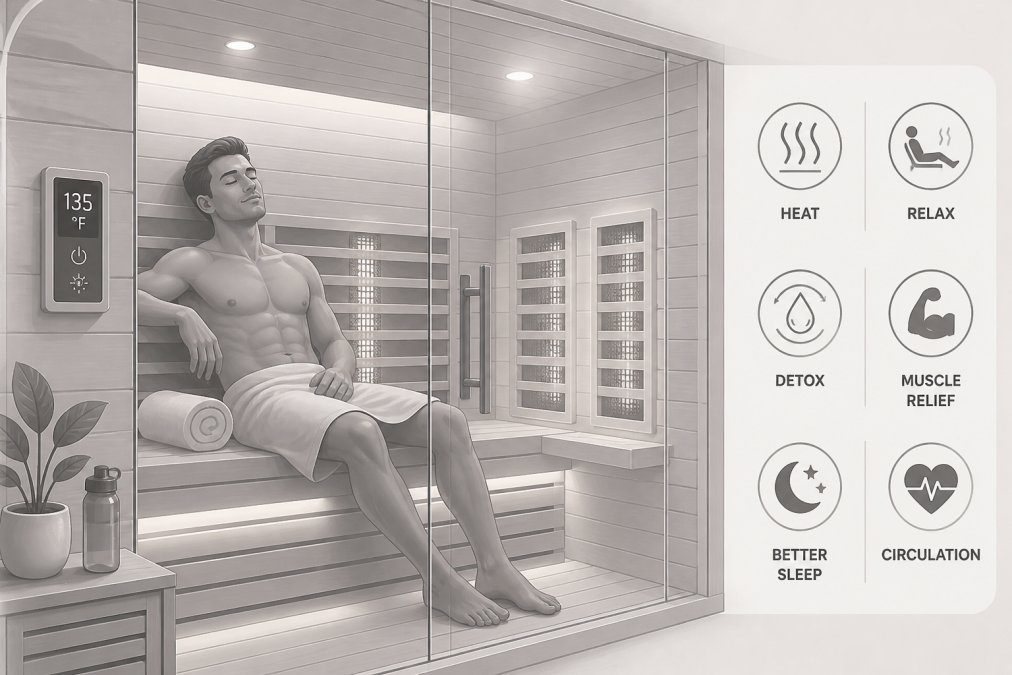
Red light therapy is non-invasive, requires no preparation, and can target specific body areas with precision. Sessions last 10-20 minutes with no recovery period needed. Infrared saunas require 30-45 minutes and involve elevated core temperature, which some athletes find incompatible with pre-competition protocols.
A quality home red light device ranges from several hundred to several thousand dollars. Infrared saunas start around $700-5,000 for portable models. Session-based access through wellness centers typically costs $30-60 per session for either modality.
How Photobiomodulation Works
Photobiomodulation relies on light absorption by mitochondrial chromophores. When wavelengths between 600-1000 nanometers penetrate tissue, they stimulate the electron transport chain, particularly at Complex IV (cytochrome c oxidase), increasing ATP synthesis, the cellular energy currency powering repair processes and tissue regeneration.
Red light (600-700 nanometers) reaches superficial layers effectively, ideal for skin, tendons, and ligaments. Near-infrared light (700-1100 nanometers) penetrates deeper, reaching muscle tissue and joints. The biological cascade triggered by increased ATP extends beyond simple energy availability: enhanced mitochondrial function reduces oxidative stress, decreases inflammation markers, and improves cellular signaling involved in tissue repair.
Studies show that 10-20 minutes of exposure produces measurable ATP improvements without diminishing returns. Consistency matters more than duration.
How Infrared Heat Functions
Infrared saunas emit radiant heat that directly warms tissue, raising core body temperature without requiring extreme ambient air temperatures. This thermal stress triggers multiple adaptive responses: heat shock proteins increase, activating cellular repair mechanisms; the cardiovascular system increases heart rate and blood flow to the skin for cooling, enhancing overall circulatory function and oxygen delivery; sweating facilitates elimination of water-soluble compounds.
The systemic nature of infrared sauna exposure distinguishes it from localized red light therapy. Whole-body temperature elevation triggers endocrine responses, including modest increases in growth hormone secretion. Cardiovascular adaptations, improved endothelial function, reduced blood pressure, and enhanced vasodilation accumulate with regular use.
Heat tolerance improves with repeated exposure, correlating with improved cardiovascular fitness markers.
Benefits of Red Light Therapy for Athletes
Red light therapy addresses specific recovery bottlenecks: delayed onset muscle soreness (DOMS), joint inflammation, and impaired collagen remodeling. It accelerates the transition from inflammation to tissue repair, allowing appropriate tissue remodeling while reducing excessive inflammation that delays return to training. Athletes using red light therapy consistently report reduced DOMS severity and faster recovery timelines, typically resuming full training 1-2 days sooner than controls.
Collagen synthesis increases under photobiomodulation, directly supporting tendon and ligament structural integrity. For athletes managing chronic joint stress or recovering from overuse injuries, daily red light exposure to affected joints can reduce pain and improve functional mobility within 2-3 weeks.
The precision of red light therapy allows athletes to target problem areas without systemic effects. Recovery between competitions benefits significantly from red light therapy's non-invasive nature and lack of systemic stress, making it suitable for pre-competition use without affecting performance.
Infrared Sauna Session Duration and Frequency
Optimal infrared sauna protocols balance therapeutic benefit against the physiological stress of elevated core temperature. Most research supports 30-45 minute sessions at temperatures between 120-150°F (49-65°C), though individual tolerance varies based on fitness level and heat adaptation.
Frequency matters more than duration. Three sessions per week produces measurable cardiovascular and recovery benefits. The timing of infrared sauna use relative to training determines recovery outcomes: using saunas 4-8 hours post-workout aligns with the inflammatory cascade and maximizes heat shock protein activation. Using saunas immediately before training can impair performance through dehydration and fatigue.
Start with 15-20 minute sessions at lower temperatures (110-120°F) and gradually extend duration and temperature as heat tolerance improves.
Muscle Recovery and Delayed Onset Muscle Soreness
DOMS results from microtrauma, inflammatory response, and temporary neuromuscular dysfunction. Both red light therapy and infrared saunas address DOMS through different mechanisms, making them complementary.
Red light therapy directly reduces DOMS severity by accelerating ATP-dependent repair processes and optimizing inflammation resolution. Applied to affected muscles within 24 hours of training, photobiomodulation reduces perceived soreness by 20-30% in most studies and accelerates functional recovery.
Infrared saunas reduce DOMS indirectly through improved circulation and heat shock protein activation. The enhanced blood flow delivers oxygen and nutrients to damaged tissue, while HSPs facilitate cellular repair. However, the systemic nature means benefits distribute across the entire body rather than concentrating on specifically damaged areas.
Combining both modalities amplifies recovery: use red light therapy on heavily damaged areas within 24 hours, then add infrared sauna sessions 4-8 hours post-workout on subsequent days.
Inflammation, Joint Pain, and Tissue Repair
Red light therapy reduces systemic inflammation through mitochondrial optimization and reduced oxidative stress. For joint pain specifically, research strongly supports photobiomodulation. Athletes with osteoarthritis, rheumatoid arthritis, or chronic overuse injuries report significant pain reduction, often 30-50% improvement, within 4-6 weeks of consistent red light therapy applied directly to affected joints.
Infrared saunas address joint pain through elevated temperature increasing synovial fluid viscosity and circulation, improving nutrient delivery to cartilage while enhancing waste removal. The systemic anti-inflammatory response helps manage pain, though the effect is more modest than direct red light application.
Tissue repair, particularly collagen remodeling in tendons, ligaments, and cartilage, responds dramatically to photobiomodulation. For athletes recovering from tendon injuries or managing chronic ligament laxity, red light therapy produces measurable structural improvements over 8-12 weeks.
Combining Heat Therapy and Light Therapy
The most sophisticated recovery protocols stack red light therapy and infrared saunas strategically rather than treating them as alternatives. Red light therapy optimizes cellular function at the mitochondrial level, while infrared saunas trigger systemic adaptations. Using both creates synergistic effects when timed appropriately.
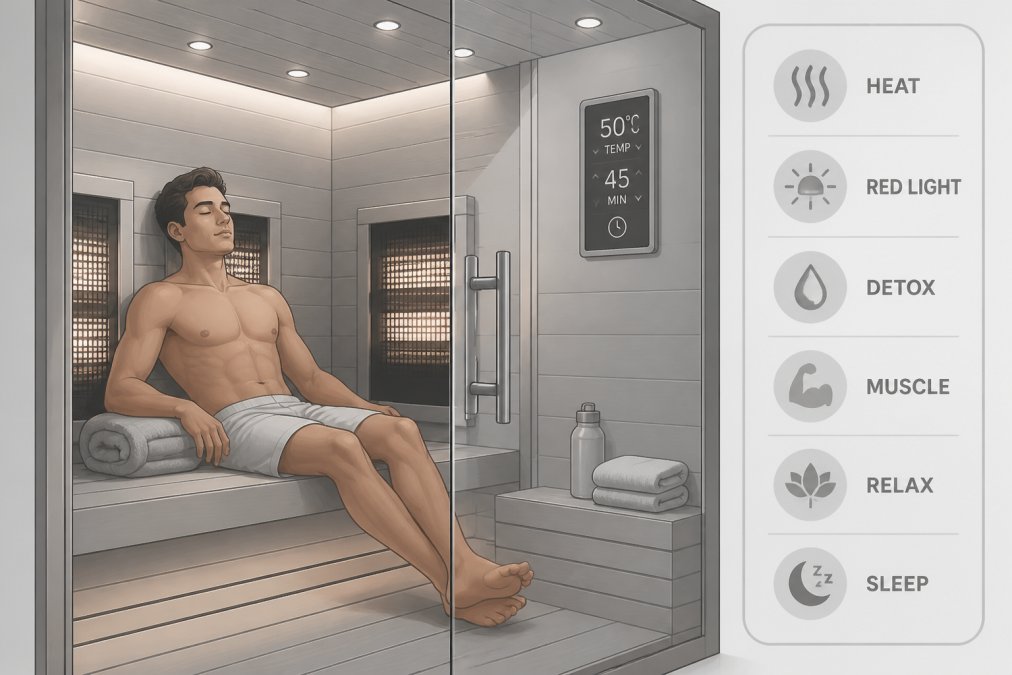
A practical protocol for serious athletes involves red light therapy within 24 hours of intense training (targeting specific damaged tissues) and infrared sauna sessions 4-8 hours post-workout (triggering systemic heat shock responses) on subsequent days.
Never use infrared saunas immediately before training; the dehydration and fatigue impair performance. Red light therapy can be used pre-training without negative effects, and some athletes use it before competition to enhance cellular energy availability.
Protocol-Based Stacking Strategies
Effective stacking requires understanding your specific recovery bottleneck. If your primary issue is localized muscle soreness and joint pain, prioritize red light therapy with infrared saunas as secondary. If your concern is systemic fatigue and cardiovascular adaptation, emphasize infrared saunas while using red light therapy for maintenance.
A high-volume training week protocol might look like: Monday (heavy lower body) → red light therapy to legs within 24 hours, infrared sauna 6 hours post-workout; Wednesday (heavy upper body) → red light therapy to upper body within 24 hours, infrared sauna 6 hours post-workout; Friday (moderate full-body) → infrared sauna only; Sunday (rest day) → optional light infrared sauna for active recovery.
During heavy training blocks, stack both modalities. During lighter training phases, red light therapy alone typically suffices. During competition phases, minimize sauna use and rely on red light therapy for maintenance.
Cost-Per-Session Analysis
A quality home red light therapy device costs $300-2,000, amortized across hundreds of sessions, yielding $1-5 per session after initial investment. Infrared saunas range $700-5,000 for home models, producing similar per-session economics over time.
Facility-based access costs $30-60 per session for either modality. For athletes using facilities 2-3 times weekly, annual costs reach $3,000-9,000. Home investment makes economic sense for committed athletes planning consistent use over 2+ years.
| Recovery Goal | Optimal Modality | Frequency | Cost (Home Annual) | Cost (Facility Annual) |
|---|---|---|---|---|
| Localized muscle soreness | Red light therapy | Daily for 1 week post-training | $100-300 | $1,560-3,120 |
| Chronic joint pain | Red light therapy | 5-6 days per week | $200-500 | $3,900-9,360 |
| Systemic fatigue | Infrared sauna | 3 times weekly | $150-400 | $3,900-9,360 |
| General wellness | Either modality | 2-3 times weekly | $100-250 | $2,600-6,240 |
| Injury recovery (acute) | Red light therapy | Daily for 2-4 weeks | $200-600 | $1,560-3,120 |
Comparison Table: Red Light Therapy vs Infrared Sauna
| Factor | Red Light Therapy | Infrared Sauna | Winner for Most Athletes |
|---|---|---|---|
| Primary Mechanism | Mitochondrial ATP stimulation | Heat shock protein activation | Red light (more direct) |
| Best For | Localized tissue repair, joint pain | Systemic circulation, cardiovascular health | Depends on goal |
| Session Duration | 10-20 minutes | 30-45 minutes | Red light (time efficient) |
| Frequency | Daily or 5-6 times weekly | 2-3 times weekly | Red light (more flexible) |
| Heat Exposure | None | Significant | Red light (pre-competition safe) |
| Targeting Precision | Excellent (specific areas) | Poor (whole-body only) | Red light |
| Home Equipment Cost | $300-2,000 | $700-5,000 | Red light (lower entry) |
| Per-Session Cost (Facility) | $30-60 | $30-60 | Equal |
| DOMS Reduction | 20-30% faster | 15-20% faster | Red light |
| Joint Pain Relief | 30-50% reduction | 20-30% reduction | Red light |
| Collagen Synthesis | Direct stimulation | Indirect support | Red light |
| Dehydration Risk | None | High | Red light |
| Pre-Competition Use | Safe | Not recommended | Red light |
Which Should You Choose for Your Recovery Goals
The choice between red light therapy and infrared sauna depends on your specific recovery bottleneck, training phase, and practical constraints. Neither is universally superior; each excels in distinct contexts.
Choose red light therapy if you have localized pain or injury, train frequently and need quick recovery between sessions, compete regularly and need pre-competition recovery options, manage chronic joint issues, or have limited time for recovery modalities.
Choose infrared saunas if you're managing systemic fatigue from high training volume, seeking cardiovascular adaptations and improved circulation, can dedicate 45 minutes to recovery, train in phases allowing for sauna use without competition proximity, or want a relaxing recovery experience that doubles as stress management.
The most effective approach combines both modalities strategically. Use red light therapy as your foundation for consistent tissue maintenance and localized recovery, then add infrared saunas during heavy training blocks when systemic stress peaks.
For athletes managing the ShopVerse.life recovery toolkit, consider pairing red light therapy with recovery-supporting equipment. The 30cm Yoga Column Foam Fitness Muscle Training Pilates Sports Massage Foam Roller Grid Trigger Point Therapy Home Gym Exercise at $28.34 complements red light therapy by addressing myofascial restriction, while tools like the Smart EMS Abdominal Trainer Muscle Stimulator Toner Fitness Vibration Waist Belt Body Slimming Belt Electric Weight Loss Unisex at $38.00 provide electrical stimulation that works synergistically with both light and heat therapies.


The evidence supports a tiered approach: red light therapy for daily maintenance and specific tissue repair, infrared saunas for systemic recovery during heavy training phases, and complementary modalities for comprehensive recovery optimization. Start with whichever addresses your most pressing recovery limitation, then expand your protocol as your understanding of your body's response deepens.
Most athletes leave recovery to chance rather than systematically addressing the biological bottlenecks limiting their adaptation. Red light therapy and infrared saunas represent evidence-based approaches to accelerating recovery, but their distinct mechanisms require strategic application. ShopVerse.life curates recovery equipment and wellness products designed to integrate seamlessly with light and heat therapies, providing a complete recovery ecosystem. Explore our collection of recovery tools and build a protocol that matches your specific training demands and recovery goals. Your fastest gains come not from harder training but from smarter recovery.
National Institutes of Health photobiomodulation research database
American College of Sports Medicine recovery guidelines
Cochrane systematic review of infrared sauna cardiovascular effects
Frequently Asked Questions
Is infrared sauna as effective as red light therapy for muscle recovery?
Both modalities support muscle recovery through different mechanisms. Infrared saunas use heat to increase blood flow and promote vasodilation, while red light therapy works at the cellular level through photobiomodulation to enhance mitochondrial function and ATP production. For delayed onset muscle soreness (DOMS), red light therapy may provide faster targeted relief, whereas infrared saunas excel at systemic inflammation reduction and cardiovascular benefits. The best choice depends on your specific recovery goal and available time.
Can you use red light therapy and an infrared sauna together in the same session?
Yes, combining both therapies can amplify recovery benefits through protocol-based stacking. Many athletes use red light therapy before or after an infrared sauna session to maximize tissue repair and reduce inflammation. Using red light therapy first on specific areas (shoulders, knees, lower back) followed by 20-30 minutes in an infrared sauna creates a comprehensive recovery protocol. However, avoid excessive heat exposure immediately before intense red light sessions, as extreme temperatures may temporarily reduce photon absorption efficiency in dermal and subcutaneous tissues.
What infrared sauna session duration is recommended for recovery?
Most recovery protocols recommend 15-30 minutes per infrared sauna session, 3-4 times weekly. Sessions under 15 minutes may not generate sufficient thermal stress to trigger heat shock proteins and vasodilation. Sessions exceeding 45 minutes offer diminishing returns and increase dehydration risk. Start with 15-20 minute sessions at moderate intensity (levels 4-6) and gradually increase duration as your body adapts. Monitor your heart rate and ensure adequate hydration before, during, and after use.
Which therapy is better for joint pain and inflammation?
Infrared saunas address systemic inflammation through heat-induced vasodilation and increased circulation, making them effective for widespread joint pain. Red light therapy targets specific areas at the cellular level, reducing local inflammation through photobiomodulation and collagen production in affected tissues. For localized joint pain (knee, shoulder, ankle), red light therapy delivers faster relief. For whole-body inflammation and cardiovascular benefits, infrared saunas excel. Many athletes use both: red light on problem joints, infrared saunas for systemic recovery and detoxification.
How often should you use red light therapy versus an infrared sauna?
Red light therapy can be used daily with minimal risk, typically 10-20 minutes per session on targeted areas. Infrared saunas should be limited to 3-4 sessions weekly to avoid excessive thermal stress and allow your body to recover. If combining both, alternate days or use them in the same session (red light first, then sauna). Your biological markers for recovery, such as heart rate variability and resting heart rate, can guide frequency adjustments. Listen to your body and reduce frequency if experiencing fatigue or elevated cortisol levels.
This article was written using GrandRanker