



























































Table of Contents
- Why Side Tables Matter in a Drawing Room
- Finding the Right Side Table Height for Your Sofa
- Side Tables with Storage: Function Meets Design
- Round Side Tables: A Versatile Choice for Drawing Rooms
- Materials That Work: Wood, Metal, Glass & More
- Side Table Decor Ideas: Styling Your Drawing Room Surface
- Modern, Nesting & Space-Saving Side Tables for Drawing Rooms
- Safety and Care: Protecting Your Side Table Investment
Side Tables for Drawing Room: Style, Storage & Setup
Last Updated: August 2, 2026
Side tables for drawing room spaces serve far more than a decorative purpose, they anchor furniture arrangements, provide functional surface area, and define the visual character of your seating area. At ShopVerse.life, we've studied how the right side table transforms a drawing room from merely functional to genuinely inviting. The challenge most homeowners face isn't finding a side table; it's finding one that matches their space's proportions, storage needs, and aesthetic without breaking the budget.
This guide covers everything from height standards and material selection to styling strategies that make your side tables work harder.
Why Side Tables Matter in a Drawing Room
A side table anchors the seating arrangement, creates visual balance, and provides essential real estate for daily essentials, remotes, books, drinks, and decorative objects. The most common mistake homeowners make is treating side tables as afterthoughts. Instead, think of them as part of your room's architecture, they should echo your color palette, complement your sofa's lines, and respect the scale of your space.
Drawing rooms benefit from at least one side table per seating zone. If you have two sofas facing each other, plan for tables at the ends of each. This distributes function and prevents one table from becoming cluttered.
Finding the Right Side Table Height for Your Sofa
Standard Height Guidelines
The standard side table height for drawing rooms ranges from 24 to 28 inches from floor to tabletop. This measurement assumes your sofa seat height is 18 to 20 inches. The ideal side table sits roughly level with the arm of your sofa, making it easy to set down a drink, book, or remote without reaching awkwardly.
Measure your sofa's arm height first. If your sofa sits lower (17 inches or less), a 24-inch table works. If your seating is higher, perhaps a modern sectional with 22-inch arms, move toward 28 inches. Research shows that when side table height mismatches sofa proportions by more than 3 inches, users report less functionality and visual awkwardness.
Adjusting for Your Furniture Layout
Your drawing room's furniture arrangement affects ideal table height. If you're pairing a side table with an accent chair that sits lower than your sofa, you may need two different heights. Nesting tables shine here, keep a taller table by the sofa and a shorter one near the chair.
In a formal drawing room where you want clear sightlines across the space, a lower table (24 inches) creates less visual obstruction. In a casual room, a taller table (28 inches) can anchor the space more assertively.
Side Tables with Storage: Function Meets Design
Storage-equipped side tables solve the perennial problem of clutter in high-traffic spaces. A drawing room side table with storage keeps remotes, throw blankets, magazines, and essentials within arm's reach but out of sight.
Drawer Options for Small Spaces
Drawers are the most practical storage solution for side tables in drawing rooms. A single drawer provides enough space for remotes, coasters, and small decorative items without adding bulk. Look for soft-close drawer mechanisms, they prevent slamming and feel more refined.
Materials matter. Wood drawers with metal slides feel more durable than particle board alternatives. If your drawing room has a modern aesthetic, consider tables with sleek metal drawer fronts or lacquered finishes. Traditional spaces pair well with wooden drawers featuring subtle hardware.
A 4-inch-deep drawer holds basics; 6-inch drawers accommodate larger items like folded blankets. Measure what you actually store before committing to a table.
Shelved and Open Storage Designs
Open shelves on side tables work best in curated, intentional spaces. A single shelf below the tabletop creates visual lightness while providing storage for books, decorative boxes, or woven baskets.
Open storage demands discipline. Everything on display becomes part of your room's aesthetic. In drawing rooms, this works beautifully when you use matching storage boxes, stack books with spines facing outward, or display a single plant or art object. Avoid mixing too many colors or styles on open shelves.
Shelved tables with storage work particularly well in smaller drawing rooms because they create vertical interest without eating floor space.
Round Side Tables: A Versatile Choice for Drawing Rooms
Round side tables for drawing room spaces offer distinct advantages over rectangular alternatives. The circular shape softens sharp angles in furniture arrangements, making rooms feel more conversational. In rooms with angular sofas or geometric décor, a round table provides visual balance.
Round tables also maximize accessibility, there are no corners to navigate around, making them ideal for high-traffic drawing rooms or homes with children and pets. A 24-inch-diameter round table provides similar surface area to a 20x24-inch rectangular table but with better sightlines.
Round tables work beautifully in modern, transitional, and eclectic drawing rooms. They feel less formal than rectangular tables, making them ideal for spaces designed for relaxation.
Materials That Work: Wood, Metal, Glass & More
The material you choose for your side table affects durability, maintenance, style, and how the piece integrates with your existing furniture.
Wood remains the most versatile choice. Solid wood tables (oak, walnut, cherry) offer durability and warmth. Light woods (ash, maple) suit modern and Scandinavian spaces; dark woods (walnut, mahogany) work in traditional and eclectic rooms.
Metal tables, whether steel, brass, or iron, bring contemporary edge and durability. Metal pairs beautifully with glass tops to create lightness, or stands alone for industrial aesthetic. Metal tables are easy to clean and resist staining.
Glass tops offer visual lightness and work well in smaller drawing rooms where you want to avoid visual weight. Tempered glass resists scratching better than standard glass. The downside: glass shows every fingerprint and dust particle.
Marble and stone convey luxury and permanence. These materials resist heat and staining better than wood. Marble requires sealing periodically to prevent staining.
Mixed materials, wood base with marble top, metal frame with wood shelf, glass top with brass legs, have become increasingly popular. These combinations let you balance aesthetics with function.
Durability and Maintenance Across Materials
Solid wood tables last decades with basic care: dust regularly, wipe spills immediately, use coasters for drinks, and apply wood conditioner annually. Avoid placing hot objects directly on wood surfaces.
Metal tables require minimal maintenance. Dust with a soft cloth and clean with appropriate metal polish. Protect metal finishes from moisture to prevent rust or tarnishing.
Glass surfaces need frequent cleaning to maintain appearance, but they're easy to sanitize and won't stain. Use glass cleaner and lint-free cloths.
Marble and stone require the most attention. Seal new marble tables before use and reseal every 1-3 years. Wipe spills immediately, acidic substances like wine or citrus can etch marble. Avoid placing hot objects directly on marble.
Side Table Decor Ideas: Styling Your Drawing Room Surface
How you style your side table transforms it from functional furniture into a design statement.
Layering Accessories for Visual Interest
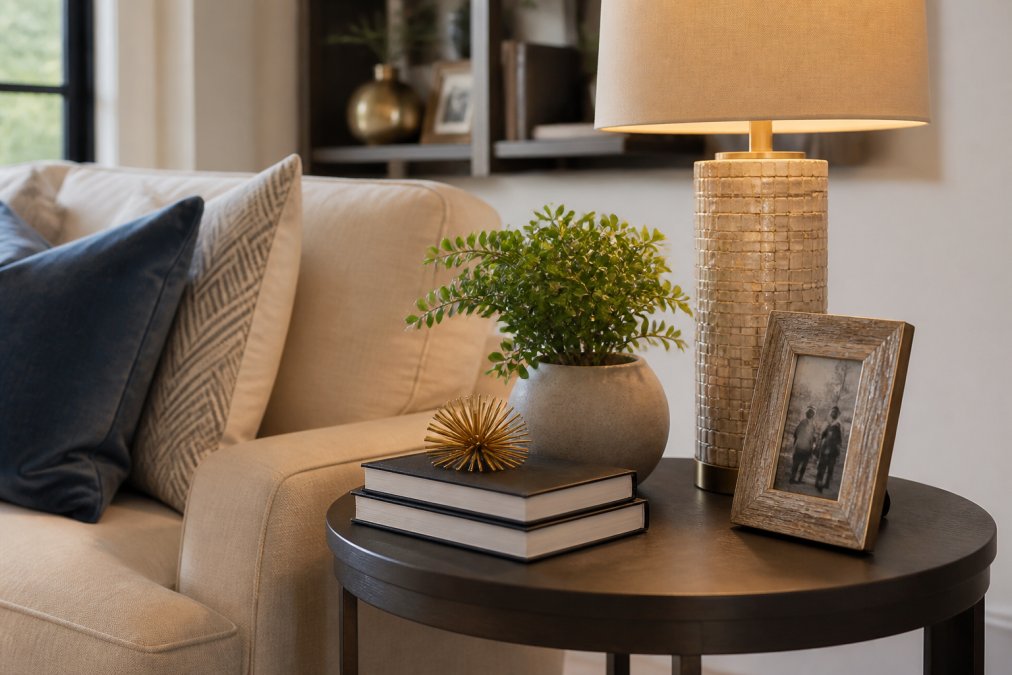
Start with a functional anchor, typically a table lamp. The lamp provides task lighting and anchors the table's visual weight. Choose a lamp that complements your room's style. A ceramic or linen-based lamp feels warm and traditional; a minimalist brass or matte black lamp suits modern spaces.
From there, add layers. A stack of 2-4 books provides height and texture. A single plant adds organic interest. A framed photo or decorative object personalizes the space.
The key is negative space. Aim to cover 50-60% of the tabletop surface, leaving 40-50% empty. This ratio feels balanced and leaves room for daily use.
Creating Balance with Your Room Layout
Your side table's styling should echo your room's broader palette and mood. If your drawing room features warm wood tones, choose accessories in similar warm tones, brass, terracotta, natural wood. If your room is cool and modern, lean toward chrome, glass, and neutral ceramics.
Height variation matters. A table with a tall lamp, short plant, medium stack of books, and small picture frame creates visual interest. Avoid placing all accessories at the same height.
Rotate accessories seasonally or monthly to keep your drawing room feeling current without requiring major changes.
Modern, Nesting & Space-Saving Side Tables for Drawing Rooms
Contemporary drawing rooms often demand furniture that's both functional and space-conscious.
Contemporary Styles and Minimalist Designs
Modern side tables emphasize clean lines and minimal ornamentation, often combining multiple materials. A glass or marble top on a slim metal base creates visual lightness while maintaining stability. Lacquered finishes in matte or glossy white, black, or bold colors suit contemporary spaces.
Minimalist tables prioritize function over decoration. A simple rectangular table with tapered legs and a single shelf represents this philosophy. These tables work beautifully in modern drawing rooms where the focus is on negative space.
Modern side tables often incorporate hidden storage, a drawer that opens with a soft push, shelves concealed within the frame, or a lift-top mechanism that reveals storage underneath.
Nesting Tables: Flexibility Without Clutter
Nesting tables are two or three tables of graduated sizes that stack together when not in use. They're ideal for drawing rooms where space is limited or where you need flexible surface area.
When you have guests, pull out both tables to expand surface area. When you need the space, nest them together to occupy a footprint barely larger than a single table. A 20-inch table paired with a 24-inch table provides noticeable size difference without looking mismatched.
Style nesting tables intentionally. When nested, they become a sculptural object; when separated, each table deserves its own styling.
Safety and Care: Protecting Your Side Table Investment
Your side table represents an investment in both function and aesthetics. Protecting that investment through thoughtful placement and maintenance ensures years of reliable use.
Childproofing and Pet-Friendly Choices
If your drawing room is a family space, consider table height and stability. Tables with weighted bases resist tipping if a child climbs or pulls on them. Avoid tables with sharp corners; opt for rounded edges or place corner guards on existing tables.
Secure tall, narrow tables to the wall if you have young children or large pets. For pet-friendly drawing rooms, choose durable materials that resist scratching and staining. Metal and glass are easier to clean than wood. Sealed or lacquered finishes resist damage better than natural wood.
Avoid placing toxic plants on accessible side tables. Select pet-safe varieties like spider plants or Boston ferns.
Cleaning and Long-Term Maintenance
Regular dusting, weekly or bi-weekly, prevents dust accumulation. Use a soft microfiber cloth for all materials.
Wipe spills immediately. Water rings on wood, fingerprints on glass, and stains on marble worsen over time. Keep coasters nearby and use them consistently.
Seasonal deep cleaning maintains your table's finish. For wood, use appropriate wood cleaner or conditioner. For metal, polish to restore shine. For glass, use quality glass cleaner and lint-free cloths. For marble, use pH-neutral cleaner designed for stone.
Inspect your table periodically for damage. Loose joints, wobbly legs, or separating veneer should be addressed promptly.
Choosing the right side tables for drawing room spaces transforms how your room functions and feels. The ideal table matches your sofa's height, complements your aesthetic, provides necessary storage or display space, and fits your lifestyle. At ShopVerse.life, we curate side tables that balance style with durability, offering fast shipping and a money-back guarantee so you can shop with confidence. Browse our collection of modern, traditional, and transitional side tables to find pieces that elevate your drawing room today.
Frequently Asked Questions
What height should a side table be next to my drawing room sofa?
Ideally, a side table should be within 1-2 inches of your sofa arm height, typically 24-26 inches tall. This makes it easy to reach a drink or place a book without stretching or bending awkwardly. Measure your sofa arm first, then choose a side table that matches or stays close to that measurement for comfort and balance in your drawing room layout.
Are round side tables better than square ones for drawing rooms?
Round side tables work well in drawing rooms because they soften sharp angles, fit naturally into curved seating arrangements, and create safer traffic flow with no corners to bump into. Square and rectangular tables, however, maximize surface area and fit snugly into corners. The best choice depends on your room layout, furniture arrangement, and whether you prioritize safety or storage space.
How do I choose between a side table with storage and a decorative one?
If your drawing room needs extra storage for blankets, magazines, or remotes, a side table with drawers or shelves adds function without taking up floor space. A decorative-only table works better if you have ample storage elsewhere and want to showcase a statement piece or minimize visual clutter. Consider what items you actually use near your seating area before deciding.
What's the best way to style a side table in my drawing room?
Layer three elements: a functional piece (lamp or small plant), a textural accent (books, a decorative box, or candle), and a personal touch (framed photo or artwork). Keep the arrangement balanced and uncluttered, leaving some surface visible. Change accessories seasonally to keep your drawing room feeling fresh without buying new furniture.
This article was written using GrandRanker