

Simple Ways to Upgrade Kitchen Tools: 10 Essential Changes
Table of Contents
- Simple Ways to Upgrade Kitchen Tools: Start Here
- Essential Kitchen Tools for Beginners and Upgrades
- When to Replace Kitchen Utensils: Signs Your Tools Need Upgrading
- Upgrading Cookware and Skillets for Better Performance
- Budget-Friendly Kitchen Updates That Deliver Results
- How to Organize Kitchen Utensils for Improved Workflow
- Sustainability and Eco-Friendly Kitchen Tool Upgrades
- Smart Kitchen Technology Integration for Modern Cooks
Last Updated: July 6, 2026
Simple Ways to Upgrade Kitchen Tools: Start Here
Kitchen upgrades don't require a complete renovation. According to the National Kitchen & Bath Association, homeowners who upgrade essential kitchen tools report higher cooking satisfaction and improved meal preparation efficiency. Strategic, incremental upgrades deliver far better results than overhauls. This guide addresses the most common pain points in home cooking: dull knives, inefficient storage, and outdated cookware that doesn't heat evenly.
Essential Kitchen Tools for Beginners and Upgrades
The most important kitchen essentials include a sharp chef's knife, reliable cutting board, mixing bowls in various sizes, a whisk, tongs, and a meat thermometer. These items handle 80% of everyday cooking tasks.
When upgrading from basic starter equipment, focus on durability and ergonomic design. A quality chef's knife should feel balanced in your hand. Mixing bowls should be deep enough to prevent splashing. Your cutting board should be at least 18 inches by 24 inches.
The transition from basic essentials to functional tools happens when you stop fighting your equipment. Dull knives slow you down. Tiny cutting boards create accidents. Flimsy mixing bowls make baking frustrating. Upgrading these core items first creates a foundation that makes every cooking task easier.
Must-Have Knives and Cutting Tools
A sharp chef's knife is non-negotiable. It should be 8 inches long, made from high-carbon stainless steel, and weighted toward the blade rather than the handle. The OXO Good Grips Y-Peeler costs under $11 and outperforms peelers costing three times as much, reducing hand fatigue during vegetable prep.
For serrated edges, a bread knife with a 10-inch blade handles crusty loaves and tomatoes with equal ease. Serrated knives stay effective longer before needing professional sharpening.
The Chef'sChoice Trizor XV EdgeSelect Electric Knife Sharpener converts traditional edges into high-performance 15-degree edges using diamond abrasives. At $160, it's an investment, but keeping quality knives sharp is essential. Dull knives are dangerous, they require more pressure, making slips more likely.
Kitchen shears deserve attention. The Messermeister Take-Apart Kitchen Shears feature blades that separate for thorough cleaning, integrated bottle opener and nutcracker functions, and adjustable tension. For cutting poultry, herbs, and packaging, they're faster than knives and easier to sanitize.
Precision Cooking Gear That Makes a Difference
The Escali Primo Digital Food Scale measures in 0.05-ounce or 1-gram increments, essential for baking where accuracy matters. Bakers who switch from volume measurements to weight-based recipes consistently report better results.
The Microplane Classic Zester/Grater features razor-sharp photo-etched stainless steel blades and costs $15. For adding fresh citrus zest, grated cheese, or finely minced aromatics, nothing else comes close.
The ThermoWorks Thermapen ONE reads temperatures in one second with accuracy within 0.5°F, has an auto-rotating display, and carries an IP67 waterproof rating. At $109, it's the industry standard for home cooks serious about precision.
A quality cutting board protects your knife investment while improving food safety. The Teakhaus End Grain Cutting Board uses sustainably sourced FSC-certified teak, naturally resistant to moisture and bacteria. End-grain construction is gentle on blade edges. Expect to spend $80-$150 for a buy-it-for-life purchase.
When to Replace Kitchen Utensils: Signs Your Tools Need Upgrading
Your kitchen utensils send clear signals when they're past their prime. A knife that requires excessive pressure to cut a tomato is dull and dangerous. Cutting boards that harbor deep stains and odors harbor bacteria. Handles that are cracked, loose, or uncomfortable to grip should be replaced. Wooden spoons that have absorbed stains and odors for years harbor bacteria despite washing.
The most overlooked sign is when you actively avoid using certain tools. If you reach for a different knife instead of your chef's knife, it's too dull. If you skip recipes requiring that one mixing bowl, it's probably uncomfortable or too small.
Rust on cast iron or stainless steel indicates either poor maintenance or the tool's end of life. Deep rust that pits the metal means replacement time. Wooden handles that have cracked or split won't recover.
Upgrading Cookware and Skillets for Better Performance
Cookware quality directly impacts cooking results. Thin aluminum pans create hot spots where food burns in some areas while remaining undercooked in others. Heavy-bottomed cookware distributes heat evenly, ensuring consistent cooking.
The All-Clad D3 Everyday Stainless Steel Skillet features tri-ply bonded construction for even heat distribution, works on all cooktops including induction, and comes with a lifetime warranty. At $100+, it eliminates the frustration of hot spots. Stainless steel skillets require proper technique, preheat adequately, use appropriate fat, and avoid moving food too early, but deliver superior browning.
Cast-iron skillets represent the ultimate upgrade for durability. A properly seasoned cast-iron skillet lasts generations, heats evenly when fully preheated, develops superior browning through natural seasoning, and works on all heat sources. The learning curve is minimal.
Nonstick cookware serves specific purposes like eggs, delicate fish, and crepes. Quality nonstick pans last 3-5 years of regular use. Budget $40-$80 and plan to replace periodically.
A good saucepan handles everything from boiling water to making sauces. Look for 3-quart capacity with heavy bottom, stainless steel construction, and a lid that feels balanced when holding by the handle.
Budget-Friendly Kitchen Updates That Deliver Results
Upgrading your kitchen doesn't require spending thousands. Strategic, targeted purchases create measurable improvements.
Start with a sharp knife. A $40 chef's knife outperforms a $200 dull knife. If budget is tight, sharpening your existing knife or buying one quality knife transforms your cooking experience immediately.
Next, upgrade your cutting board. A wood or bamboo board costs $20-$40 and protects both your knives and your hands.
The DI ORO Seamless Silicone Spatula Set features a seamless one-piece design for hygiene, heat resistance up to 600°F, internal stainless steel core, and dishwasher safe construction. At $20, it prevents food buildup where bacteria hide.
A digital food scale under $30 transforms baking accuracy. The Escali Primo costs $25 and measures in precise increments.
| Upgrade | Cost | Impact | Timeline |
|---|---|---|---|
| Sharp chef's knife | $40-$80 | Faster prep, safer cutting | Immediate |
| Quality cutting board | $20-$40 | Knife protection, food safety | Immediate |
| Digital food scale | $25-$35 | Consistent baking results | First bake |
| Silicone spatulas | $15-$25 | Better hygiene, durability | Immediate |
| Instant-read thermometer | $30-$50 | Perfect protein every time | First use |
Budget-friendly updates work because they address the most frustrating pain points. Each upgrade removes one frustration from your cooking experience.
How to Organize Kitchen Utensils for Improved Workflow
Kitchen organization directly impacts cooking efficiency. Start by grouping utensils by function: knives and cutting tools in one location, mixing and measuring tools in another, cooking tools in a third.
Store frequently used items at eye level and within arm's reach of where you use them. Knives belong near your cutting board. Mixing bowls belong near your prep area. Cooking utensils belong near your stove.
Vertical storage saves counter and cabinet space. Knife blocks keep blades protected. Wall-mounted magnetic strips display knives while keeping them accessible. Hooks on cabinet doors hold measuring spoons and cups. Drawer dividers prevent utensils from becoming tangled.
Label your storage areas so other people using your kitchen know where items belong.
Sustainability and Eco-Friendly Kitchen Tool Upgrades
Sustainable kitchen upgrades reduce waste while often improving cooking quality. Durable, well-made tools last decades, reducing the need for frequent replacements.
The Teakhaus End Grain Cutting Board uses sustainably sourced FSC-certified teak, naturally resistant to moisture and bacteria. Unlike plastic cutting boards requiring replacement every few years, a quality wood board improves with age.
Cast-iron cookware represents the ultimate sustainable upgrade. A cast-iron skillet purchased today can be used for 50+ years and passed to the next generation. Stainless steel cookware lasts indefinitely and actually improves with use.
Avoid single-use kitchen gadgets that clutter drawers and end up in landfills. Instead, invest in multi-purpose tools. Quality kitchen shears cut herbs, poultry, and packaging. A good chef's knife handles most cutting tasks. A quality whisk works for both baking and cooking.
Natural materials like wood, stainless steel, and cast iron require minimal processing and last for decades. Bamboo cutting boards are renewable and biodegradable. Wooden spoons don't leach chemicals into food.
Smart Kitchen Technology Integration for Modern Cooks
Modern kitchen technology enhances cooking precision. Smart thermometers connect to your phone, sending alerts when meat reaches target temperature. Smart scales connect to recipe apps, automatically adjusting ingredient quantities. Connected cooktops adjust temperature automatically and alert you when food is ready.
However, technology should enhance rather than complicate cooking. The best kitchen upgrades are simple, reliable, and work without batteries or WiFi. A quality chef's knife never needs charging. A cast-iron skillet works on any heat source. An instant-read thermometer provides immediate feedback.
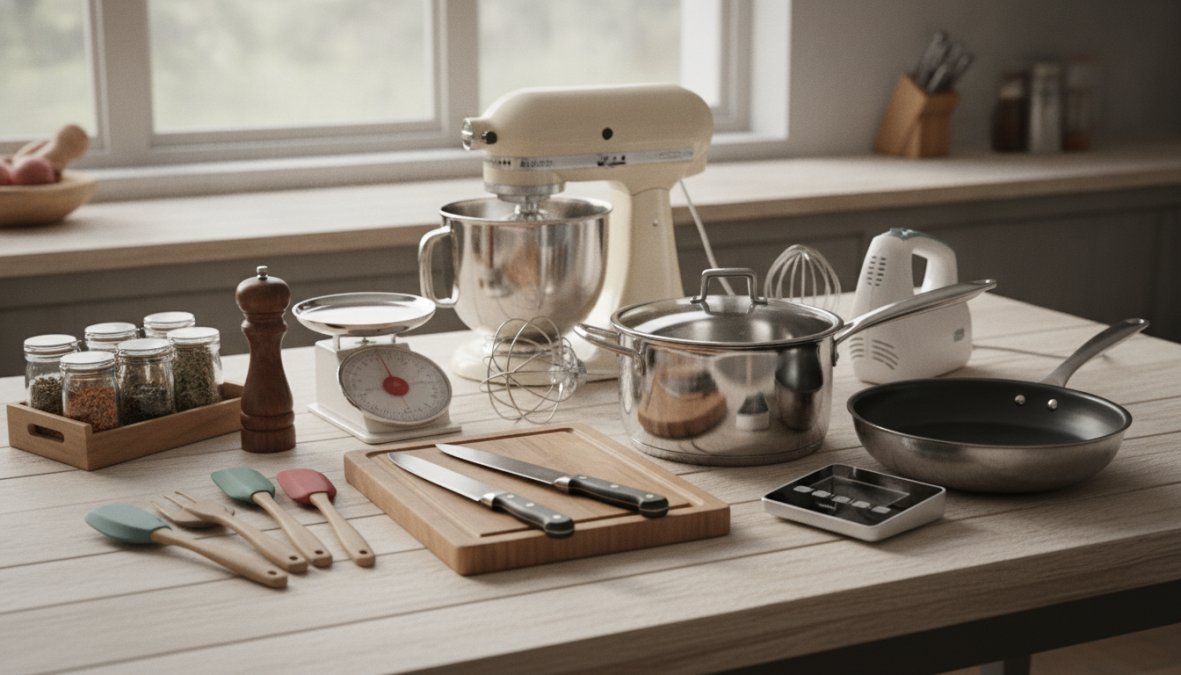
The smartest kitchen technology integration starts with fundamentals. Master knife skills before adding smart gadgets. Learn proper cookware care before upgrading to premium options. Build cooking confidence with reliable, simple tools. Then, selectively add smart technology where it genuinely improves your cooking experience.
Research from the American Culinary Federation indicates that home cooks who invest in quality fundamentals, sharp knives, proper cookware, and good organization, report higher cooking satisfaction than those who focus on gadgets.
Start with one upgrade. A sharp knife transforms your cooking immediately. Add a second upgrade when you've mastered the first. Build your kitchen gradually, choosing each tool with intention. Within six months, you'll have a functional kitchen that makes cooking enjoyable rather than frustrating.
Kitchen tool upgrades shouldn't feel overwhelming. Most home cooks need just five to seven core tools to handle virtually every cooking task. ShopVerse.life offers a curated selection of kitchen essentials designed for durability, ergonomic comfort, and reliable performance. Our 100% secure payment system, fast shipping worldwide, and 24/7 online support ensure you get the right tools quickly. Browse our kitchen collection today and discover why thousands of home cooks trust ShopVerse.life for simple ways to upgrade kitchen tools that actually improve their cooking.
Frequently Asked Questions
What are the most important kitchen tools every home cook should upgrade first?
Start with a quality chef's knife, a reliable meat thermometer for precision cooking, and durable mixing bowls. These three items form the foundation of functional kitchen essentials and directly improve your cooking basics and culinary performance. A sharp chef's knife reduces prep time, a thermometer prevents overcooking, and quality bowls enable better mixing and food preparation. These upgrades offer the highest return on investment for beginner cooks.
How do I know when it's time to replace kitchen utensils?
Replace kitchen utensils when handles crack or loosen, blades become dull despite sharpening, nonstick coatings peel, or mixing bowls develop cracks. Worn-out tools compromise food safety and cooking quality. Serrated knives that no longer cut cleanly, tongs with loose joints, and saucepans with warped bottoms all signal replacement time. Regular inspection of your cooking gear ensures optimal culinary performance and kitchen safety.
Are eco-friendly and sustainable kitchen tool upgrades worth the investment?
Yes, sustainable upgrades like FSC-certified wood cutting boards and stainless steel tools offer long-term value. While initial costs may be higher, durable materials last decades, reducing waste and replacement frequency. Eco-friendly options like seamless silicone spatulas and sustainable cookware eliminate harmful chemicals and reduce environmental impact. These upgrades align with both functional kitchen needs and responsible consumption practices.
What budget-friendly kitchen tool upgrades deliver the biggest performance improvement?
Affordable upgrades include a quality Y-peeler ($10-15), digital food scale ($25), kitchen shears ($30), and silicone spatula set ($20). These tools enhance workflow efficiency and precision cooking without major expense. Upgrading from dull knives to sharp ones and replacing warped cookware with flat-bottomed pans also improves cooking results significantly. Focus on tools you use daily for maximum impact on your functional kitchen.
This article was written using GrandRanker