

Tips for Avoiding Fake Online Products: A 2026 Guide
Table of Contents
- Why Fake Products Are a Growing Problem for Online Shoppers
- How to Identify Counterfeit Goods Before You Buy
- Signs of a Scam Website: What to Watch For
- Verify Retailers: Is This Website Legit Checker Methods
- Essential Tips for Avoiding Fake Online Products Safely
- How to Report Fake Products Online and Protect Others
- Extended Warranties and E-Waste Recycling: Added Protection
- Conclusion: Shop Smart and Protect Your Purchases
Tips for Avoiding Fake Online Products: A 2026 Guide
Last Updated: June 27, 2026
Counterfeit goods now account for a significant portion of items sold across major marketplaces, costing consumers billions annually. At ShopVerse.life, we've analyzed the most effective tips for avoiding fake online products. Below, we'll show you how to identify counterfeits, spot scam websites, verify retailers, and protect your purchases through smart shopping practices.
Why Fake Products Are a Growing Problem for Online Shoppers
Counterfeit goods represent one of the fastest-growing challenges in e-commerce. Scammers have become increasingly sophisticated at replicating authentic packaging and building seemingly legitimate storefronts.
Electronics, cosmetics, jewelry, designer goods, and tech accessories are particularly targeted because they command high prices and consumers often can't immediately detect the difference. Many fake products appear on the same platforms where legitimate sellers operate, making the assumption that platform presence equals legitimacy dangerously unreliable.
Many people discover their purchases are fake only after trying to use them, and getting refunds becomes a months-long battle with customer service.
How to Identify Counterfeit Goods Before You Buy
Spotting fake products before purchase is the most effective protection. This requires examining multiple signals simultaneously.
Inspect Product Photos and Descriptions Carefully
Authentic sellers invest in professional photography with consistent lighting and multiple views. Counterfeiters often use blurry images or photos lifted directly from manufacturer websites.
Examine packaging details closely for spelling errors, inconsistent fonts, misaligned logos, or color variations. Compare product photos to official images from the brand's website, counterfeiters often use slightly modified versions that reveal subtle differences in color, texture, or proportions.
Check descriptions for red flags. Authentic sellers write clear, grammatically correct descriptions. Counterfeiters often introduce errors during translation or modification, with awkward phrasing that doesn't match the photos shown.
Check for Authenticity Certificates and Serial Numbers
Most high-value products include authentication mechanisms. Jewelry comes with gemstone certifications. Electronics include serial numbers verifiable with manufacturers. Designer goods have authentication holograms or QR codes.
Request certificates before purchasing, legitimate sellers gladly provide documentation. If a seller refuses, that's a major red flag.
Many manufacturers allow you to verify serial numbers on their official websites. Ask the seller for the serial number and verify it yourself before completing purchase. Counterfeiters often use fake serial numbers that don't exist in manufacturer databases.
Signs of a Scam Website: What to Watch For
Not all fake products come from counterfeiters replicating legitimate goods. Some come from outright scam websites designed to take your money and disappear.
Red Flags in Website Design and Security
Professional retailers invest heavily in website design. Scam websites often look hastily constructed with obvious design flaws, misaligned images, or confusing navigation.
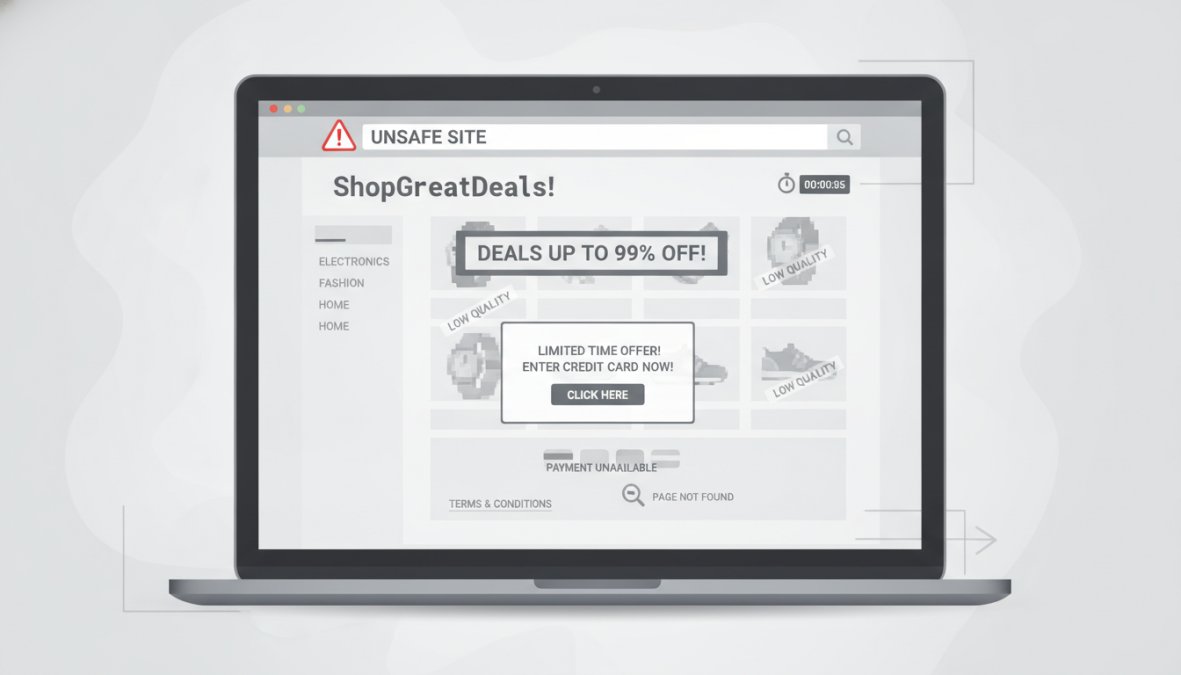
Check the website's SSL certificate, your browser shows a padlock icon next to the URL if the site uses HTTPS encryption. Legitimate retailers always use HTTPS. If you see a security warning, leave immediately.
Examine the URL carefully. Scammers create domain names that closely resemble legitimate brands with slight variations like "amazn.com" instead of "amazon.com". These look similar at a glance but lead to fake sites.
Look for contact information. Legitimate businesses provide phone numbers, email addresses, and physical addresses. Scam sites often provide no way to contact them. Try calling the number listed, if it's disconnected or doesn't match the business name, walk away.
Check the website's age using WHOIS lookup tools. Scam sites are often created recently and disappear within months. If a site was registered within the past few weeks with extensive product listings, that's suspicious.
Suspicious Pricing and Too-Good-to-Be-True Offers
If a product is priced significantly below market rate, investigate why. Compare prices across multiple retailers, if one site offers the same product at 70% below every other seller, something is wrong.
Watch for artificial urgency: "Only 2 items left in stock!" or "Sale ends in 2 hours!" These tactics push you to buy without thinking. Legitimate retailers use urgency occasionally, but if every product has countdown timers, you're probably on a scam site.
Verify Retailers: Is This Website Legit Checker Methods
Before entering payment information, verify you're dealing with a legitimate retailer.
Research Brand Authorization and Official Retailers
Visit the brand's official website and check their list of authorized retailers. If your retailer isn't listed, that's a red flag.
Search for the retailer's name combined with "scam," "fake," or "complaint." Look for patterns in complaints, if dozens of people report receiving counterfeits or non-delivery, trust those warnings.
Check the retailer's business registration through your state's Secretary of State office. If the business doesn't exist in official records, it's a scam.
Look for independent reviews on Trustpilot or the Better Business Bureau. Be cautious of sites with zero reviews or only five-star reviews, both suggest fake reviews.
Use Price Tracking Tools and Comparison Shopping
Price tracking tools like CamelCamelCamel show historical pricing, revealing whether the current price is genuinely discounted or artificially inflated then "discounted."
Compare the same product across multiple retailers. If one seller is dramatically cheaper, verify why. Extreme discounts often signal counterfeits.
| Verification Method | What It Checks | Red Flag If... |
|---|---|---|
| SSL Certificate | Secure connection | No padlock icon or HTTPS warning |
| Domain Age | How long site has existed | Registered within past 30 days |
| Contact Information | Business legitimacy | No phone/address or obviously fake |
| Brand Authorization | Seller legitimacy | Not listed on brand's official site |
| Price Comparison | Deal legitimacy | 70%+ cheaper than all competitors |
| Customer Reviews | Seller reliability | Only 5-star reviews or zero reviews |
| Business Registration | Legal existence | Doesn't exist in state records |
Essential Tips for Avoiding Fake Online Products Safely
The most effective protection combines multiple strategies applied consistently.
Prioritize Secure Checkout and Payment Protection
Always use payment methods that offer buyer protection. Credit cards provide chargeback options if you receive fake products. Services like PayPal add another layer of security because PayPal handles disputes rather than leaving you to fight with the merchant.
Never wire money or use untraceable payment methods like gift cards. Scammers specifically request these because they can't be reversed.
Look for secure checkout indicators. Legitimate retailers use established payment processors like Stripe, Square, or PayPal. If a site requires you to enter credit card information directly into their own form, that's a security risk.
Check your credit card statement after purchase. Scam sites sometimes charge more than displayed or make multiple charges. Dispute these immediately with your credit card company.
Review Customer Ratings and Warranty Coverage
Read reviews carefully rather than just looking at star ratings. Fake reviews often use generic language like "Great product!" Genuine reviews include specific details about actual use.
Look for reviews mentioning whether the product is authentic. Customers who received counterfeits often mention this explicitly, describing differences from expected authentic products.
Check the warranty offered. Authentic products come with manufacturer warranties. Counterfeits rarely include real warranties. If a seller offers no warranty or a vague one, that's suspicious.
Legitimate retailers stand behind their products with money-back guarantees if unsatisfied. If a seller refuses returns or offers only store credit for fake products, they're likely aware the products aren't authentic.
Understand Return Policy and Money-Back Guarantees
Before purchasing, read the return policy completely. Scam sites either have no return policy or require you to pay return shipping. Legitimate retailers offer free returns on counterfeit or damaged goods.
Most retailers offer 30-day returns. Some offer 60 or 90 days. If a seller offers only 7-day returns, they're limiting your ability to discover counterfeits after purchase.
Document everything if you receive a fake product. Take photos showing condition, packaging, and authentication failures. Keep all communications with the seller. This documentation strengthens refund requests or dispute filings.
How to Report Fake Products Online and Protect Others
When you discover a counterfeit product, reporting it protects other shoppers and holds bad actors accountable.
Document Evidence and File Complaints
Photograph the product from multiple angles showing how it differs from the authentic version. Include close-ups of packaging, serial numbers, and quality issues. Take screenshots of the product listing and all communications with the seller.
Write detailed notes about what made you conclude the product was fake, including specific differences and when you discovered the issue. Keep all original packaging and the product itself.
Report to Platforms, Brands, and Consumer Protection Agencies
Most e-commerce platforms have reporting mechanisms for counterfeits. Report through official channels, not seller messages.
Contact the brand directly. Most major brands have anti-counterfeiting teams that investigate reports and may take legal action. File complaints with the Federal Trade Commission and state attorneys general, which track patterns leading to enforcement actions.
Report the seller to payment processors. Provide documentation so they can track sellers with high fraud rates and eventually ban them.
Extended Warranties and E-Waste Recycling: Added Protection
Extended warranty programs offer additional protection for electronics and high-value items, particularly important since counterfeits often fail within weeks.
When products reach end-of-life, proper disposal matters. E-waste recycling programs prevent harmful materials from entering landfills. Many retailers accept electronics for recycling when you purchase replacements.
Counterfeit electronics pose particular recycling challenges because their composition is often unknown. Legitimate electronics manufacturers document material composition for safe recycling. When in doubt, contact your local waste management authority.
Protecting yourself from counterfeit products requires vigilance across multiple shopping stages. By inspecting product photos, verifying retailer legitimacy, using secure payment methods, and understanding return policies, you eliminate most fraud risks. When you encounter counterfeits, reporting them strengthens protections for the entire shopping community. For curated, authenticated products with full warranty protection, ShopVerse.life provides a vetted selection across electronics, home goods, fashion, and wellness categories. Every item includes authenticity verification, secure payment processing, and a money-back guarantee. Shop with confidence knowing your purchases are backed by our 100% secure payment system and dedicated customer support available 24/7.
Frequently Asked Questions
How can I tell if an online store is selling fake products?
Look for red flags like unusually low prices, poor product photography, grammatical errors in descriptions, missing contact information, and lack of secure checkout indicators. Verify the retailer is authorized by the brand, check customer reviews for authenticity complaints, and confirm they offer a clear return policy and money-back guarantee. Legitimate retailers typically display trust badges and offer secure payment options.
What are the best ways to identify counterfeit goods before purchasing?
Request detailed product photos from multiple angles, verify authenticity certificates and serial numbers with the manufacturer, and compare pricing across authorized retailers using price tracking tools. Check if the seller provides documentation like GRA certificates for jewelry or third-party appraisals. Read customer reviews specifically mentioning authenticity, and contact the brand directly if uncertain about a seller's legitimacy.
How do I report fake products online if I've already purchased them?
Document everything: take photos of the product, packaging, and any defects, and save all communications with the seller. Report the fake product to the marketplace platform (Amazon, eBay, etc.), the brand's official website, and consumer protection agencies like the FTC or your country's equivalent. File a chargeback with your credit card company if the seller refuses a refund, and leave honest reviews warning other shoppers about counterfeit items.
What should I look for when checking if a website is legit before buying?
Verify HTTPS encryption (padlock icon in the browser), check for a physical address and customer service contact details, confirm the domain name matches the official brand site, and review third-party trust certifications. Look for a clear return policy, warranty information, and secure payment options. Cross-reference the retailer on independent review sites and the Better Business Bureau to assess reliability and customer satisfaction history.
This article was written using GrandRanker