

Upgrade Your Kitchen Workflow: A Step-by-Step Guide
Table of Contents
- Understanding the Kitchen Work Triangle and Layout Efficiency
- How to Upgrade Your Kitchen Workflow With Efficient Layout Ideas
- Kitchen Organization for Efficiency: Storage and Cabinetry Solutions
- Smart Kitchen Appliances for Workflow Optimization
- Meal Prep Strategies to Streamline Your Kitchen Workflow
- Digital Integration and Sustainable Workflow Upgrades
- Common Mistakes to Avoid When Upgrading Kitchen Workflow
- Conclusion: Start Your Kitchen Workflow Upgrade Today
Upgrade Your Kitchen Workflow: A Step-by-Step Guide
Last Updated: July 25, 2026
Most kitchens are designed for aesthetics, not efficiency. At ShopVerse.life, we've helped thousands of homeowners transform their cooking spaces into smooth, functional zones where meal preparation feels manageable. The difference between a kitchen that works and one that doesn't often comes down to simple workflow optimization, not expensive renovations.
This guide breaks down practical strategies that separate high-performing kitchens from chaotic ones. Whether you're working with an existing layout or planning upgrades, these concepts apply immediately. We'll show you how to assess your kitchen footprint, optimize cooking zones, organize storage, and integrate smart solutions without gutting your kitchen.
Understanding the Kitchen Work Triangle and Layout Efficiency
The kitchen work triangle connects your three primary work stations: the refrigerator, the stove, and the sink. When positioned correctly, you minimize wasted steps and create natural flow for meal preparation.
The ideal distances are 4 to 9 feet between each point. If your refrigerator sits 15 feet from your sink, you're creating unnecessary traffic patterns and burning energy on every cooking session. This principle results from decades of kitchen ergonomics research showing which layouts reduce fatigue and increase efficiency.
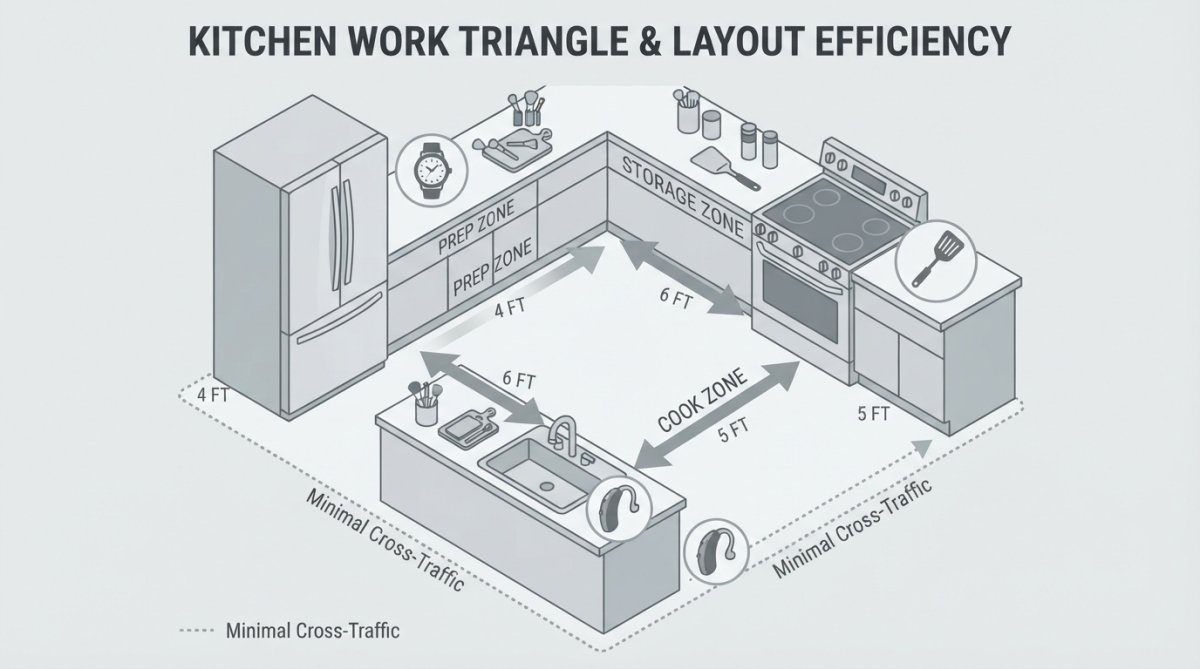
Treat the work triangle as a principle rather than a rigid rule. Kitchens with islands, multiple cooks, or unconventional layouts sometimes benefit from modified triangles or multiple work zones. What matters most is that the three primary stations don't force unnecessary movement patterns.
How to Upgrade Your Kitchen Workflow With Efficient Layout Ideas
Assessing your current kitchen footprint is the essential first step before making changes. Stand in your kitchen during meal prep and notice where you naturally move. Do you walk repeatedly between the refrigerator and sink? Are you reaching across your stove to access your cutting board? These patterns reveal friction points.
Assessing Your Current Kitchen Footprint
Your kitchen footprint determines what optimizations are realistic. A galley kitchen has different constraints than an L-shaped or U-shaped layout. Map out your current workflow by answering these questions:
- Where do you spend the most time during meal prep?
- Which appliances or storage areas require repeated movement across the kitchen?
- Are there bottlenecks where two people can't work simultaneously?
- How much counter space do you actually use versus what sits empty?
Many kitchens have dead zones that collect clutter but rarely contribute to cooking. Identifying these spaces lets you reclaim them for functional storage or prep areas. Your kitchen's efficiency depends less on square footage and more on how intentionally you use the space you have.
Optimizing Cooking Zones and Appliance Placement
Cooking zones are distinct areas where specific tasks happen: the prep zone centers around your cutting board and sink, the cooking zone orbits your stove and oven, and the storage zone includes your refrigerator and pantry. When these zones overlap or require excessive movement, your workflow suffers.
Appliance placement determines whether zones function smoothly. Your refrigerator should be the first stop in your workflow. Position your prep station (sink and cutting board) within arm's reach. Your stove should be the next logical step, ideally with countertop space on both sides for staging ingredients and plating.
Place frequently used small appliances in a secondary zone away from your main cooking triangle. This prevents them from consuming counter space where you actually need to work. Appliance placement also affects traffic flow. If your oven door swings into the main prep area, you've created a collision zone.
Kitchen Organization for Efficiency: Storage and Cabinetry Solutions
Storage and organization determine whether your kitchen workflow flows or stalls. A well-organized kitchen means you spend seconds finding what you need, not minutes digging through cabinets.
Smart Storage Strategies and Pantry Organization
Pantry organization starts with frequency. Items you use daily should be at eye level and within arm's reach of your prep zone. Specialty ingredients and seasonal items can go higher or deeper. This eliminates the frustration of constantly reaching, bending, or moving things to find what you need.
Consider vertical storage before expanding horizontally. Wall-mounted shelving above counters, magnetic strips for knives, and hooks for frequently used utensils reclaim space without requiring cabinet modifications. Many kitchens have underutilized vertical space that could hold 20-30% more items with minimal investment.
Drawer dividers transform deep drawers from chaotic piles into organized systems. Utensils, cooking tools, and gadgets should each have designated spots. When everything has a home, you spend less time searching and more time cooking.
Pantry organization extends to how you store dry goods. Clear containers let you see what you have at a glance. Label everything with purchase dates so you use older items first. Group similar items together so you reduce decision fatigue and prevent buying duplicates.
Countertop and Cabinetry Upgrades for Better Workflow
Countertop real estate is your most valuable kitchen asset. Start by removing items that don't belong on counters: rarely used small appliances, decorative items, and mail. These should live in cabinets or off the kitchen entirely.
Cabinetry upgrades don't always mean replacing everything. Pull-out shelves in lower cabinets make deep storage accessible. Lazy Susans in corner cabinets eliminate dead space. Vertical dividers organize baking sheets and cutting boards so you can grab what you need instantly.
Open shelving can improve workflow if used strategically. Store frequently used items on open shelves within your cooking zone. Reserve closed cabinets for items you use occasionally or want hidden from view. Every item on open shelving should earn its spot through regular use.
Smart Kitchen Appliances for Workflow Optimization
Modern kitchen appliances solve specific workflow problems when chosen intentionally. A high-powered blender reduces prep time for sauces and soups. A quality stand mixer handles dough work that would exhaust you manually. An instant-read thermometer eliminates guesswork from cooking temperatures.
However, not every appliance improves workflow. Many people buy gadgets that look useful but end up collecting dust because they don't fit into actual cooking patterns. Before investing in new appliances, ask whether they solve a genuine friction point in your current workflow.
Smart appliances add convenience but also complexity. They work best when they genuinely reduce friction rather than adding another layer of technology to manage. A basic refrigerator that keeps food cold reliably beats a smart fridge that requires troubleshooting.
The best appliance upgrades save you time on tasks you do regularly. If you make coffee every morning, a quality coffee maker is worth the investment. Match appliance choices to your actual cooking patterns, not aspirational ones.
Meal Prep Strategies to Simplify Your Kitchen Workflow
Meal prep strategies transform how efficiently you use your kitchen. Batch cooking reduces the number of times you activate your cooking zones. Instead of cooking dinner five nights a week, you cook twice and store portions for reheating.
Setting Up a Dedicated Prep Station
A dedicated prep station concentrates all your cutting, chopping, and ingredient staging in one location. This station should include your cutting board, a sharp knife, and containers for prepped ingredients. Position it near your sink for easy cleanup and near your refrigerator for quick access to fresh ingredients.
The prep station works best when physically separated from your cooking zone. This lets you prepare ingredients without interfering with someone cooking. In smaller kitchens, a portable cutting board or fold-down work surface creates a temporary prep station without permanent modifications.
Organization at your prep station matters. Keep your most-used knife sharp and accessible. Store cutting boards vertically so you can grab one without moving others. Keep a small trash container nearby for scraps, eliminating trips across the kitchen.
Creating Cleanup Stations for Traffic Flow
Cleanup stations separate dirty dishes and prep waste from your active cooking zone. A small staging area near your sink, a bowl for scraps, and a container for compostable items keeps your main workspace uncluttered while you're actively cooking.
Traffic flow improves when cleanup doesn't interfere with cooking. Position your trash and compost bins so someone can dispose of waste without crossing the cooking zone. A small dish rack near the sink lets you rinse items as you go rather than letting them pile up.
Clean as you cook rather than after. Wiping down surfaces, rinsing bowls, and putting ingredients away immediately prevents the kitchen from becoming chaotic mid-meal.
Digital Integration and Sustainable Workflow Upgrades
Digital integration is reshaping how modern kitchens function. Smart timers, recipe apps that sync with your shopping list, and inventory tracking systems reduce mental load. However, digital tools work best when they genuinely solve workflow problems rather than adding complexity.
A simple kitchen timer on your phone works fine. A smart speaker that lets you set hands-free timers while cooking is genuinely useful. A connected refrigerator that sends notifications when you're low on milk is convenient but not essential.
Sustainable workflow upgrades focus on reducing waste and energy consumption. Proper storage extends food life, reducing waste and saving money. Efficient meal planning prevents buying ingredients you won't use. Choosing durable, repairable appliances reduces your environmental footprint and saves money long-term.
Consider water usage during meal prep. A double-basin sink where you can rinse in one side while soaking in the other is more efficient than a single-basin setup. Low-flow faucets reduce water consumption without sacrificing functionality.
Energy-efficient appliances use less electricity while performing the same functions. An ENERGY STAR refrigerator costs slightly more upfront but saves money monthly. Over a decade, the savings exceed the premium.
Common Mistakes to Avoid When Upgrading Kitchen Workflow
The biggest mistake is renovating without understanding your actual workflow. Many people spend thousands on a beautiful kitchen that doesn't function better because they didn't diagnose what was actually broken. Assess your current workflow before making changes.
Overestimating counter space needs is common. Most kitchens have enough counter space, it's poorly organized. Before adding an island or extending counters, reclaim the space you already have by removing unnecessary items and reorganizing storage.
Underestimating storage needs is the opposite problem. You need enough cabinet space for everything you own plus room to grow. If your cabinets overflow, you'll never achieve workflow efficiency.
Placing appliances based on aesthetics rather than function creates workflow disasters. A beautiful stove in the wrong location means constant backtracking. Function first, aesthetics second.
Ignoring traffic patterns is another common mistake. If multiple people work in your kitchen or pass through it, your cooking zones need to accommodate that reality.
Not upgrading your knife and cutting tools is a subtle but significant mistake. A dull knife slows prep work and increases injury risk. A cutting board that slides around wastes energy. These basics directly impact workflow speed and safety.
Upgrading your kitchen workflow doesn't require a full renovation. It requires understanding how you actually cook, identifying friction points, and making intentional changes that solve real problems. Start by assessing your work triangle, organizing your storage, and setting up dedicated zones for prep, cooking, and cleanup.
For those looking to simplify their kitchen experience further, ShopVerse.life offers carefully curated kitchen essentials and organizational tools designed to enhance your cooking space. From precision timing devices like the 1pc 12 inch tempered glass wall clock with modern marble texture and gold Roman numerals that brings elegant functionality to your kitchen, to stylish solutions for maintaining your space, ShopVerse.life's curated collection helps you create a kitchen that's both beautiful and efficient. With 100% secure payments, fast shipping, and dedicated support, ShopVerse.life makes it easy to find exactly what you need to complete your kitchen workflow upgrade.
| Workflow Element | Optimization Strategy | Expected Impact |
|---|---|---|
| Work Triangle | Position refrigerator, stove, sink 4-9 feet apart | Reduces daily steps by 20-30% |
| Prep Station | Dedicate one area for cutting and ingredient staging | Cuts prep time by 15-25% |
| Storage Organization | Arrange items by frequency of use | Reduces search time by 40%+ |
| Appliance Placement | Position based on workflow sequence, not aesthetics | Improves efficiency by 25%+ |
| Cleanup Zones | Separate trash, compost, and dirty dishes from cooking | Maintains workspace clarity |
| Traffic Flow | Account for multiple cooks and kitchen passages | Prevents bottlenecks and collisions |
Kitchen Design Principles from the National Kitchen & Bath Association provides evidence-based guidelines for kitchen layouts that maximize efficiency. USDA Food Safety Guidelines for Kitchen Organization offers insights into how proper storage and workflow reduce contamination risks. Ergonomics Research on Kitchen Design from Cornell University demonstrates how layout choices reduce physical strain during meal preparation.
Frequently Asked Questions
What is the kitchen work triangle and why does it matter for my kitchen workflow?
The kitchen work triangle connects your refrigerator, stove, and sink, the three main work zones. Efficient placement of these appliances reduces unnecessary steps during food preparation and cooking. When these stations are properly positioned, you minimize traffic flow disruptions and create a logical workflow that saves time and reduces fatigue during meal prep and cleanup tasks.
How can I improve kitchen organization for efficiency without a full renovation?
Start with smart storage solutions: install drawer dividers, use vertical cabinetry space, and organize your pantry by meal prep categories. Add task lighting near work zones and create dedicated stations for different activities, prep, cooking, and cleanup. These kitchen organization for efficiency improvements require minimal investment but significantly streamline your daily workflow and reduce time spent searching for tools or ingredients.
What smart kitchen appliances for workflow improvement are worth the investment?
Prioritize appliances that reduce repetitive tasks: a quality food processor, electric kettle, or multi-cooker can streamline meal prep strategies and cooking times. Consider your specific cooking habits before purchasing. Smart appliances that integrate with timers or notifications help optimize workflow, but basic, reliable appliances often outperform trendy options. Focus on tools that address your most time-consuming kitchen tasks.
How do I know if my kitchen workflow upgrade is actually working?
Conduct a post-renovation workflow audit by timing your typical meal prep, cooking, and cleanup routines before and after changes. Track which zones you visit most frequently and identify any remaining bottlenecks. Notice improvements in kitchen equity and resale value through better functional design. Small adjustments based on your actual usage patterns often yield better results than following generic design principles alone.
This article was written using GrandRanker