

Zero Waste Kitchen on a Budget: Start Today
Table of Contents
- How to Start a Zero Waste Kitchen on a Budget: The Essentials
- Affordable Zero Waste Swaps for Your Kitchen
- DIY Zero Waste Kitchen Products You Can Make at Home
- Reduce Food Waste on a Budget Through Smart Planning
- Reusable Food Storage Cheap: Glass Jars and Beyond
- Common Mistakes to Avoid When Starting Zero Waste on a Budget
- Zero Waste Kitchen on a Budget: Your Action Plan
- Conclusion
Last Updated: July 26, 2026
How to Start a Zero Waste Kitchen on a Budget: The Essentials
Learning how to start a zero waste kitchen on a budget doesn't require spending thousands on specialty products or making drastic changes overnight. At ShopVerse.life, we've found that the most sustainable kitchens are built gradually, using what you already own and replacing items thoughtfully as they wear out. Zero waste living actually saves money once you stop buying single-use plastics and reduce food waste through intentional planning.
The biggest misconception is that you need expensive eco-friendly alternatives immediately. The reality is simpler: start with what you have, make one or two free swaps, and build from there. This approach works because it's sustainable financially and mentally, you're not overwhelming yourself with new habits or purchases, making you far more likely to stick with it long-term.
Why Budget Matters in Zero Waste Living
Sustainability shouldn't be a luxury only affordable to wealthy households. The barrier to entry for zero waste living has been artificially inflated by retailers selling premium products marketed as "eco-friendly." When you prioritize budget-conscious choices, you're making the most sustainable decision: using resources you already have rather than consuming new ones.
Research from EPA waste reduction guidelines shows that the average American household generates significant landfill waste, much of it preventable through simple behavioral changes rather than product purchases. A household that reduces food waste through meal planning saves more money than one that buys premium compostable containers but still throws away groceries.
| Change Type | Cost | Impact | Timeline |
|---|---|---|---|
| Meal planning & shopping lists | Free | Reduces food waste by 20-30% | Immediate |
| Using glass jars you own | Free | Eliminates plastic storage | Immediate |
| Composting at home | Free to $15 | Diverts 30% of kitchen waste | 1-2 weeks |
| DIY cleaning products | $5-10 | Replaces $30+ in store products | Ongoing |
| Buying bulk with containers | Varies | Saves 15-25% on groceries | Per purchase |
Affordable Zero Waste Swaps for Your Kitchen
Free and Low-Cost Alternatives to Single-Use Plastics
The easiest zero waste swaps cost nothing because they use items already in your home. Before buying anything, inventory what you have: glass jars from pasta sauce, jam, or canned goods; cloth napkins or old t-shirts; ceramic bowls with lids; and cardboard boxes. These items handle 80% of what single-use plastics do in a typical kitchen.
For storage, glass jars are your foundation. Save every jar that comes through your kitchen, pasta sauce jars, pickle jars, jam jars, and canning jars. They're free, durable, and last indefinitely. Label them with masking tape and a marker. A household can build a complete glass storage system without spending a cent.
Old cloth napkins, tea towels, and worn-out t-shirts become reusable wipes for cleaning, wrapping food, and covering bowls. Cut t-shirts into squares and keep them in a basket. They replace paper towels and plastic wrap almost entirely.
DIY Solutions vs. Buying New Products
The zero waste market sells you the idea that you need special products: beeswax wraps, silicone storage lids, bamboo containers, and branded reusable bags. DIY solutions often outperform purchased alternatives because they're customized to your specific needs.
Beeswax wraps cost $15-30 for a set of three. Homemade versions cost under $5 and last just as long. Glass bowls with ceramic or glass lids, which you likely already own, serve the same purpose and work better because they're stackable and visible.
DIY Zero Waste Kitchen Products You Can Make at Home
Budget-Friendly Cleaning Solutions
Commercial cleaning products generate plastic waste and cost significantly more than DIY alternatives. A zero waste kitchen on a budget relies on simple ingredients: vinegar, baking soda, castile soap, and essential oils. These four items replace nearly every cleaning product in your kitchen and cost under $15 total.
White vinegar cuts grease, disinfects, and deodorizes. Mix it 1:1 with water in a spray bottle for general cleaning. Baking soda is a gentle abrasive that scrubs without scratching. Make a paste with water for scrubbing pots, pans, and countertops. Castile soap is a plant-based liquid soap that's biodegradable and concentrated. One bottle costs $8-12 and lasts months because you use just a few drops per task.
Homemade Food Storage Alternatives
Glass jars handle most food storage needs. Pasta, grains, flour, sugar, nuts, and dried beans all store perfectly in glass jars with lids. They keep food fresh longer than plastic containers because glass doesn't leach chemicals and seals better.
For fresh produce, cloth bags made from old t-shirts or cotton scraps work as well as plastic produce bags. Cut fabric into rectangles, sew three sides, and leave one side open. These bags breathe better than plastic, keeping vegetables fresher longer and cost nothing if you use scrap fabric.
Covering food without plastic wrap requires creativity but saves money. Glass plates or ceramic bowls inverted over bowls work perfectly. Cloth napkins dampened slightly and draped over bowls keep food fresh while allowing air circulation.
Reduce Food Waste on a Budget Through Smart Planning
Meal Planning and Shopping List Strategies
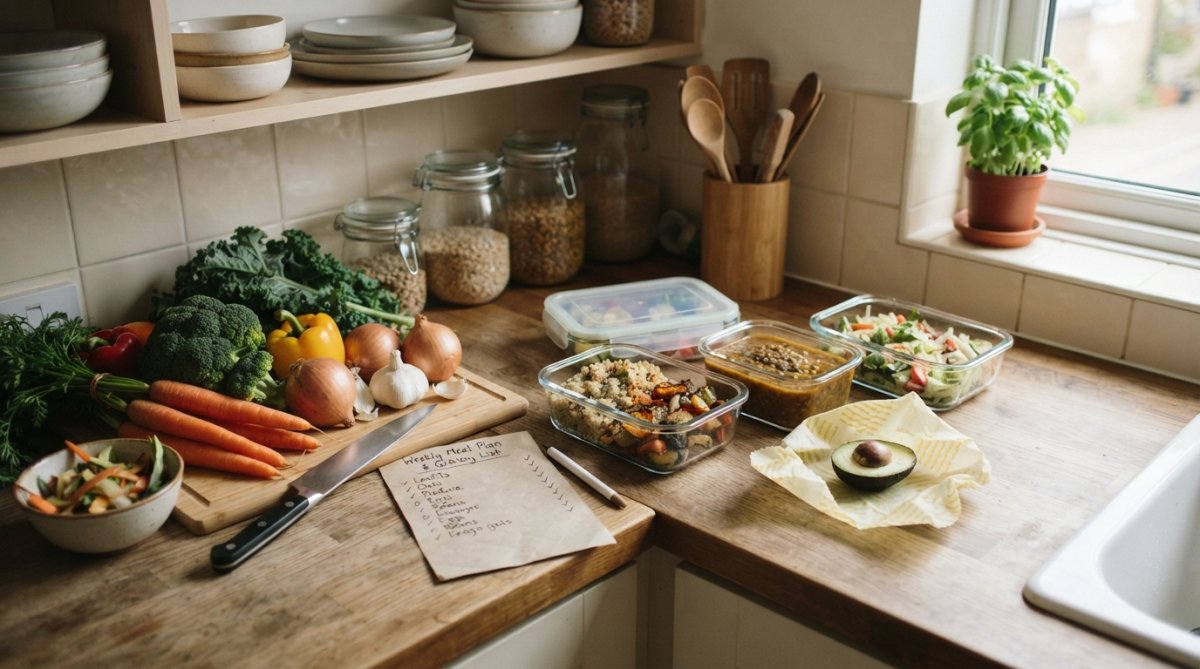
Food waste is the biggest hidden cost in most kitchens. Households throw away 30-40% of the food they purchase, which translates to wasted money and unnecessary landfill waste. A zero waste kitchen on a budget starts with intentional meal planning that uses every ingredient purchased.
Plan your meals around what you already have, not around recipes you want to make. Check your pantry, refrigerator, and freezer first. Build a week of meals using these ingredients, then make a shopping list only for what you're missing. This single habit cuts food waste by 20-30% immediately and reduces your grocery bill proportionally.
When making your shopping list, organize by store section and note quantities carefully. Use the "first in, first out" method in your refrigerator and pantry by placing new items behind older ones. Vegetables that are slightly wilted still work in soups, stews, and stir-fries.
Composting Kitchen Scraps Without Extra Cost
Composting is free and eliminates 30% of typical kitchen waste. You don't need a special composter or special knowledge. A simple pile in your yard works perfectly. If you have no yard, a container under your sink works for temporary storage until you can take scraps to a community garden or composting facility.
Start composting by collecting vegetable scraps, fruit peels, eggshells, coffee grounds, and tea bags in a container. Avoid meat, dairy, and oils, which attract pests. Keep your compost moist like a wrung-out sponge and stir occasionally. Within 3-6 months, you'll have dark, crumbly compost that improves garden soil or houseplant health.
If space is truly limited, many cities offer municipal composting programs where you drop off food scraps weekly. Check EPA composting resources to find programs in your area.
Reusable Food Storage Cheap: Glass Jars and Beyond
Finding Free and Low-Cost Storage Containers
Glass jars are the foundation of zero waste food storage and are completely free if you save jars from food purchases. Pasta sauce jars, canning jars, jam jars, and glass bottles from beverages all work. Within a month, you'll have enough jars to store your entire dry goods pantry.
Thrift stores sell glass jars, bowls, and containers for $0.25-1.00 each. Yard sales and community buy-nothing groups offer free or nearly-free containers. Post on local Facebook groups asking for glass jars or food storage containers, many people have extras taking up cabinet space.
For containers you can't find free or secondhand, invest in one or two quality glass containers with locking lids. These cost $15-25 each but last decades.
Organizing Your Pantry Without Buying New Products
Pantry organization doesn't require special organizers or labels. Glass jars already filled with ingredients are self-organizing because you can see what's inside. Group similar items together: grains in one area, baking ingredients in another, snacks in a third.
Cardboard boxes from deliveries or grocery purchases create dividers and shelf sections. Cut boxes to size and use them to separate different food categories. They're free, customizable, and replaceable.
Masking tape and a marker create labels for everything. Write the contents and purchase date on each jar. This simple system prevents buying duplicates and helps you use older items first.
Common Mistakes to Avoid When Starting Zero Waste on a Budget
The biggest mistake is buying too much too fast. People get excited about zero waste living and purchase expensive reusable products all at once. Start with what you have, make one change per week, and buy only when something wears out and needs replacing.
Another common error is perfectionism. You don't need to eliminate 100% of waste immediately. Reducing waste by 50% in your first month is excellent progress. Aiming for perfection leads to frustration and abandonment.
Ignoring food waste while focusing on packaging waste misses the biggest opportunity. A household that reduces food waste by 30% saves far more money than one that eliminates plastic bags but still throws away groceries.
Buying specialty "zero waste" products defeats the purpose. Using what you have and making do with ordinary items is always more sustainable than buying new, even if the new items are "eco-friendly."
Zero Waste Kitchen on a Budget: Your Action Plan
Start this week with three free changes. First, save every glass jar that enters your home and use them for food storage. Second, collect cloth scraps or old t-shirts and use them instead of paper towels. Third, plan your meals around what you already have before shopping.
Next week, make your first DIY cleaning solution using vinegar and baking soda. Mix them in a spray bottle and test on one surface. Once you see how well they work, you'll naturally use them for all cleaning tasks.
In week three, start a compost pile or container for food scraps. If outdoor space isn't available, keep scraps in a container in your freezer until you can deliver them to a composting facility.
By week four, you'll have made four significant changes without spending money. At this point, assess what's working and what needs adjustment. If you need additional storage containers, check thrift stores or community buy-nothing groups. If you want to upgrade one item, choose the one you use most frequently and invest in quality.
The zero waste kitchen on a budget is built gradually through intentional choices, not through purchasing power. Each week of small changes compounds into a sustainable system that saves money while reducing waste.
Starting a zero waste kitchen on a budget is entirely achievable without specialty products or significant expenses. The most effective approach uses what you already own, makes intentional choices about food and waste, and replaces items thoughtfully as they wear out. If you're looking for quality storage solutions and reusable products to support your zero waste journey, ShopVerse.life offers carefully curated home and kitchen essentials designed to last. With features like secure payments, fast shipping, and a money-back guarantee, ShopVerse.life makes it easy to invest in durable items that reduce waste over time. Start your zero waste kitchen today with what you have, and build from there.
Frequently Asked Questions
What are the cheapest zero waste swaps for the kitchen?
The most budget-friendly zero waste swaps are free or nearly free: reuse glass jars from pasta sauce or condiments for food storage, use old newspaper or cardboard for composting, save plastic containers from takeout, and repurpose cloth napkins and towels instead of paper ones. DIY cleaning products made from vinegar and baking soda cost pennies. Start with what you already have before buying specialized zero waste products. Many effective sustainable swaps require zero investment, just a shift in how you use existing items.
How can I reduce food waste on a budget without special products?
Meal planning is your biggest money-saver and waste-reducer combined. Write a shopping list based on planned meals, buy only what you need, and store food properly in repurposed containers. Use vegetable scraps for broth, freeze overripe fruit for smoothies, and eat leftovers intentionally. Start a compost bin using a cardboard box or old bucket, no special equipment needed. These practices reduce food waste while saving money, making them the most budget-conscious zero waste strategies available.
Is a zero waste kitchen really cheaper in the long run?
Yes, but only if you avoid the trap of buying premium zero waste products. The cost-benefit analysis favors zero waste living when you focus on DIY alternatives and reusing what you have. Meal planning reduces food waste and grocery spending. Composting eliminates waste management costs. Reusable containers and bags eliminate ongoing single-use plastic purchases. However, buying expensive beeswax wraps, silicone bags, and specialty products upfront can offset savings. Start free, then invest gradually in items that replace recurring expenses.
Can I practice zero waste in a small apartment or rental?
Absolutely. Zero waste for renters focuses on what you control: meal planning, composting in a small container, using reusable bags and containers, and DIY cleaning products. You don't need permission to reduce waste. Skip large composting systems, use a small bin under the sink or freeze scraps for drop-off at farmers markets. Reusable containers take minimal space. Many zero waste practices are invisible to landlords and require no modifications, making them perfect for temporary housing or small kitchens.
This article was written using GrandRanker