

Benefits of Using Curated Online Marketplaces
Table of Contents
- What Makes Curated Online Marketplaces Different
- How to Identify Reliable Online Marketplaces
- Building Customer Trust Through Vendor Vetting
- Curated vs. Open Marketplace Models: Key Differences
- Why You Should Buy Electronics Online From Curated Sources
- How Curation Drives Conversion and Customer Retention
- Conclusion
Last Updated: August 17, 2026
What Makes Curated Online Marketplaces Different
Curated online marketplaces are retail platforms where a dedicated team of experts actively selects, vets, and manages the vendor base and product inventory rather than allowing any seller to list items freely. This fundamental difference shapes everything about the shopping experience, from product quality to buyer confidence.
The distinction matters more than it might initially appear. In an open marketplace model, anyone can become a vendor with minimal barriers to entry. A curated approach introduces gatekeeping, not as a limitation, but as a quality filter. Every vendor undergoes vetting before approval. Every product category is reviewed for authenticity, safety, and value alignment. The result is a fundamentally different shopping environment.
This curation process directly impacts your experience as a buyer. You're not sifting through thousands of listings with wildly inconsistent quality or authenticity concerns. Instead, you're shopping within a pre-filtered ecosystem where the platform has already eliminated counterfeit products, unreliable sellers, and items that don't meet baseline quality standards. ShopVerse.life operates on this principle, every electronics item, home good, and wellness product in the catalog has been selected for reliability and quality.
The operational difference is substantial. Open marketplaces prioritize volume and scale. Curated marketplaces prioritize brand positioning and customer trust. That's not ideology, it's a deliberate trade-off. A curated model means slower growth in listings but faster growth in buyer confidence. It means fewer products but higher conversion rates. It means higher vendor standards but stronger platform integrity.
How to Identify Reliable Online Marketplaces
Identifying a reliable online marketplace requires looking beyond surface-level promises. Several concrete signals separate trustworthy platforms from those that prioritize growth over quality.
Vendor vetting transparency is the first indicator. Reliable marketplaces publish their vendor approval criteria. You should be able to understand what standards sellers must meet before listing products. Some platforms require business registration verification. Others conduct background checks or require minimum seller ratings. The specificity matters. Vague language like "we work with trusted sellers" signals insufficient vendor governance. Clear criteria signal operational rigor.
Counterfeit prevention measures reveal how seriously a platform takes product authenticity. Look for explicit anti-counterfeiting policies. Does the marketplace verify product authenticity for electronics? Do they work directly with brand manufacturers to confirm legitimacy? Reliable platforms often display authentication badges or certifications on product listings. They may require sellers to provide proof of authorization from brands they represent. This infrastructure is expensive to maintain, which is exactly why it's a reliable trust signal.
Return and refund policies demonstrate confidence in quality control. Marketplaces that stand behind their curation typically offer straightforward return processes. ShopVerse.life's money-back guarantee exemplifies this, it signals that the platform is confident enough in its vendor vetting and product selection to absorb return costs. Marketplaces with restrictive return policies or lengthy refund timelines often lack confidence in their quality assurance processes.
Customer support responsiveness is a practical indicator. Reliable marketplaces maintain 24/7 support channels. They respond to issues within hours, not days. Test this before committing to significant purchases. Send a pre-purchase question to support. How quickly do they respond? Is the answer helpful or generic? Platforms that invest in responsive support typically invest in quality control across all operations.
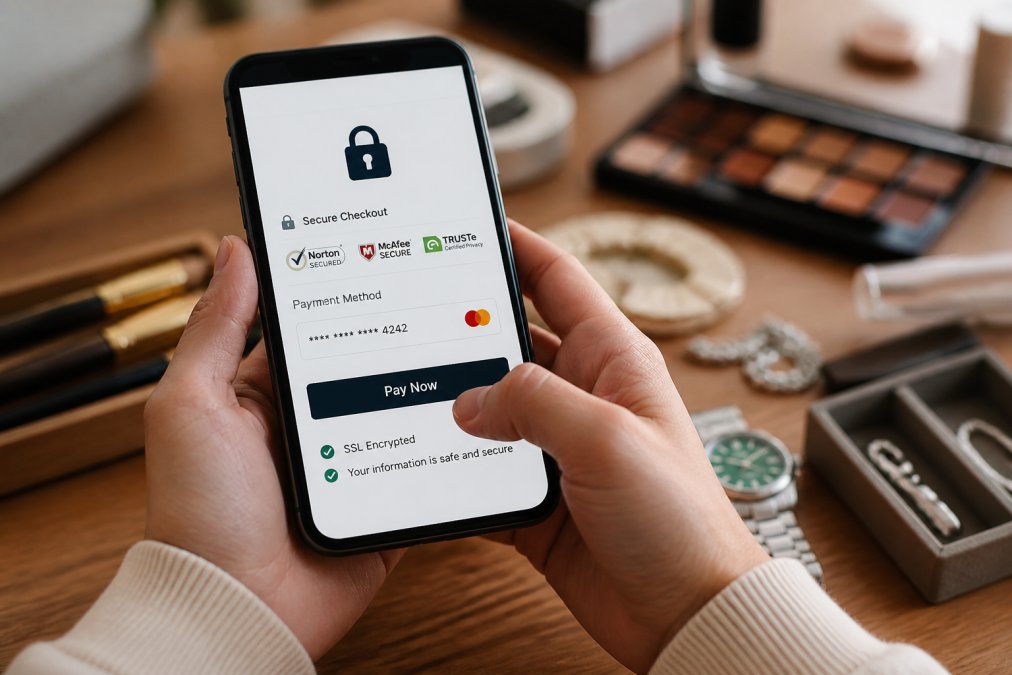
Data security implementation directly affects your trust. Look for SSL encryption on checkout pages (indicated by the padlock icon in your browser). Reliable marketplaces display security certifications. They clearly explain payment security measures. They offer secure payment options, credit cards, digital wallets, or third-party payment processors that protect your financial information. Platforms that lack these visible security signals are signaling insufficient investment in transactional security.
Building Customer Trust Through Vendor Vetting
Vendor vetting is the operational foundation of customer trust in curated marketplaces. Without rigorous vendor governance, curation is merely marketing language.
The vetting process typically involves multiple stages. Initial screening verifies seller legitimacy, business registration, tax identification, and basic compliance. For electronics specifically, this stage confirms that sellers are authorized resellers or direct manufacturers. This prevents gray-market products and unauthorized distributors from listing items.
The second stage examines seller performance history. Reliable marketplaces track metrics like order fulfillment speed, return rates, and customer ratings. New sellers often face higher scrutiny or restrictions until they demonstrate consistent performance. Established sellers with strong track records receive more favorable terms. This creates a performance-based hierarchy that incentivizes quality.
Ongoing compliance monitoring is the third stage. Curated platforms don't vet once and then ignore vendors. They continuously monitor seller performance against established standards. If a seller's return rate spikes, customer complaints increase, or quality issues emerge, the platform investigates. Poor performers face warnings, restrictions, or removal. This creates accountability that open marketplaces cannot enforce at scale.
Brand consistency enforcement ensures that products align with platform positioning. A marketplace focused on premium lifestyle products will reject sellers offering counterfeit luxury goods or low-quality knockoffs. This consistency maintains brand equity across the entire platform. Buyers develop confidence that anything they find meets a baseline quality standard.
The financial impact of rigorous vendor vetting is significant. Platforms that invest in quality control see higher customer retention rates. Repeat customers drive efficiency in advertising and targeting because acquisition costs decrease. New customers arrive through word-of-mouth rather than paid acquisition. The platform's value proposition becomes self-reinforcing, quality attracts customers, who generate positive reviews, which attracts more customers.
Curated vs. Open Marketplace Models: Key Differences
Understanding the structural differences between curated and open models clarifies why curation matters for specific shopping scenarios.
| Aspect | Curated Model | Open Model |
|---|---|---|
| Vendor Entry | Requires approval after vetting | Minimal barriers, anyone can list |
| Product Consistency | Standardized quality baseline | Highly variable quality |
| Counterfeit Risk | Actively prevented | Buyer responsibility to verify |
| Return Process | simplified, platform-backed | Seller-dependent, variable |
| Price Range | Premium positioning | Wide price variation |
| Customer Support | Platform-provided, 24/7 | Seller-dependent |
| Shopping Experience | One-stop shop, simplified choice | High volume, more research required |
| Average Order Value | Typically higher | Variable |
The curated model prioritizes user experience and brand positioning. Fewer products means easier decision-making. Consistent quality means fewer purchase regrets. Reliable support means faster issue resolution. These factors drive higher average order value because customers are willing to pay premium prices for the simplified, trustworthy experience.
The open model prioritizes seller volume and marketplace scale. More listings attract more traffic. Lower barriers to entry mean rapid growth. The trade-off is buyer responsibility for verification. Customers must research sellers, check ratings, read reviews, and assess authenticity themselves. This creates friction in the shopping journey but appeals to price-conscious buyers willing to invest time in research.
For specific categories like electronics, the model difference is pronounced. Electronics require authenticity verification because counterfeit components are common and potentially dangerous. A curated approach to electronics marketplace efficiency means buyers can trust that items are genuine without extensive research. An open model shifts that burden to the buyer, creating conversion friction for risk-averse shoppers.
The operational cost difference is substantial. Curated models require investment in vendor governance, quality assurance, and compliance monitoring. These costs are reflected in higher product prices or lower platform margins. Open models minimize operational costs by outsourcing quality control to buyers. The savings are passed to sellers, enabling lower prices. Neither model is objectively superior, they serve different market segments and shopping behaviors.
Why You Should Buy Electronics Online From Curated Sources
Buying electronics from curated sources addresses specific risks that open marketplaces cannot effectively mitigate.
Counterfeit electronics represent a genuine safety concern, not merely a financial one. Fake components in power supplies, batteries, or charging devices can malfunction, overheat, or fail catastrophically. Counterfeit semiconductors in audio equipment or computing devices may perform unpredictably or fail prematurely. A curated marketplace directly addresses this risk through vendor vetting and product authentication. Sellers must prove authorization to sell brand-name electronics. Products are verified against manufacturer specifications before listing.

Quality assurance in electronics requires technical expertise. Open marketplaces cannot reasonably verify that a wireless router meets performance specifications or that a laptop has genuine components. Curated platforms employ product specialists who understand electronics categories. They evaluate products against industry standards. They verify warranty coverage and manufacturer support. This expertise reduces buyer risk substantially.
Return process reliability matters more for electronics than for many product categories. If an electronics item arrives defective or fails to meet specifications, you need a straightforward return process. Curated marketplaces like ShopVerse.life handle returns directly rather than routing disputes through individual sellers. This centralized approach means faster resolution and lower friction. You're not negotiating with a seller in another country or waiting weeks for a response.
Warranty and support alignment is a practical advantage. Curated platforms often verify that products include valid manufacturer warranties. They coordinate with vendor support to ensure customers can access technical assistance. Open marketplaces often leave customers to navigate warranty claims directly with sellers, creating complications if sellers become unresponsive.
The one-stop shop advantage simplifies purchasing decisions. Rather than comparing electronics across multiple platforms, you can consolidate purchases within a single curated ecosystem. This reduces decision fatigue and creates a simplified shopping experience. For busy professionals and parents managing household needs, this efficiency has real value.
How Curation Drives Conversion and Customer Retention
Curation directly impacts conversion rates and repeat purchase behavior through mechanisms that extend beyond simple product quality.
Reduced decision friction is the primary conversion driver. Buyers facing 500 electronics options experience choice paralysis. Buyers facing 50 curated options make decisions faster. Simplified choice architecture increases conversion rates because customers complete purchases rather than abandoning carts during research phases. This translates to higher average order value per visitor.
Trust acceleration shortens the customer journey. A buyer entering a curated marketplace experiences immediate credibility signals. Trust badges, vendor vetting transparency, and security certifications reduce purchase anxiety. Customers move from discovery to decision faster. This efficiency compounds across multiple purchases, first-time buyers become repeat customers because the experience removed friction.
Post-purchase satisfaction drives retention. Customers who receive authentic, high-quality products as expected become loyal repeat buyers. They're more likely to recommend the platform to peers. They consolidate more purchasing categories within the platform over time. A single positive electronics purchase can lead to subsequent purchases across home goods, wellness products, and gifts.
Data-driven insights enable platforms to optimize the customer journey. Curated marketplaces track which products convert, which categories drive repeat purchases, and which vendor offerings create satisfaction. This data informs inventory decisions, vendor relationships, and marketing strategy. Over time, the platform becomes increasingly aligned with customer preferences, driving higher conversion rates and customer lifetime value.
Retention metrics reveal curation's financial impact. Platforms with strong vendor governance and quality control see higher repeat purchase rates. Customers who trust the platform's curation process shop more frequently and across more categories. They're less price-sensitive because they value the simplified, trustworthy experience. This customer loyalty reduces acquisition costs and increases profitability.
The intersection of conversion optimization and customer retention creates a compound effect. Higher conversion rates generate more first-time buyers. Better post-purchase experiences convert first-time buyers into repeat customers. Repeat customers generate higher lifetime value and lower acquisition costs. This virtuous cycle is why curated marketplaces can sustain premium positioning while growing market share.
Navigating online shopping safely requires more than just finding the lowest price. It requires confidence that products are authentic, vendors are reliable, and your transaction is secure. Curated online marketplaces address these concerns through rigorous vendor vetting, quality assurance, and customer-focused support. ShopVerse.life exemplifies this approach, with curated premium picks across electronics, home essentials, and wellness products, 24/7 online support, 100% secure payment systems, and a money-back guarantee, the platform removes the guesswork from online shopping. Whether you're upgrading your home office with reliable electronics or finding the perfect gift, shopping from curated sources means investing in authenticity, quality, and peace of mind. Shop all categories with confidence at ShopVerse.life.
Frequently Asked Questions
What are the main benefits of using curated online marketplaces instead of open marketplaces?
Curated online marketplaces reduce decision fatigue by pre-selecting quality vendors and products based on strict standards. You get vendor vetting, counterfeit prevention, and consistent brand positioning, meaning fewer returns and higher buyer confidence. Open marketplaces offer volume but no quality guarantees; curated platforms trade breadth for reliability, which saves time and reduces purchasing risk.
How do curated marketplaces protect me from counterfeit products when I buy electronics online?
Curated platforms implement vendor governance through rigorous vetting processes, supply chain transparency checks, and ongoing quality assurance audits. Vendors must meet authentication standards and provide proof of legitimacy. If a counterfeit item slips through, curated marketplaces typically offer stronger buyer protection and faster resolution than open platforms, backed by their reputation and platform integrity.
Are curated marketplace prices higher, and is the premium worth it?
Curated marketplaces often cost more upfront, but the premium covers vendor vetting, quality assurance, faster customer support, and buyer protection guarantees. You pay for platform integrity and reduced risk of fraud or defective products. Whether it's worth it depends on your priorities: if you value time, security, and reliability over hunting for the lowest price, curation delivers measurable value.
How do curated marketplaces improve the customer journey compared to shopping across multiple sites?
A curated marketplace serves as a one-stop shop with consistent user experience, unified payment security, and centralized support. Instead of managing accounts across different platforms, you navigate one trusted ecosystem with algorithmic curation that learns your preferences. This streamlines the shopping experience, reduces friction at checkout, and builds customer retention through familiarity and reliability.
This article was written using GrandRanker