

How to Soundproof a Home Office on a Budget
Table of Contents
- Start by Finding Where the Noise Gets In
- Cheap Soundproofing Materials That Actually Work
- DIY Home Office Soundproofing: A Step-by-Step Plan
- Door Soundproofing Ideas for Any Budget
- Soundproofing a Home Office for Renters Without Losing the Deposit
- What to Realistically Expect (and How to Measure It)
- Conclusion
- Frequently Asked Questions
Last Updated: October 14, 2026
Start by Finding Where the Noise Gets In
You can spend a fortune on acoustic panels and still hear your neighbor's lawnmower, which is why knowing how to soundproof a home office on a budget matters. The problem usually isn't the walls.
Learning how to soundproof a home office on a budget starts with diagnosis, not shopping. Sound behaves like water: it slips through the smallest openings, then spreads everywhere.
Walk around your office and listen. Then check these common entry points:
- Door gaps at the bottom and sides
- Window frames that don't seal tight
- Electrical outlets on shared walls
Blocking vs. Absorbing: Two Different Jobs
Sound blocking stops noise from entering your room. Sound absorption reduces echo and reverb inside the room.
They solve different problems, and most people mix them up. Heavy, airtight materials block sound. Soft, porous materials absorb it. If your calls echo, you need absorption. If you hear traffic, you need blocking.
Match the Fix to the Noise Type
Different noise needs different solutions. A barking dog next door behaves nothing like an echo inside your own room.
- Neighbor noise and voices: seal gaps, add mass to shared walls
- Traffic and low rumbles: block windows, add dense barriers
- Echo and reverb on calls: add soft furnishings, rugs, panels
Get this match right, and cheap fixes outperform expensive ones.
Cheap Soundproofing Materials That Actually Work
Cheap soundproofing materials work best when they add mass or seal air. Skip anything marketed as a "miracle" panel.
Here's what earns its place in a budget setup:
| Material | Best For | Rough Cost Tier | Installation Effort |
|---|---|---|---|
| Acoustic caulk | Sealing gaps | Low | Easy |
| Weather-stripping | Door and window edges | Low | Easy |
| Door sweep | Bottom door gaps | Low | Easy |
| Solid-core door | Replacing hollow doors | Medium | Moderate |
| Mass-loaded vinyl | Adding wall mass | Medium | Moderate |
| Acoustic panels | Cutting echo | Medium | Easy |
| Heavy curtains | Window noise | Low | Easy |
| Rugs and soft furnishings | Reducing reverb | Low | Easy |
The U.S. Department of Energy guide to air sealing explains how sealing air leaks improves both comfort and noise control. That's the principle behind every cheap fix here.
DIY Home Office Soundproofing: A Step-by-Step Plan
DIY home office soundproofing follows a clear order: diagnose, seal, add mass, then absorb. Skip a step and you'll spend money on treatments that don't touch your actual noise problem.
Here's the sequence, organized by budget tier so you can stop at any point and still get results.
Tier 1: Free Fixes (Do These First)
Before buying anything, run a 20-minute diagnostic. It costs nothing and prevents wasted spending.
- Close the door and listen. Play a podcast or white noise outside the door. Walk the perimeter of the room. Note where sound is loudest.
- Feel for moving air. On a windy day, run your hand along door frames, window edges, baseboards, and outlet covers on shared walls. Air movement means sound movement.
- Check the outlet and switch plates. Outlets on shared walls are common leak paths because the electrical box is often open to the wall cavity behind it.
- Listen at the floor. If you hear footsteps or voices from below, the leak is structural, not a gap you can caulk.
Write down your top two leak locations. Those get fixed first.
Tier 2: Low-Cost Fixes (Under $50 Total)
These deliver the highest return per dollar for most home offices.
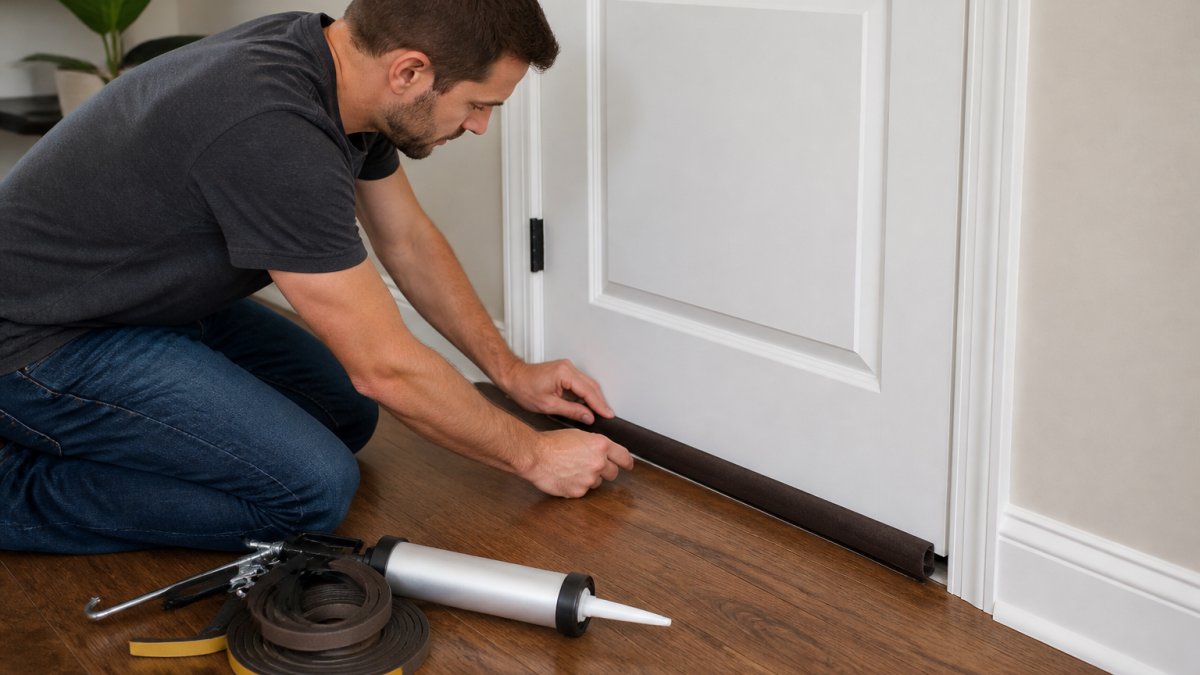
- Door sweep or draft stopper: seals the bottom gap, often the single largest leak. Look for a rubber or silicone sweep that compresses against the floor.
- Weather-stripping: self-adhesive foam or V-strip tape around the door stop and window sashes.
- Acoustic caulk: a flexible, non-hardening sealant for gaps at the door frame, window frame, and baseboard. Standard painter's caulk cracks over time and loses its seal.
A common pattern is that these four fixes together cut perceived noise from hallways and adjacent rooms noticeably, especially for speech and mid-frequency sound.
Tier 3: Moderate Fixes ($50-$200)
Add these once the cheap leaks are sealed.
- Heavy soundproof curtains: look for dense, multi-layer fabric with a tight weave. They reduce window noise and cut echo. They do not block low-frequency traffic rumble well.
- A solid-core or mass-loaded door: the biggest single upgrade for door noise. A hollow-core door is essentially a drum; a solid-core door adds mass and blocks far more sound.
- Mass-loaded vinyl (MLV): a dense, flexible barrier you can hang behind drywall, inside a door frame, or over a shared wall. It adds mass without major construction.
Tier 4: More Involved Upgrades ($200+)
Only pursue these if the cheaper tiers didn't get you far enough, or if you own the space.
- Adding a second layer of drywall with a damping compound between layers. This adds mass and decoupling to a shared wall.
- Building a room-within-a-room using resilient channel and staggered studs. Effective but expensive and disruptive.
- Replacing a hollow door with a solid-core door plus a full perimeter seal kit.
Step 1: Seal the Door Gaps
Air gaps around doors are the number one leak in most home offices. Seal them before anything else.
Run your hand around the door frame while noise plays outside. Feel moving air? That's your leak. Apply acoustic caulk or acoustic sealant to the frame, then add weather-stripping to the door stop.
For the bottom gap, install a door sweep or draft stopper. This single fix often delivers the biggest improvement per dollar.
Step 2: Treat Windows and Walls
Windows leak sound through thin glass and loose frames. Walls leak through outlets and cracks.
Start with soundproof curtains or a heavier window treatment. Then seal window gaps with caulk. On walls, add acoustic panels or acoustic foam to reduce echo, and place a rug on hard floors.
For extra mass, consider mass-loaded vinyl behind drywall or a layer of dense insulation.
Door Soundproofing Ideas for Any Budget
Door soundproofing ideas range from a few dollars to a full door replacement. Start small and add layers as needed.
The upgrade path looks like this:
- Add a draft stopper to the bottom gap
- Apply weather-stripping around the frame
- Seal the frame with acoustic caulk
- Replace a hollow door with a solid-core door
- Add mass-loaded vinyl to the door face
A solid-core door blocks far more sound than a hollow one. If you rent, skip the replacement and stack the cheaper layers instead.
Soundproofing a Home Office for Renters Without Losing the Deposit
Soundproofing a home office for renters means reversible fixes only. Nothing drilled, glued, or permanently mounted.
Focus on these rental-friendly options:
- Tension rods with heavy soundproof curtains
- Peel-and-stick weather-stripping and draft stoppers
- Freestanding acoustic panels
These come off cleanly at move-out. For more on rental-friendly home upgrades, HUD's guidance on tenant rights and property care offers useful context on what renters can and can't modify.
What to Realistically Expect (and How to Measure It)
Realistic expectations matter more than any product claim. Sealing gaps and adding soft furnishings won't create a recording studio, and no budget fix will silence low-frequency traffic rumble coming through a shared foundation.
The Physics You Need to Know
Two different mechanisms are at work, and they solve different problems:
- Absorption (foam, curtains, rugs) reduces echo and reverb inside the room. It makes calls sound clearer and the room feel calmer. It does almost nothing to stop noise coming through walls, doors, or windows.
- Blocking (mass, airtightness, decoupling) reduces noise transmission from outside the room. It requires weight and a continuous seal. A gap the size of a pencil eraser can defeat thousands of dollars of mass.
This is why a room full of acoustic foam can still let in every word of a neighbor's conversation. Foam absorbs; it doesn't block.
What Budget Fixes Typically Deliver
Here's a realistic picture, based on common patterns:
- Sealing door and window gaps: noticeable drop in speech and mid-frequency noise from hallways and adjacent rooms. Often the biggest single improvement.
- Heavy curtains: softer window noise and reduced echo. Limited effect on low-frequency traffic rumble.
- Acoustic panels: clearer calls, less reverb. Minimal effect on noise coming through walls.
How to Measure Before and After
You don't need lab equipment. A phone-based sound level meter app is enough to compare conditions.
- Pick a steady noise source. A podcast, white noise track, or a fan running outside the office works well. Consistency matters more than volume.
- Measure the baseline. Stand in the center of the room, hold the phone at ear height, and record the level for 30 seconds. Note the average reading.
- Apply one fix at a time. Seal the door, then measure. Add weather-stripping, then measure. This isolates what actually helped.
- Compare averages, not peaks. A 3-5 dB drop is often perceptible; a 10 dB drop sounds roughly half as loud to most listeners. Small numbers matter more than they seem.
- Test with speech, not just tone. Speech intelligibility is what most people actually care about in a home office. If you can no longer make out words from the next room, the fix worked.
Set a Realistic Target
Aim for a room where you can take a call without the other person hearing your neighbor's dog, and where your own voice doesn't echo back at you. That's achievable on a modest budget. A fully silent, studio-grade room is not, without construction-level changes.
Conclusion
Noise leaking into your office is a solvable problem, and it rarely requires a big budget. Start by finding the gaps, then seal, add mass, and absorb in that order.
ShopVerse.life is your premier destination for curated, high-quality products designed to elevate your everyday lifestyle. Browse our home office collection and build a quieter workspace today.
Frequently Asked Questions
What is the cheapest way to soundproof a home office?
Sealing air gaps is the cheapest first step. A foam door sweep and weather-stripping for one door usually run under $40 total, and acoustic caulk for baseboards costs about $8 to $12 per tube. These target the gaps where sound leaks most. Heavier options like mass-loaded vinyl or solid-core doors cost more and work best after the cheap fixes are done.
Do rugs and curtains actually reduce noise in a home office?
They reduce echo and reverberation inside the room, which makes calls sound clearer, but they do little to block noise coming through walls or doors. A thick area rug with a pad and heavy, layered curtains help absorb reflected sound. For blocking neighbor or traffic noise, pair them with gap sealing and added mass on the shared wall.
Do acoustic panels soundproof a room or just reduce echo?
Acoustic panels mainly reduce echo and improve room acoustics. They absorb sound waves bouncing inside the room, so your voice sounds tighter on calls, but they do not stop noise from passing through walls. To block sound transmission, you need mass and an airtight seal, not foam. Panels are a useful addition after sealing and mass are handled.
What can renters do to soundproof a home office without damaging walls?
Renters should focus on reversible fixes: removable weather-stripping, a tension-rod door seal, heavy curtains on existing rods, freestanding acoustic panels, and rugs. These can be removed without marks or holes. Avoid drilling, permanent caulk, or wall-mounted panels. Document the room before and after, and check your lease for rules on adhesives.
A quieter home office starts with one small fix, not a full renovation. ShopVerse.life makes it simple to find the right sealing, curtain, and panel picks in one place, backed by secure checkout and 24/7 support. Get started with ShopVerse.life and turn your office into a space you can actually focus in.