

Most Reliable Kitchen Appliance Brands in 2026
Table of Contents
- What Makes a Kitchen Appliance Brand Reliable
- Average Lifespan of Kitchen Appliances by Type
- How to Choose Reliable Kitchen Appliances
- Appliance Maintenance Tips for Durability
- Repair Frequency and Service Call Data
- When to Repair vs. Replace Your Kitchen Appliances
- Supply Chain and Parts Availability Matter
- Conclusion
- Frequently Asked Questions
Last Updated: September 29, 2026
What Makes a Kitchen Appliance Brand Reliable
Among reliable kitchen appliance brands, those that deliver products functioning as intended, requiring minimal repairs, and maintaining strong customer support stand out for their quality. Reliability encompasses build quality, component durability, parts availability, and track record across product categories.
When evaluating appliance brands, focus on lifespan before major repairs, parts availability, and warranty coverage. ShopVerse.life curates kitchen essentials from brands known for these qualities.
Reliable brands source durable motors, use quality seals, and maintain accessible service networks.
Average Lifespan of Kitchen Appliances by Type
Refrigerators typically last 10-18 years depending on usage patterns and maintenance. Dishwashers generally operate for 7-12 years before requiring major repairs. Ovens and ranges often exceed 15 years, while microwaves typically last 8-10 years. Smaller appliances like coffee makers and toasters usually function for 3-5 years before component failure. Garbage disposals average 8-15 years of reliable operation when properly maintained.
These ranges assume normal use and basic maintenance. Improper installation or heavy use reduces lifespan; quality brands with accessible parts often outlast these averages.
Operational stress shortens lifespan: refrigerators in hot garages work harder than those in climate-controlled spaces; dishwashers in hard-water areas experience faster seal degradation.
How to Choose Reliable Kitchen Appliances
Research brands with lower repair frequency in service call data, this indicates superior build quality and component selection.
Examine warranty coverage: brands offering 5+ years on major components stand behind their engineering more than those offering only 1-year warranties.
Look for appliances with widely available replacement parts. Check whether local repair technicians stock parts for your brand, if they struggle to find components, that's a red flag.
Read consumer feedback on long-term reliability. Reviews mentioning "still works great after five years" matter more than packaging comments. If multiple reviewers mention the same component failure, that's a design weakness.
Verify that qualified repair technicians operate in your area before purchase.
Installation Quality: The Hidden Reliability Factor
Manufacturer reliability means nothing if installation is poor. Studies show 15-20% of early-failure service calls stem from improper installation rather than manufacturing defects.
Verify the retailer or installer will handle setup per manufacturer specifications. Poor installation commonly includes:
- Inadequate electrical grounding or undersized circuits: Refrigerators and electric ranges require dedicated circuits. Shared circuits cause voltage fluctuations that degrade electronic control boards prematurely.
- Improper water line connections: Dishwashers and ice-maker lines installed without shutoff valves or with kinked hoses experience seal failures and leaks within 2-3 years.
- Incorrect leveling: Washing machines and refrigerators that aren't level experience accelerated bearing wear and door seal degradation. Refrigerators tilted backward (as designed) by less than 1/4 inch per foot develop compressor problems.
- Missing or damaged transit bolts: Washing machines shipped with transit bolts must have them removed before operation. Failure to remove them causes drum bearing failure within months.
- Inadequate ventilation clearance: Ranges and refrigerators need proper airflow. Insufficient clearance forces compressors and heating elements to work harder, reducing lifespan by 3-5 years.
Ask for written documentation confirming proper installation with photos of electrical connections, water lines, and leveling. Many warranties exclude failures from improper installation, so this protects your investment.
If installing yourself, download the manufacturer's guide first. If it requires specialized tools or expertise you lack, budget $200-400 for professional installation, insurance against $2,000+ premature failures.
Appliance Maintenance Tips for Durability
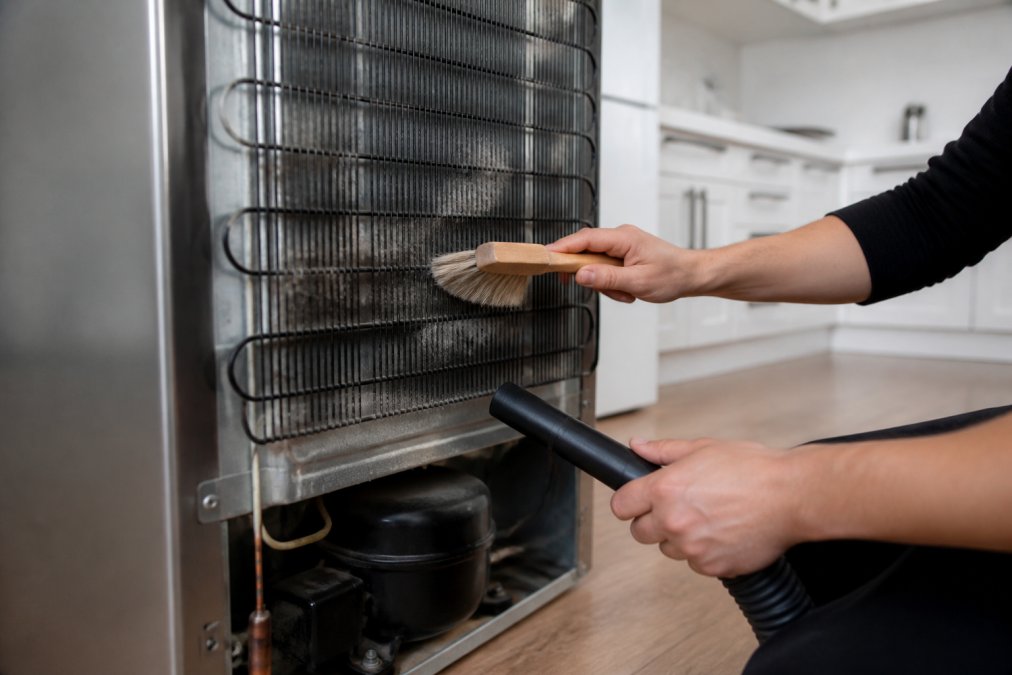
Clean refrigerator coils every six months with a soft brush or vacuum, dust forces the compressor to work harder and shortens lifespan.
Descale dishwashers monthly with white vinegar in an empty cycle. This removes mineral deposits and can add 2-3 years to lifespan.
Check refrigerator door seals every 2-3 years. Test by closing the door on a dollar bill, if it pulls out easily, replacement is due.
Keep dishwasher filters clean after each cycle. Debris buildup clogs spray arms and strains the pump motor. Most filters simply lift out and rinse under running water.
For ovens and ranges, wipe surfaces after use and clean interiors regularly to prevent grease damage. Ensure vents aren't blocked.
Check washing machine hoses annually for cracks, bulges, or mineral deposits. Replace hoses every 5-7 years regardless of appearance, internal corrosion isn't visible but causes failures. This preventative step prevents catastrophic leaks that damage appliances and surrounding areas.
Run garbage disposals with cold water and adequate flow. Never force large items through the unit. Run the disposal for 10-15 seconds after food is ground to ensure complete drainage. This discipline prevents jams that burn out the motor.
Repair Frequency and Service Call Data
Common failure points across kitchen appliances include electronic control boards, door seals, heating elements, and motor assemblies. Brands that source higher-quality versions of these components experience fewer field service calls. Longevity in the kitchen extends beyond internal mechanics to the surfaces themselves, where selecting durable kitchen worktops ensures that the entire culinary environment remains resilient against the daily wear that eventually compromises even the most robust appliances.
Refrigerator repairs most frequently involve compressor failure, thermostat malfunction, or door seal degradation. Dishwasher repairs typically address pump failures, spray arm clogs, or electronic control issues. Oven repairs commonly involve heating element burnout or temperature sensor failure.
The best indicator of brand reliability is whether authorized service technicians keep common replacement parts in stock. If a brand requires ordering parts from distant warehouses, repair times stretch to weeks. This delays appliance restoration and increases customer frustration even when the repair itself is straightforward.
When to Repair vs. Replace Your Kitchen Appliances
The decision to repair or replace depends on the appliance's age, repair cost, and remaining expected lifespan. But the most overlooked factor is total cost of ownership, calculating whether a reliable brand's higher upfront cost pays for itself through fewer repairs and lower energy consumption.
Age-Based Repair vs. Replace Framework
For appliances under five years old, repair almost always makes financial sense. A single repair typically costs far less than replacement, and the appliance should have many years of reliable operation remaining.
For appliances between five and ten years, compare repair cost to replacement cost.
The Reliability Premium: Long-Term Cost of Ownership
A more reliable brand often costs 15-25% more upfront than budget alternatives. But does that premium pay for itself? The answer lies in calculating 10-year total cost of ownership, which includes purchase price, repair costs, and energy consumption.
Example: Refrigerator comparison
- Budget model: $800 purchase + ($120 × 10 years) + $400 in repairs (compressor replacement at year 8) = $2,400 over 10 years
- Reliable brand: $1,100 purchase + ($95 × 10 years) + $150 in repairs (one seal replacement at year 6) = $2,300 over 10 years
Repair Frequency as a Reliability Indicator
Track how many times an appliance has required service. If the same appliance requires repair twice in eighteen months, component reliability is questionable. The second repair signals that the underlying design or manufacturing has a weakness.
When Repair Costs Justify Replacement
Some repairs cost so much that replacement becomes obvious:
- Compressor replacement in refrigerators: $400-800. If the refrigerator is over 8 years old, replacement is typically smarter.
- Motor replacement in washing machines: $300-600. If the machine is over 7 years old, replacement is usually the better choice.
- Heating element + control board in electric ranges: $400-700 combined. If the range is over 10 years old, replacement is almost always justified.
When repair cost exceeds 40% of a new appliance's price and the appliance is past its halfway point in expected lifespan, replacement is the financially rational choice.
Supply Chain and Parts Availability Matter
Parts availability directly impacts how long an appliance remains usable after a component fails. A brand with strong supply chain infrastructure ensures repairs happen quickly and affordably.
Conclusion
Selecting among reliable kitchen appliance brands requires looking beyond initial reviews to examine long-term durability, component quality, parts availability, and service network density. The most reliable brands consistently deliver products that function dependably for years, maintain accessible replacement parts, and provide responsive technical support when issues arise.
Frequently Asked Questions
What is the most durable brand of kitchen appliances?
Durability depends on the appliance type and how well it's maintained. Brands with strong track records in repair frequency data and longer mean time between failures tend to offer better reliability. Focus on models with solid build quality, good warranty coverage, and strong after-sales service support. Check field service data and customer satisfaction ratings before purchasing to identify the most reliable kitchen appliance brand for your needs.
What is the average lifespan of kitchen appliances?
Refrigerators typically last 10-18 years, dishwashers 9-12 years, ranges and ovens 13-15 years, and microwaves 7-10 years. Lifespan varies based on usage patterns, maintenance habits, and component quality. Appliances with better mechanical integrity and electronic control boards tend to reach the longer end of these ranges. Regular preventative maintenance and proper installation can significantly extend the average lifespan of kitchen appliances beyond these benchmarks.
How do I choose a reliable kitchen appliance brand?
Evaluate brands based on warranty coverage, replacement parts availability, repair technician networks, and customer feedback. Check service call frequency data and product longevity records. Look for Energy Star ratings as a reliability indicator. Review user experience ratings and technical support responsiveness. Consider installation standards and whether the brand offers smart features with proven reliability. Prioritize brands with strong after-sales service and accessible diagnostic codes for troubleshooting.
What maintenance tips help extend appliance durability?
Perform preventative maintenance regularly: clean refrigerator coils, replace dishwasher filters, descale coffee makers, and check door seals. Follow manufacturer guidelines for operational stress limits and avoid overloading. Keep electronic control boards dry and protected from moisture. Schedule professional inspections if you notice unusual noise levels or performance changes. Proper installation standards matter too, hire qualified installers to ensure correct setup. Consistent preventative maintenance is the most effective way to extend appliance lifespan and reduce repair frequency.