

Smart Home Lighting Systems Compared
Table of Contents
- Smart Lighting Systems Overview
- Smart Lighting Hub vs Hubless: Which Approach Works Best
- Smart Lighting Compatibility with Voice Assistants
- Smart Lighting Energy Savings and Cost Analysis
- Installation and Retrofit Considerations
- Matter Protocol and Future-Proof Interoperability
- Privacy, Security, and Circadian Wellness Features
- How to Choose the Right Smart Lighting System for Your Home
Last Updated: August 25, 2026
Smart Lighting Systems Overview
Smart home lighting systems represent one of the fastest-growing segments in home automation. The market reached USD 5,405.7 million in 2025 and is projected to hit USD 17,491.0 million by 2034, growing at a compound annual growth rate of 13.94% (IMARC Group, 2026). This explosive growth reflects a fundamental shift in how homeowners think about lighting, no longer just functional illumination, but a connected system that adapts to behavior, saves energy, and supports wellness.
At ShopVerse.life, we've analyzed the landscape of smart lighting options available to consumers today. Smart home lighting systems compared reveals two distinct approaches: hub-based systems that offer centralized control and hubless solutions that prioritize simplicity. Understanding which approach fits your home architecture, privacy preferences, and budget is essential before investing.
Approximately 31% of U.S. households now own smart lighting systems (2026 data), up significantly from 13% in 2025 (parksassociates.com). Yet most buyers make decisions based on incomplete information, comparing individual products rather than evaluating the entire infrastructure required to make them work together. That's where this guide differs.
Smart Lighting Hub vs Hubless: Which Approach Works Best
Hub-based systems centralize control through a dedicated device that communicates with individual smart bulbs, switches, and sensors. Hubless systems eliminate this intermediary, allowing bulbs and switches to connect directly to your Wi-Fi or Bluetooth network.
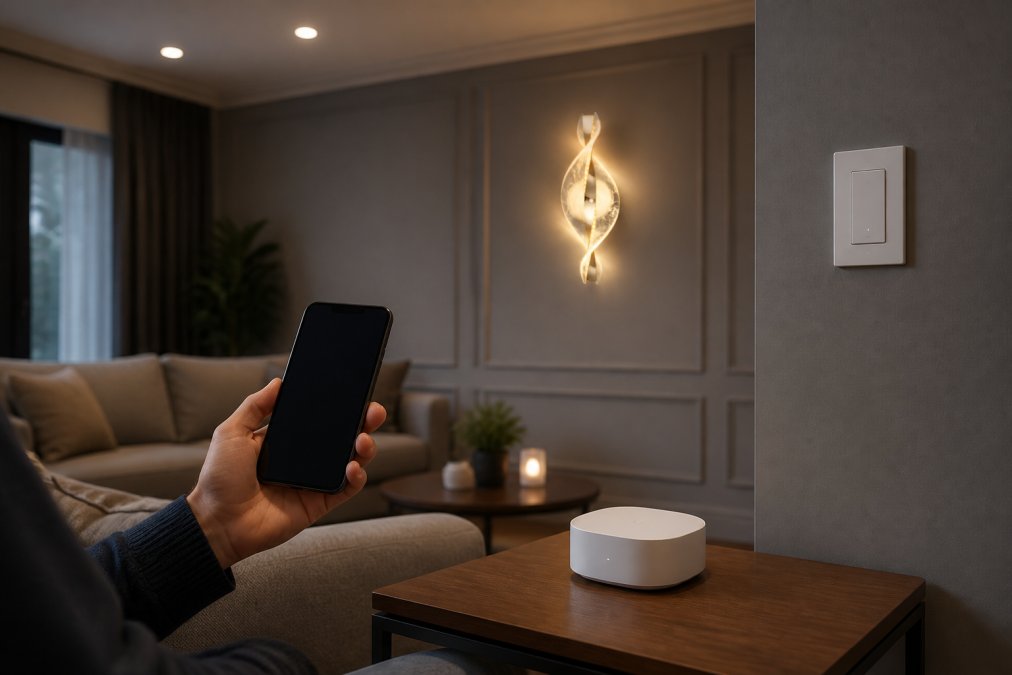
Hub-based systems offer superior reliability and responsiveness. A dedicated hub creates a mesh network that extends range and reduces latency, the delay between sending a command and the light responding. Hub systems consistently deliver sub-second response times because they don't depend on Wi-Fi congestion or internet connection stability.
The hardware segment dominates smart lighting adoption at 61% of market share, with most of that hardware being hub infrastructure (MarketsandMarkets, 2026). Examples include Philips Hue Bridge, LIFX Hub, and proprietary systems bundled with smart switches. These hubs typically cost $50-$200 upfront but unlock advanced automation, local control when internet drops, and the ability to handle dozens of devices without performance degradation.
Hubless systems eliminate upfront cost and complexity. You buy smart bulbs, they connect directly to Wi-Fi, and you control them through a mobile app. But they sacrifice reliability: when your internet drops, your lights don't respond to voice commands. They also struggle with automation requiring local processing. A hub can execute "if motion detected, turn lights on for 5 minutes" locally; hubless systems send that signal to the cloud, wait for processing, and send the command back, introducing noticeable latency.
For households under 20 smart lights, hubless works fine. For comprehensive smart homes with motion sensors, multiple rooms, and complex automation, a hub becomes essential.
Smart Lighting Compatibility with Voice Assistants
Voice control has become essential for smart lighting. According to American Home Shield's 2025 Smart Home Survey, 82% of Americans trust their smart home devices, and lighting ranks among the top 5 most-owned smart devices at 34% adoption.
Amazon Alexa works with the broadest range of smart lighting products. Google Home has tighter integration but covers most major brands. Apple's HomeKit ecosystem has expanded significantly. The practical issue: not all smart bulbs work with all platforms. A bulb that works flawlessly with Alexa might require workarounds for Google Home.
For voice control to feel responsive, latency must be under 1 second. Hub-based systems consistently achieve this. Hubless systems depend on Wi-Fi quality and cloud processing speed, introducing unpredictability.
If you're heavily invested in one voice assistant ecosystem, verify compatibility before purchasing. Philips Hue works perfectly across all platforms but requires their bridge. LIFX bulbs work without a hub but have slower Alexa integration than hub-based competitors.
:::pro For the smoothest voice control experience, choose hub-based systems with native integration to your primary voice assistant. Hubless systems work, but expect occasional lag during peak Wi-Fi usage. :::
Smart Lighting Energy Savings and Cost Analysis
Smart LED bulbs consume 70-90% less energy than traditional incandescent bulbs (Highland Electric, 2025). A typical home with 40 light fixtures using incandescent bulbs costs roughly $150-$200 annually in electricity for lighting alone. Switching to smart LEDs reduces that to $15-$30 per year, $1,500-$1,800 in savings over a 10-year lifespan.
The real savings come from automation. Smart systems learn your patterns and automatically adjust brightness based on occupancy, time of day, and natural light levels. Commercial installations found that motion sensors and daylight harvesting reduced energy consumption by an additional 30-40% beyond LED efficiency gains.
Hub-Based System (Philips Hue equivalent):
- Hub: $100
- 40 smart bulbs at $42 each: $1,680
- Installation (professional): $400
- Total upfront: $2,180
- Annual energy savings: $170
- Payback period: 12.8 years
Hubless System (LIFX equivalent):
- 40 smart bulbs at $30 each: $1,200
- DIY installation: $0
- Total upfront: $1,200
- Annual energy savings: $150
- Payback period: 8 years
The hubless system breaks even faster, but the hub system delivers better long-term value through superior automation and reliability. For renters or anyone uncomfortable with large upfront costs, ShopVerse.life offers options like the Magnetic Rechargeable 50 Wall Lamp at $52.98, which provides adjustable brightness (249 to 2000 lumens) without ecosystem complexity.

| System Type | Upfront Cost | Annual Energy Savings | Payback Period | Best For |
|---|---|---|---|---|
| Hub-Based (40 fixtures) | $2,180 | $170 | 12.8 years | Comprehensive smart homes |
| Hubless (40 fixtures) | $1,200 | $150 | 8 years | Renters, incremental upgrades |
| Hybrid (hub + selective bulbs) | $800-$1,200 | $100-$130 | 8-12 years | Budget-conscious retrofits |
Installation and Retrofit Considerations
Installation difficulty becomes practical rather than theoretical. Hub-based systems require identifying where the hub will live, running power to it, and ensuring Wi-Fi coverage. Most hubs are small enough to hide behind furniture or in a closet.
Smart bulbs require no installation beyond screwing them into existing fixtures. Smart switches are more involved, hardwired switches require running electrical wire through walls, typically requiring a professional electrician at $280-$750 per switch. Wireless switches (battery-powered or rechargeable) avoid this entirely.
For retrofit scenarios, start with bulbs and add switches only if you need physical controls for guests or high-traffic areas. Bulbs are reversible; hardwired switches are permanent.
Renters should avoid any hardwired modifications. The Modern Gold/Black LED Acrylic Wall Sconce at $61.86 offers elegant lighting without requiring installation beyond wall mounting.

Hub-based system configuration typically takes 15-30 minutes through a mobile app. Hubless systems are faster but require pairing each bulb individually to Wi-Fi, which becomes tedious above 10 devices.
Matter Protocol and Future-Proof Interoperability
The Matter protocol is becoming the baseline standard for consumer smart home products, ensuring cross-platform compatibility across Apple Home, Amazon Alexa, and Google Home ecosystems.
A Matter-enabled smart bulb works seamlessly with any Matter-compatible hub or voice assistant. No compatibility workarounds. For 2026, Matter-over-Thread systems represent the best smart lighting to buy. Thread creates a mesh network without requiring a dedicated hub, with intelligence distributed across devices. This combines the reliability of hub-based systems with the simplicity of hubless setups.
The industry is moving toward truly autonomous systems that learn user habits, adjust lighting automatically, and optimize brightness and color temperature based on time of day and occupancy patterns.
If you're making a smart lighting investment today, prioritize Matter compatibility. It's the only guarantee that your bulbs will work with whatever ecosystem becomes dominant in the next five years.
Privacy, Security, and Circadian Wellness Features
Data privacy remains the top concern for smart home adopters. According to Horowitz Research's 2025 Smart Home Study, 57% of consumers cite data privacy as their primary concern about smart home devices, followed by security vulnerabilities at 46%.
Smart lighting systems collect behavioral data: when you're home, your daily routines, which rooms you use most, your sleep schedule. Hub-based systems with local processing offer better privacy because commands execute on the hub rather than being sent to the cloud. Hubless systems send all commands through the manufacturer's cloud servers, logging your usage patterns.
If privacy is paramount, choose hub-based systems from manufacturers with transparent privacy policies. Philips Hue and LIFX publish detailed privacy documentation. Avoid generic Chinese-manufactured smart bulbs that lack transparency about data handling.
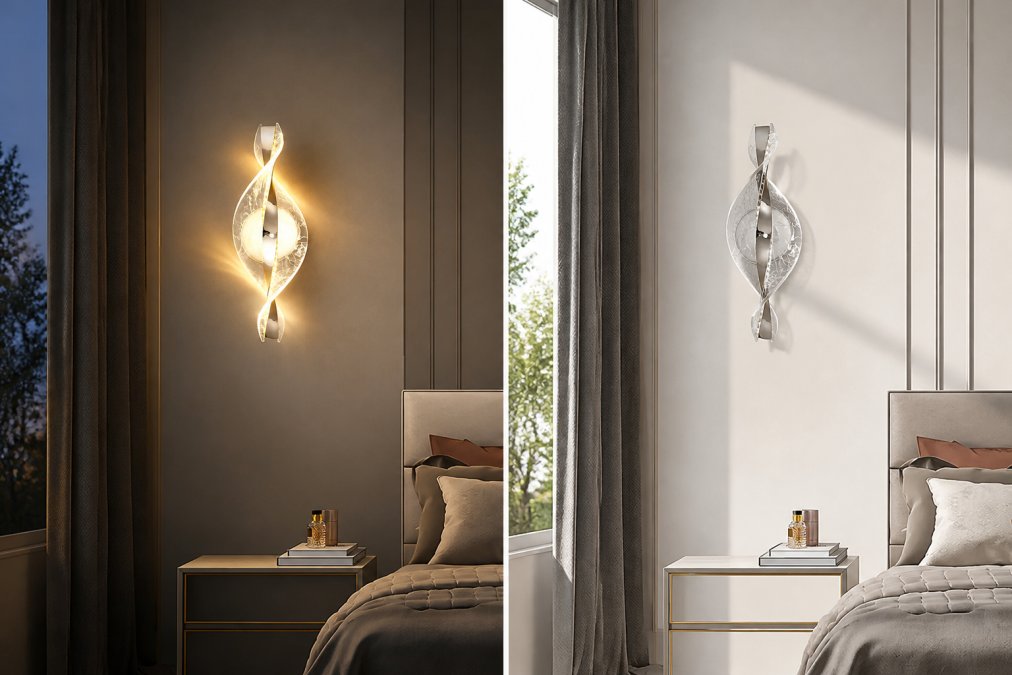
Circadian lighting automatically adjusts color temperature and brightness throughout the day to align with natural sunlight patterns. Cool, bright light (5000K) in the morning supports alertness. Warm, dim light (2700K) in the evening supports melatonin production and sleep quality. Studies show users report better sleep quality and reduced evening fatigue.
Most advanced smart lighting systems support circadian modes. The Wake Up Light Sunrise Alarm Clock at $51.54 offers circadian-aligned lighting for bedrooms, with sunrise simulation that eases you awake gradually.
For security, ensure your smart lighting system uses encrypted communication and requires authentication. All major platforms (Philips Hue, LIFX, Nanoleaf) meet these standards.
How to Choose the Right Smart Lighting System for Your Home
Choose hub-based systems if:
- You're building a comprehensive smart home (20+ devices)
- Reliability during internet outages matters
- You want advanced automation (motion sensors, occupancy-based scenes)
- You prioritize voice control responsiveness
- You value local privacy (commands processed on the hub)
Choose hubless systems if:
- You're adding lights gradually (under 10 devices)
- You're renting or prefer non-permanent installations
- You want the fastest setup time
- Upfront cost is your primary constraint
- You don't need complex automation
Choose hybrid systems if:
- You want flexibility to start simple and expand
- You need some hardwired switches but prefer bulb-based control elsewhere
- Budget is moderate but you want future-proofing
Prioritize Matter compatibility in either case. This single decision protects your investment from platform fragmentation.
For most households, the optimal approach is starting with a hub-based system covering main living areas (living room, kitchen, bedroom) and gradually adding hubless bulbs to secondary spaces. This balances cost, reliability, and automation capability.
ShopVerse.life curates smart lighting options across multiple categories. For decorative ambient lighting, the 144 LED USB Wall Decoration Lights at $44.02 provides warm, flexible lighting without smart home infrastructure. For integrated smart control, prioritize systems with Matter certification and hub support.

Smart home lighting systems compared reveals that the "best" system depends entirely on your home's architecture, privacy preferences, and automation ambitions. Hub-based systems cost more upfront but deliver superior reliability and responsiveness. Hubless systems offer simplicity and lower entry costs but sacrifice automation depth. The Matter protocol is rapidly becoming the standard, ensuring interoperability across ecosystems.
ShopVerse.life's curated collection helps you navigate these options with confidence. Our team has vetted smart lighting products across multiple price points and use cases, ensuring you invest in solutions that genuinely improve your home's functionality and ambiance. Shop our smart lighting selection and discover the system that matches your needs, budget, and vision for modern living.
Frequently Asked Questions
Do smart lights require a hub to function?
Not all smart lighting systems require a hub. Hubless systems use direct Wi-Fi or mesh networking to connect bulbs and switches to your phone or voice assistant, offering simplicity and lower upfront costs. Hub-based systems provide greater range, local reliability, and faster response times. The choice depends on your home size, network strength, and whether you prioritize ease of setup or advanced automation features.
How do smart lighting systems impact energy efficiency?
Smart LED bulbs save 70-90% more energy than traditional incandescent bulbs, with potential savings of up to $100 per year per fixture. Automation features like occupancy sensors, daylight harvesting, and scheduling further reduce consumption by ensuring lights operate only when needed. Over a 10-year lifespan, a single smart bulb can save hundreds in electricity costs, making energy savings one of the strongest financial arguments for upgrading to smart lighting systems.
What is the best smart lighting system for home use?
The best system depends on your priorities. For future-proof interoperability, Matter-over-Thread systems offer cross-platform compatibility with Apple Home, Google Home, and Alexa with sub-second response times. For plug-and-play simplicity, hubless Wi-Fi bulbs work well in smaller homes. For comprehensive automation and commercial-grade reliability, hub-based systems with mesh networking excel. Consider your home size, existing devices, and whether you prioritize ease of installation or advanced features.
Are smart lighting systems worth the cost?
Yes, for most homeowners. While upfront costs average $42 per smart bulb, $50-$200 for a hub, and $20-$80 per dimmer switch, energy savings of $100+ annually per room offset these expenses within 2-3 years. Additional benefits include convenience, improved home ambiance, enhanced security through scheduling, and increased property value. The 13.94% annual market growth reflects strong consumer confidence in the return on investment.
This article was written using GrandRanker