

Smart Home Starter Kit for Apartments: 2026 Guide
Table of Contents
- Why Smart Home Starter Kits Work for Apartment Living
- Smart Lighting for Renters: Easy Installation, Maximum Impact
- How to Set Up a Smart Home Without Drilling or Permanent Changes
- Renter-Friendly Smart Home Devices That Require No Installation
- Top Smart Home Starter Kits for Apartments in 2026
- Quick Comparison: Smart Home Starter Kits Side by Side
- Security and Privacy: What Renters Need to Know
- How to Choose the Right Smart Home Starter Kit for Your Apartment
Last Updated: August 24, 2026
According to RubyHome's 2026 market analysis, 51.4% of all U.S. households now own at least one smart home device, and the smart home market is projected to reach $54.53 billion in 2026. For renters, 82% want smart home technology, yet most face a critical barrier: the inability to drill holes, install permanent wiring, or make modifications that violate lease agreements. This guide from ShopVerse.life covers how to build a functional smart home starter kit for apartments without touching your walls or risking your security deposit.
The challenge renters face isn't a lack of smart home options, it's that most guides assume you own your space. What actually works is a different approach: wireless devices, magnetic mounts, adhesive strips, and plug-and-play ecosystems you can remove without leaving a trace.
Why Smart Home Starter Kits Work for Apartment Living
Modern smart home devices are wireless, battery-powered, and designed for rental living. According to Parks Associates' 2025 renter study, 75% of single-family renters show interest in at least one smart home device, and 60% said preinstalled security and smart home devices made a rental more appealing.
A smart home starter kit for apartments solves three specific problems. First, it eliminates the installation barrier, no drilling, no permanent changes, no lease violations. Second, it creates a cohesive ecosystem where devices talk to each other through a central hub or voice assistant. Third, it's portable. When your lease ends, you pack everything up and take it with you.
Smart Lighting for Renters: Easy Installation, Maximum Impact
Smart lighting is the entry point to apartment automation. Replace a bulb, download an app, and you've got voice control, scheduling, and color customization. When you move, you unscrew them and take them with you.
You can automate sunrise simulations to ease your morning wake-up (the ShopVerse.life Wake Up Light Sunrise Alarm Clock at $51.54 combines this with white noise). You can schedule lights to turn on at sunset, simulating occupancy when you're away. You can set scenes like "Movie Mode" that dims all lights to 20%.

Smart bulbs typically cost $10-$20 each, and a starter set of three runs $30-$50. They're compatible with Alexa, Google Assistant, and Apple HomeKit. Battery life ranges from 10,000 to 25,000 hours, roughly 2.7 to 6.8 years of continuous operation.
Test with one bulb first. If it works, scale up. If it doesn't, you're out $15, not $150.
How to Set Up a Smart Home Without Drilling or Permanent Changes
Setup for a renter-friendly smart home takes under two hours and requires a central hub, a smartphone, and a Wi-Fi network with reasonable signal strength.
Step 1: Choose and Set Up Your Hub (20 minutes)
Your hub is the brain. The three main options are Amazon Echo (works with Alexa), Google Nest Hub (works with Google Assistant), and Apple HomePod mini (works with Siri). Each costs $50-$100.
Place your hub in a central location where it has clear Wi-Fi signal. Plug it in, open the companion app, and follow the setup wizard. You'll create an account, connect it to your Wi-Fi network, and name your hub.
Step 2: Add Smart Bulbs (15 minutes)
Screw smart bulbs into your existing light fixtures. Open the hub's app, select "Add Device," and follow the pairing process. Most bulbs flash while waiting to be paired.
Step 3: Add Smart Plugs (10 minutes)
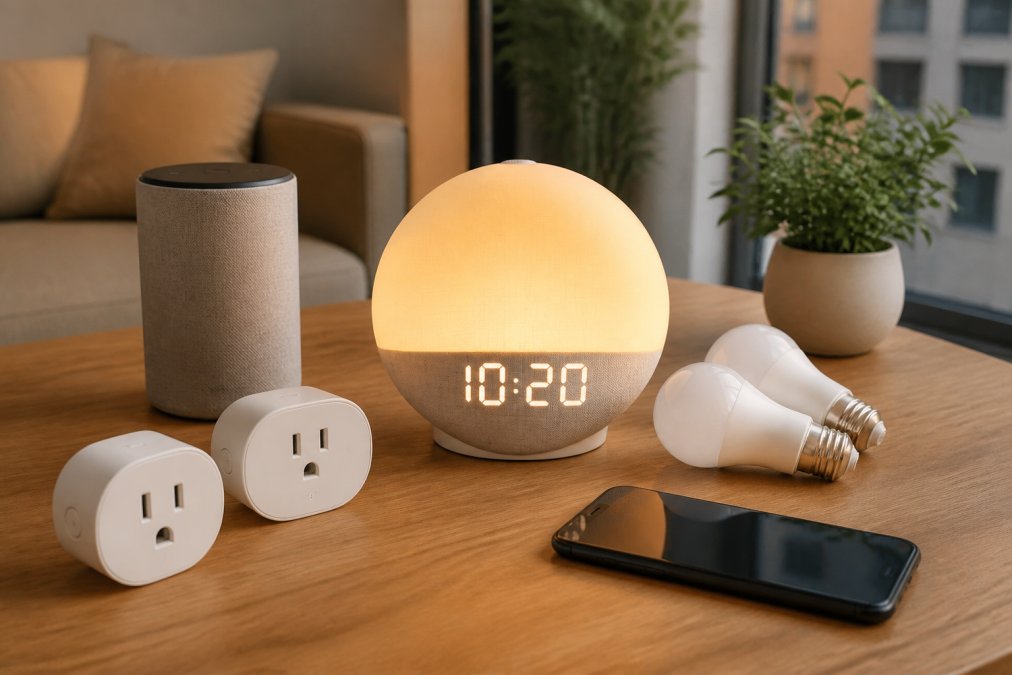
Smart plugs turn any regular appliance into a smart device. Plug them into wall outlets, plug your devices into them, and they're controllable via app or voice. A coffee maker, lamp, fan, or space heater becomes schedulable and remotely switchable. They cost $15-$30 each.
Step 4: Configure Automation Routines (15 minutes)
Create routines, sequences of actions triggered by time, location, or voice command. Example: "Bedtime" turns off all lights and sets your thermostat to 68 degrees. "Good Morning" turns on your bedroom light at 6:30 AM and starts your coffee maker.
Step 5: Test and Adjust (remaining time)
Ask your hub to turn lights on and off. Most issues stem from weak Wi-Fi signal. If a device doesn't respond, move it closer or upgrade to a mesh Wi-Fi system.
Renter-Friendly Smart Home Devices That Require No Installation
Smart Bulbs and Lamps
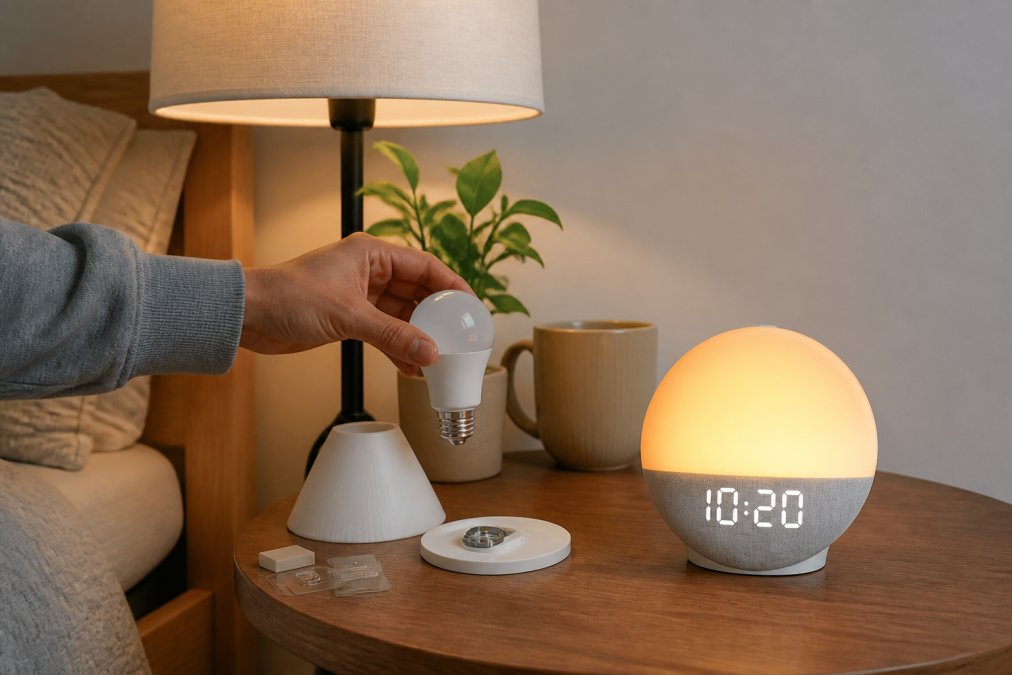
Screw them in, pair them, done. No tools required. Cost: $10-$25 per bulb. The ShopVerse.life Magnetic Rechargeable 50 Wall Lamp at $52.98 is cordless, rechargeable, and uses magnetic mounting, ideal for renters who want wall lighting without drilling.

Smart Plugs
Plug them into outlets, plug appliances into them, and you've automated any device. They monitor energy usage. Cost: $15-$30 each.
Smart Cameras
The ShopVerse.life Mini WiFi Camera 1080P HD at $22.18 delivers sharp video, night vision, and two-way audio. Mount it on a shelf or use adhesive strips. No drilling. Cost: $20-$80.

Motion Sensors and Door/Window Sensors
Wireless battery-powered devices that trigger automation. Motion sensor detects movement and turns on lights. Door sensor detects when you open a door and sends a notification. Both use adhesive mounting. Cost: $20-$50 each.
Smart Video Doorbells
Most require 16V power from existing doorbell wiring. Battery-powered options exist but are less common. Cost: $100-$300.
Smart Locks
Most smart locks replace your interior deadbolt, which requires removing the old lock. Some landlords allow this; many don't. Battery-powered smart locks that mount over your existing lock exist but are limited. Check your lease or ask your landlord before buying.
What to Avoid
Smart thermostats require hardwired installation. Smart doorbells often need existing wiring. In-wall smart switches require electrical work. Whole-home security systems need professional installation. These violate most leases.
Top Smart Home Starter Kits for Apartments in 2026
Budget-Friendly Option: Essential Connectivity Under $150
Amazon Echo Dot with Smart Bulbs and Plugs Bundle
The Echo Dot (4th generation or newer) costs $50, two smart bulbs run $30, and two smart plugs add $40. Total: under $150.
The Echo Dot is the smallest, most affordable hub. Alexa has the broadest device compatibility. The bundle gives you voice control, lighting automation, and energy monitoring on day one. The Dot has a smaller speaker than the full Echo and no display, but it's perfect for testing whether smart home automation fits your lifestyle.
Best for: Solo renters or couples in studios and one-bedroom apartments.
Mid-Range Pick: Balanced Features and Ecosystem Flexibility
Google Nest Hub with Nest Mini, Nest Cam, and Philips Hue Starter Kit
This bundle costs $250-$300 and includes Google's ecosystem plus Philips Hue smart lighting, the gold standard for color and brightness control.
The Nest Hub has a 7-inch touchscreen for time, weather, and camera feeds without asking. The Nest Mini provides voice control in a second room. Philips Hue bulbs are generally considered reliable. The Nest Cam provides 1080P video with motion detection and person recognition. Philips Hue bulbs cost $15-$20 each, making this pricier than Amazon's equivalent.
Best for: Renters in two-bedroom apartments or larger who want both voice control and visual feedback.
Premium Choice: Advanced Automation and Security Integration
Apple HomePod Mini with HomeKit Cameras and Eve Smart Plugs
This ecosystem costs $300-$400 and prioritizes privacy and security. Apple HomeKit encrypts all data end-to-end. Eve smart plugs are reliable and responsive. HomeKit Secure Video stores camera footage in iCloud, encrypted and not accessible to Apple.
HomeKit has the smallest device ecosystem and fewer third-party brands support it. Setup is more complex and prices are higher. If you don't own Apple devices, friction increases.
Best for: Renters with iPhones, iPads, or Macs who prioritize data privacy.
Quick Comparison: Smart Home Starter Kits Side by Side
| Kit | Starting Price | Hub Type | Best Feature | Privacy Level | Renter-Friendly |
|---|---|---|---|---|---|
| Amazon Echo Bundle | $120-150 | Echo Dot | Broadest device compatibility | Moderate | Yes |
| Google Nest Bundle | $250-300 | Nest Hub with display | Visual feedback + touchscreen | Moderate | Yes |
| Apple HomeKit | $300-400 | HomePod Mini | End-to-end encryption | High | Yes |
| Wyze Starter Kit | $80-120 | Wyze Hub | Budget-friendly entry point | Moderate | Yes |
The Wyze kit deserves mention. At $80-$120, it's the cheapest entry point. Wyze cameras and sensors are reliable, and their app is intuitive. The tradeoff is a smaller ecosystem and fewer third-party integrations.
Security and Privacy: What Renters Need to Know
Smart home devices collect data. They track when you're home, what you're doing, and what you're buying. According to American Home Shield's 2025 smart home survey, 57% of Americans express concern about how their information is collected and used by smart home devices, and 46% fear potential hacking.
Amazon, Google, and Apple all collect usage data. They know when you turn lights on and off, what time you wake up, what temperature you prefer. Apple collects less data than Amazon or Google, but they still collect some.
Your Wi-Fi network should be encrypted (WPA3 is the current standard). Your hub should require a strong password. Devices should auto-update firmware.
Use strong, unique passwords for your smart home account. Enable two-factor authentication if offered. Don't put cameras in bedrooms or bathrooms. Review privacy settings in your hub's app. If privacy is paramount, choose Apple HomeKit.
How to Choose the Right Smart Home Starter Kit for Your Apartment
Start with this question: What problem are you solving? If you want to save energy, prioritize smart plugs. If you want security, prioritize cameras and motion sensors. If you want convenience, prioritize lighting and voice control.
Consider your ecosystem. If you own an iPhone, HomeKit makes sense. If you use Android and Google services, the Nest ecosystem is natural. If you use both or neither, Amazon's Alexa is the safest choice.
Budget matters. A $120 starter kit gets you 80% of the value of a $300 kit. For renters, starting small and expanding over time is smarter than buying everything at once.
Test before committing. Buy one smart bulb, one plug, and a hub. Use them for two weeks. If it clicks, expand from there.
ShopVerse.life curates smart home products that work specifically for renters and apartment dwellers. Our carefully selected collection includes renter-friendly devices like the Wake Up Light Sunrise Alarm Clock ($51.54) for gentle wake-ups, the Mini WiFi Camera ($22.18) for security, and the Magnetic Rechargeable Wall Lamp ($52.98) for installation-free lighting. All come with our 100% money-back guarantee and fast shipping, so you can build your smart home starter kit for apartments with confidence.
Building a smart home in an apartment doesn't require permanent changes or landlord approval. It requires the right devices, ones designed for wireless connectivity, non-permanent installation, and portability. Start with a hub, add smart bulbs and plugs, and expand from there. ShopVerse.life makes this easier with curated kits and individual products selected specifically for renters. Shop our complete collection of smart home essentials and transform your apartment into an automated, secure, and convenient living space.
=== FAQ ANSWERS (audit these too, same rules) ===
[1] Q: What is the best smart home starter kit for apartments? A: The best smart home starter kit for apartments combines ease of installation, renter-friendly devices, and ecosystem compatibility. Look for kits with smart lighting, plugs, and a hub that requires no drilling or permanent modifications. Budget-friendly options ($80-$150) work well for beginners, while mid-range kits ($150-$300) offer more automation features. Choose based on your preferred ecosystem, Amazon Alexa, Google Home, or Apple HomeKit, and ensure all devices connect via Wi-Fi without hardwiring.
[2] Q: How can I set up a smart home without drilling or making permanent changes? A: Use adhesive-backed smart bulbs, plug-and-play smart plugs, portable smart speakers, and magnetic or clip-on sensors. Smart light strips and wireless cameras mount with removable adhesive. Avoid devices requiring electrical work, plumbing modifications, or wall anchors. Most modern smart home starters ship with plug-and-play components designed for renters. Focus on wireless connectivity through Wi-Fi and Bluetooth, which eliminates the need for hardwiring or drilling.
[3] Q: Are smart home devices compatible with rental agreements? A: Most renter-friendly smart home devices are compatible with rental agreements because they require no permanent installation. Smart bulbs, plugs, speakers, and wireless cameras don't damage walls or electrical systems. However, smart locks and security systems may need landlord approval depending on your lease. Always check your rental agreement before installing anything, and choose devices you can remove without leaving marks or damage when you move.
[4] Q: What smart home devices work best for renters? A: The best devices for renters include smart bulbs (replace standard bulbs, no wiring needed), smart plugs (plug into outlets to control appliances), portable smart speakers (no installation required), wireless security cameras (mount with adhesive), and smart thermostats with adhesive backing. Avoid smart locks requiring door modifications and hardwired security systems. Focus on devices with wireless connectivity, removable installation, and the ability to take them with you when you move.
[5] Q: How much does a smart home starter kit for apartments cost? A: Smart home starter kits for apartments range from $80-$150 for budget options with basic smart bulbs, plugs, and a speaker hub, to $150-$300 for mid-range kits with enhanced automation and more compatible devices. Premium kits exceed $300 and include advanced security cameras, multiple hubs, and extensive ecosystem integration. ShopVerse.life offers individual components like smart bulbs from $44-$62, allowing you to build a custom kit within your budget.
Frequently Asked Questions
Q: What is the best smart home starter kit for apartments?
A: The best smart home starter kit for apartments combines ease of installation, renter-friendly devices, and ecosystem compatibility. Look for kits with smart lighting, plugs, and a hub that requires no drilling or permanent modifications. Budget-friendly options ($80-$150) work well for beginners, while mid-range kits ($150-$300) offer more automation features. Choose based on your preferred ecosystem, Amazon Alexa, Google Home, or Apple HomeKit, and ensure all devices connect via Wi-Fi without hardwiring.
Q: How can I set up a smart home without drilling or making permanent changes?
A: Use adhesive-backed smart bulbs, plug-and-play smart plugs, portable smart speakers, and magnetic or clip-on sensors. Smart light strips and wireless cameras mount with removable adhesive. Avoid devices requiring electrical work, plumbing modifications, or wall anchors. Most modern smart home starters ship with plug-and-play components designed for renters. Focus on wireless connectivity through Wi-Fi and Bluetooth, which eliminates the need for hardwiring or drilling.
Q: Are smart home devices compatible with rental agreements?
A: Most renter-friendly smart home devices are compatible with rental agreements because they require no permanent installation. Smart bulbs, plugs, speakers, and wireless cameras don't damage walls or electrical systems. However, smart locks and security systems may need landlord approval depending on your lease. Always check your rental agreement before installing anything, and choose devices you can remove without leaving marks or damage when you move.
Q: What smart home devices work best for renters?
A: The best devices for renters include smart bulbs (replace standard bulbs, no wiring needed), smart plugs (plug into outlets to control appliances), portable smart speakers (no installation required), wireless security cameras (mount with adhesive), and smart thermostats with adhesive backing. Avoid smart locks requiring door modifications and hardwired security systems. Focus on devices with wireless connectivity, removable installation, and the ability to take them with you when you move.
Q: How much does a smart home starter kit for apartments cost?
A: Smart home starter kits for apartments range from $80-$150 for budget options with basic smart bulbs, plugs, and a speaker hub, to $150-$300 for mid-range kits with enhanced automation and more compatible devices. Premium kits exceed $300 and include advanced security cameras, multiple hubs, and extensive ecosystem integration. ShopVerse.life offers individual components like smart bulbs from $44-$62, allowing you to build a custom kit within your budget.
This article was written using GrandRanker